Regular observation, reviews ensure safer workplaces


LOUISE WOODBURN A competent worker can explain why a control matters, recognise when conditions fall outside the approved method and know when to stop and seek assistance



To improve operation and employee safety, theory-based training must be supported by practical training and ongoing observation, ensuring that employees can apply what they have learned under the real conditions of high-risk mining environments, says integrated health and safety consultancy KBC Health and Safety risk solutions GM Louise Woodburn.
Managing high-risk work requires workers to recognise hazards, understand controls, respond to changing conditions and exercise responsible judgement. Given that these capabilities are behaviour based, she says workers need to be regularly monitored during shifts to ensure that their approaches continuously align with safety requirements and procedures.
“A worker may be able to explain an isolation procedure during training. However, in a real situation, they may be unfamiliar with the equipment, face unclear identification or encounter additional energy sources,” explains Woodburn.
To address this, she stresses the need for practical training and observation in the field through ongoing planned task observations (PTOs).
PTOs enable supervisors or relevant third parties to observe work in the field and determine whether theory-based learning is correctly applied on the ground.
“Industry best practice is to coach supervisors to carry out PTOs themselves. They can then conduct observations weekly or fortnightly against a planned schedule,” says Woodburn.
She says the purpose of the PTO is to watch how each worker performs the job in a high-risk setting by monitoring worker behaviour, assessing competency and identifying knowledge or process gaps. Supervisors can then use their findings to provide gap coaching to help improve the worker’s efficiency and ensure adherence to safety precautions.
Woodburn emphasises that effective PTO depends on whether supervisors understand its meaning and what to monitor, adding that true competence should be measured by being able to perform a task safely.
“A competent worker can explain why a control matters, recognise when conditions fall outside the approved method and know when to stop and seek assistance,” she says, adding that competence also includes understanding the limits of one’s own knowledge and authority.
Aligned to this, Woodburn highlights the right to refuse unsafe work under the Mine Health and Safety Act, wherein an employee must be able to know when to say that a task has gone beyond their scope and that they need advice before continuing.
She attributes this ability to a worker’s risk perception, noting that every person perceives risk differently, and therefore, a mining operation should establish a common understanding regarding risk perception and risk assessment.
By doing so, Woodburn says, workers will immediately understand and cooperate when a worker calls a stop owing to a task being beyond their scope or if they encounter a safety concern.
To instil this confidence in workers, operations should require workers to demonstrate tasks and explain their decisions, she says.
Woodburn points out that mines are generally good at training for specific risks, such as electrical lockout, tagout and safe isolation or working at heights.
“It is the worker on the ground who may be injured [as a result of unsafe practices], so they must understand the limits of their authority and knowledge. They must also feel supported by a safety culture that allows them to stop work that could affect them and their families,” she says.
Procedure versus Reality
A critical challenge impacting operation and employee safety is a gap between what a standard operating procedure (SOP) or code of practice (COP) requires and what workers actually encounter on the ground, points out Woodburn.
She asserts that while South Africa’s mining legislation and standards, including mine health and safety standards, are “among the best in the world”, the challenge lies in applying them practically.
Further, she points out that site conditions are sometimes assumed during the development of standards and procedures, as opposed the realistic conditions.
“This can happen when procedures are written without involving the workforce,” explains Woodburn.
Therefore, when conducting risk assessments or writing SOPs and COPs, mining health and safety officers should get input from the respective operation’s employees.
“Every fatality represents a person [lost to] a family and a community. Leadership needs reliable evidence about the conditions people are facing and the controls protecting them,” says Woodburn.
Article Enquiry
Email Article
Save Article
Feedback
To advertise email advertising@creamermedia.co.za or click here
Research Reports


Projects

Latest Multimedia


Latest News
Showroom

Rio Carb is an OEM (Original Equipment Manufacturer) of R-C700 Chromium Carbide (CrC) alloy clad wear plates and pipes used for heavy materials...
VISIT SHOWROOM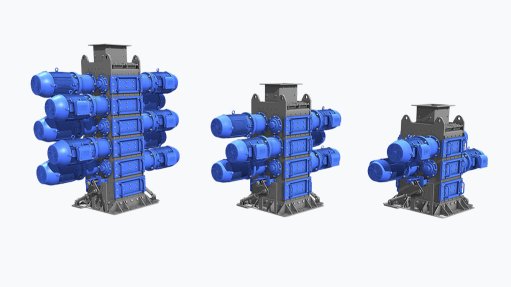
Energy and Densification Systems (EDS) has developed equipment for crushing, milling, blending and densifying products. Based on its globally...
VISIT SHOWROOM



Press Office
Announcements
What's On
Subscribe to improve your user experience...
Option 1 (equivalent of R125 a month):
Receive a weekly copy of Creamer Media's Engineering News & Mining Weekly magazine
(print copy for those in South Africa and e-magazine for those outside of South Africa)
Receive daily email newsletters
Access to full search results
Access archive of magazine back copies
Access to Projects in Progress
Access to ONE Research Report of your choice in PDF format
Option 2 (equivalent of R375 a month):
All benefits from Option 1
PLUS
Access to Creamer Media's Research Channel Africa for ALL Research Reports, in PDF format, on various industrial and mining sectors
including Electricity; Water; Energy Transition; Hydrogen; Roads, Rail and Ports; Coal; Gold; Platinum; Battery Metals; etc.
Already a subscriber?
Forgotten your password?
Receive weekly copy of Creamer Media's Engineering News & Mining Weekly magazine (print copy for those in South Africa and e-magazine for those outside of South Africa)
➕
Recieve daily email newsletters
➕
Access to full search results
➕
Access archive of magazine back copies
➕
Access to Projects in Progress
➕
Access to ONE Research Report of your choice in PDF format
RESEARCH CHANNEL AFRICA
R4500 (equivalent of R375 a month)
SUBSCRIBEAll benefits from Option 1
➕
Access to Creamer Media's Research Channel Africa for ALL Research Reports on various industrial and mining sectors, in PDF format, including on:
Electricity
➕
Water
➕
Energy Transition
➕
Hydrogen
➕
Roads, Rail and Ports
➕
Coal
➕
Gold
➕
Platinum
➕
Battery Metals
➕
etc.
Receive all benefits from Option 1 or Option 2 delivered to numerous people at your company
➕
Multiple User names and Passwords for simultaneous log-ins
➕
Intranet integration access to all in your organisation