New GEF-funded initiative to strengthen electric vehicle battery value chains and industrial competitiveness

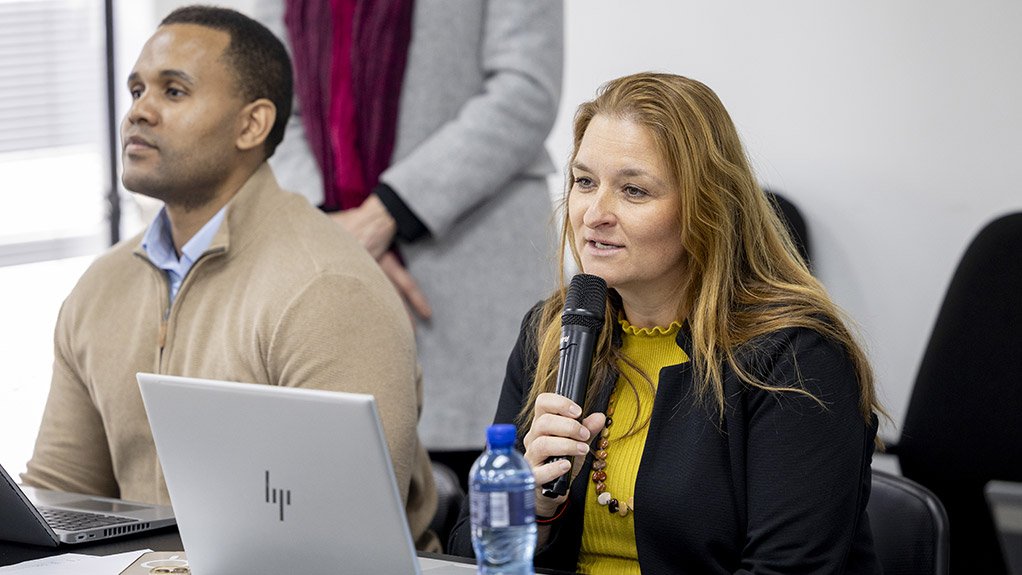



South Africa has taken an important step towards strengthening its electric mobility ecosystem with the introduction of the Global Environment Facility (GEF-8) funded project, “Supporting the Just Energy Transition in South Africa by Strengthening Local Value Chains and Enhancing Quality Assurance for Electric Vehicle Batteries.” The five year initiative is being implemented by the United Nations Industrial Development Organization (UNIDO) in partnership with the South African National Energy Development Institute (SANEDI), under the guidance of the Department of Trade, Industry and Competition, the Department of Electricity and Energy, and the Department of Transport.
The project aims to reduce greenhouse gas emissions by strengthening the quality infrastructure, policy environment and skills base needed to accelerate the growth of South Africa’s low-carbon electric mobility market and battery value chain. It will support battery testing and certification, workforce development, battery recycling and second-life applications, as well as investment opportunities linked to local manufacturing and beneficiation.
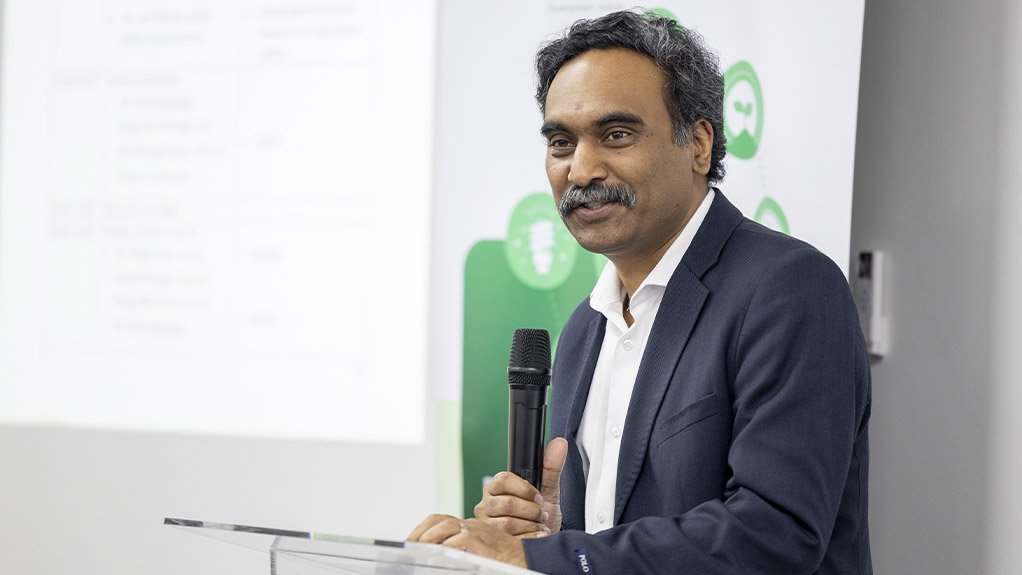
Welcoming participants to the introductory event, SANEDI Acting Chief Executive Officer Prof. Prathaban Moodley, highlighted the significance of the initiative for South Africa’s industrial future.
The purpose of the event was to prepare stakeholders for the commencement of the project by outlining its objectives, implementation approach and planned activities, as well as opportunities for collaboration among government, industry, academia, research institutions, development partners and civil society.
“The transition to a low-carbon economy is not simply about changing technologies. It is about transforming industries, creating new opportunities to strengthen our economy and ensuring that South Africa remains competitive while delivering on our climate change commitments,” said Moodley. “Electric mobility is much more than electric vehicles. It is an entire industrial ecosystem that spans policy, manufacturing, quality infrastructure, testing and certification, skills development, investment, recycling and innovation.”
Moodley noted that South Africa has the industrial capability, technical expertise and access to critical minerals required to play a meaningful role in the global battery value chain. He added that the project would help unlock these opportunities while supporting economic growth, investment and job creation.
Speaking on behalf of the GEF Operational Focal Point at the Department of Forestry, Fisheries and the Environment (DFFE), Ms. Shahkira Parker said the project arrives at a pivotal moment as countries around the world accelerate the transition to low-carbon, climate-resilient economies.
“For South Africa, this transition must not only reduce greenhouse gas emissions, but also create new economic opportunities, strengthen local industries and ensure that no one is left behind. That is the essence of our just energy transition,” Parker said.
She emphasised that the project’s focus on strengthening local value chains and quality infrastructure would boost industrial competitiveness while contributing to South Africa’s climate and development objectives.
“This project demonstrates that decarbonisation is not simply an environmental imperative. It is an economic opportunity,” she added.
Delivering remarks on behalf of UNIDO, Mr. Levy Maduse, Acting UNIDO Representative for Southern Africa, stressed that the global shift towards electric mobility should be viewed as a major industrial transformation rather than solely a transport or environmental issue.
“The deeper question is whether South Africa will retain and expand its industrial capabilities as automotive technologies change. Will the country participate in the production, testing, maintenance, repurposing and recycling of the technologies that will define the future automotive industry?” Maduse said.
He explained that UNIDO’s approach is to align climate action with industrial development.
“The task is to make decarbonisation a driver of industrial upgrading, innovation and inclusive economic development,” he said. “South Africa has important advantages, including an established automotive industry, engineering and research capabilities, mineral resources and existing industrial infrastructure. The opportunity now is to convert those advantages into industrial capability.”
Maduse added that the project has a catalytic role, helping to strengthen critical enabling capabilities such as battery value-chain development, quality assurance, skills development and responsible end-of-life battery management.
Providing further context, Ms. Karin Reiss-Haimbala from UNIDO Headquarters in Vienna, said the initiative reflects a growing global focus on ensuring that countries are not only consumers of clean-energy technologies, but active participants in the value chains underpinning the energy transition. A programme manager in UNIDO’s Energy and Climate Action Unit, Reiss-Haimbala leads the organisation’s project portfolio in South Africa.
“We deeply believe that when we speak of an inclusive and just transition, we need to leverage industry solutions as a powerful driver for development. Countries that succeed in aligning industrial policy with the energy transition will gain new sources of competitiveness, jobs and exports,” she said.
Looking ahead, she outlined the project’s next steps as part of the inception phase. These include establishing the Project Management Unit at SANEDI, strengthening the partnership structure, further private sector engagements, reviewing and refining the project logical framework and workplan to avoid duplication with existing initiatives and ensure alignment with recent policy and other developments, and constituting a representative Project Steering Committee to provide strategic guidance and governance.
“This is an invitation to stakeholders, including the private sector, to engage with us and help shape implementation,” she said. “Once the workplan has been finalised and endorsed, we will be fully operational and ready to translate the project’s ambitions into practical results.”
Reiss-Haimbala also announced that the project will be showcased during the Africa Electric Mobility Conference in Cape Town later this year, providing an opportunity to share lessons and collaborate with similar initiatives across the continent.
By bringing together government, industry, academia and development partners, the GEF-8 Battery Value Chain Project aims to position South Africa to capture greater value from the global electric mobility transition while supporting industrial development, climate action and a just energy transition.
Article Enquiry
Email Article
Save Article
Feedback
To advertise email advertising@creamermedia.co.za or click here

Projects
Latest Multimedia

Latest News
Showroom
CMTS is a leading, well-established EC&I contractor with 37+ years of mining and industrial experience. We execute full-scope EC&I projects with...
VISIT SHOWROOM

Announcements
What's On
Subscribe to improve your user experience...
Option 1 (equivalent of R125 a month):
Receive a weekly copy of Creamer Media's Engineering News & Mining Weekly magazine
(print copy for those in South Africa and e-magazine for those outside of South Africa)
Receive daily email newsletters
Access to full search results
Access archive of magazine back copies
Access to Projects in Progress
Access to ONE Research Report of your choice in PDF format
Option 2 (equivalent of R375 a month):
All benefits from Option 1
PLUS
Access to Creamer Media's Research Channel Africa for ALL Research Reports, in PDF format, on various industrial and mining sectors
including Electricity; Water; Energy Transition; Hydrogen; Roads, Rail and Ports; Coal; Gold; Platinum; Battery Metals; etc.
Already a subscriber?
Forgotten your password?
Receive weekly copy of Creamer Media's Engineering News & Mining Weekly magazine (print copy for those in South Africa and e-magazine for those outside of South Africa)
➕
Recieve daily email newsletters
➕
Access to full search results
➕
Access archive of magazine back copies
➕
Access to Projects in Progress
➕
Access to ONE Research Report of your choice in PDF format
RESEARCH CHANNEL AFRICA
R4500 (equivalent of R375 a month)
SUBSCRIBEAll benefits from Option 1
➕
Access to Creamer Media's Research Channel Africa for ALL Research Reports on various industrial and mining sectors, in PDF format, including on:
Electricity
➕
Water
➕
Energy Transition
➕
Hydrogen
➕
Roads, Rail and Ports
➕
Coal
➕
Gold
➕
Platinum
➕
Battery Metals
➕
etc.
Receive all benefits from Option 1 or Option 2 delivered to numerous people at your company
➕
Multiple User names and Passwords for simultaneous log-ins
➕
Intranet integration access to all in your organisation