Minerals Council launches investment, growth strategy for mining industry

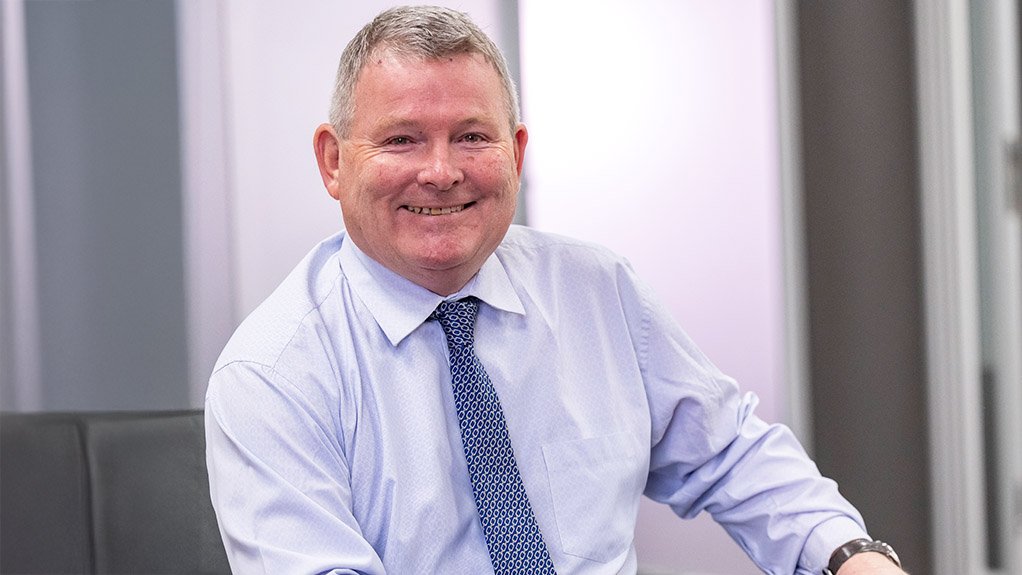


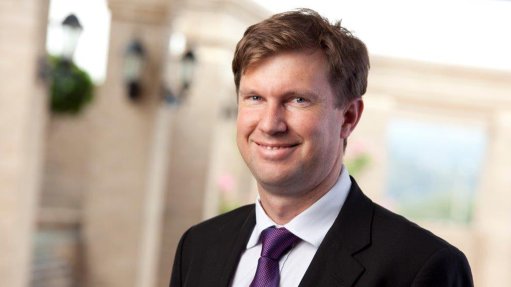
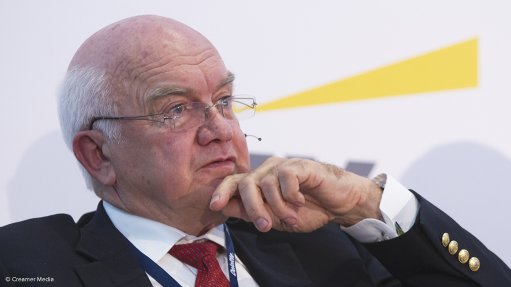
The Minerals Council South Africa has launched its Investment and Growth Strategy to attract further investments in exploration, new mines and existing operations, and thereby grow the sector, create employment and provide job security, said its president Paul Dunne on October 7.
While recent announcements of mine extensions, new mines and feasibility progress towards new mines by member companies were encouraging signals, the bulk of the R70-billion of investments that had been committed and was ready for implementation was to maintain output at current levels, he said.
Despite South Africa's extraordinary mineral endowment, world-class mining expertise and long-established industrial capability, the sector has not performed at a level consistent with that potential.
Production remained below levels achieved more than two decades ago, exploration expenditure had declined by 80% over the past two decades and South Africa attraced less than 1% of global exploration capital despite possessing one of the most attractive geological opportunities in the world, said Dunne.
These figures represent deferred investment, unrealised production, forgone economic activity and employment opportunities that never materialised.
“The green shoots, as indicated by the mine extensions, new mines and progress in feasibility studies, must be nourished with an enabling environment to serve as an open invitation for the world to invest in South African mining.”
The quality of infrastructure, the efficiency of permitting systems, the predictability of regulatory frameworks, the reliability of energy supply and the effectiveness of public institutions were what determined to what degree the conditions necessary for capital-intensive investments existed, he added.
“South Africa's mining challenges are not a function of geology, resource quality or investor interest. We are well positioned to participate in a global economy increasingly shaped by demand for minerals required for industrial development, energy security, advanced manufacturing and technological innovation.
“The most significant constraint is the ability of the broader operating and regulatory environment to convert that opportunity into investment,” said Dunne.
The Investment and Growth Strategy indicates that sustained yearly growth of 3% in the mining sector could add an estimated R65-billion to South Africa's GDP and support between 50 000 and 100 000 additional jobs by 2035.
The strategy aims to establish an evidence-based understanding of the factors constraining mining investment and growth, and identify the interventions most likely to improve the sector's contribution to the South African economy, he said.
“This process identified multiple mining-specific barriers across the investment and operating environment and provided the foundation for what has become one of the most important strategic initiatives undertaken by the Minerals Council in recent years,” he said.
Many of the barriers limiting investment and growth in the mining sector are systemic. During consultations to develop the strategy, infrastructure constraints relating to logistics, electricity and water were consistently raised as key challenges.
There were also concerns raised about crime and illegal mining impacting on competitiveness and increasing operating costs.
Further, junior mining and exploration companies identified a range of obstacles that negatively affect South Africa's ability to attract early-stage investment.
The need for policy and administrative certainty emerged as a recurring theme during engagements with industry stakeholders, Dunne added.
However, many of the constraints affecting mining growth sit beyond the direct control of the Department of Mineral and Petroleum Resources (DMPR).
“This is why the inclusion of the mining sector as one of the three priority sectors of the Government-Business Partnership is a critically important development for the sector,” emphasised Dunne.
Additionally, the government and business partnership also provided a mechanism to align government departments, regulators, State-owned entities and the private sector around a clearly defined set of priorities with measurable and tangible outcomes.
The DMPR and the Minerals Council shared joint accountability to ensure this process delivered the outcomes committed to under the strategy, he added.
The first workstream agreed to with the DMPR was focused on reducing administrative bottlenecks affecting mining projects. The objective was to unlock more than R50-billion in capital expenditure by February 2028.
“This investment pipeline is particularly noteworthy because it demonstrates that substantial investment opportunities already exist. They are opportunities identified within existing company portfolios, including new investments and projects capable of expanding current operations and extending mine lives,” Dunne pointed out.
The second workstream would focus on identifying the industry's competitiveness gaps and developing a clear understanding of the reforms required to strengthen South Africa's position as a mining destination.
Mining jurisdictions increasingly competed on the basis of institutional performance, administrative efficiency and the quality of their investment environment, he added.
The third workstream supported the DMPR’s national implementation of a transparent and efficient national mining cadastre by March 2027, which was considered a fundamental requirement for a competitive exploration environment and mineral rights administration tool.
“South Africa's mineral endowment remains one of our greatest economic advantages.
“Whether that advantage translates into higher investment, stronger exports, improved competitiveness and greater employment will depend less on the quality of the resources themselves than on the effectiveness of the systems that surround them,” said Dunne.
“The Investment and Growth Strategy has provided a clear diagnosis and action plan. The Government-Business Partnership provides the most immediate pathway to implementation.”
Article Enquiry
Email Article
Save Article
Feedback
To advertise email advertising@creamermedia.co.za or click here
Projects
Latest Multimedia

Latest News

Showroom
M and J Mining are leading suppliers of physical support systems as used by the underground mining industry. Our selection of products are not...
VISIT SHOWROOM
Multotec, recognised industry leaders in metallurgy and process engineering help mining houses across the world process minerals more efficiently,...
VISIT SHOWROOM
Announcements
What's On
Subscribe to improve your user experience...
Option 1 (equivalent of R125 a month):
Receive a weekly copy of Creamer Media's Engineering News & Mining Weekly magazine
(print copy for those in South Africa and e-magazine for those outside of South Africa)
Receive daily email newsletters
Access to full search results
Access archive of magazine back copies
Access to Projects in Progress
Access to ONE Research Report of your choice in PDF format
Option 2 (equivalent of R375 a month):
All benefits from Option 1
PLUS
Access to Creamer Media's Research Channel Africa for ALL Research Reports, in PDF format, on various industrial and mining sectors
including Electricity; Water; Energy Transition; Hydrogen; Roads, Rail and Ports; Coal; Gold; Platinum; Battery Metals; etc.
Already a subscriber?
Forgotten your password?
Receive weekly copy of Creamer Media's Engineering News & Mining Weekly magazine (print copy for those in South Africa and e-magazine for those outside of South Africa)
➕
Recieve daily email newsletters
➕
Access to full search results
➕
Access archive of magazine back copies
➕
Access to Projects in Progress
➕
Access to ONE Research Report of your choice in PDF format
RESEARCH CHANNEL AFRICA
R4500 (equivalent of R375 a month)
SUBSCRIBEAll benefits from Option 1
➕
Access to Creamer Media's Research Channel Africa for ALL Research Reports on various industrial and mining sectors, in PDF format, including on:
Electricity
➕
Water
➕
Energy Transition
➕
Hydrogen
➕
Roads, Rail and Ports
➕
Coal
➕
Gold
➕
Platinum
➕
Battery Metals
➕
etc.
Receive all benefits from Option 1 or Option 2 delivered to numerous people at your company
➕
Multiple User names and Passwords for simultaneous log-ins
➕
Intranet integration access to all in your organisation