Latin American countries, some steelmakers argue for US tariff exemptions

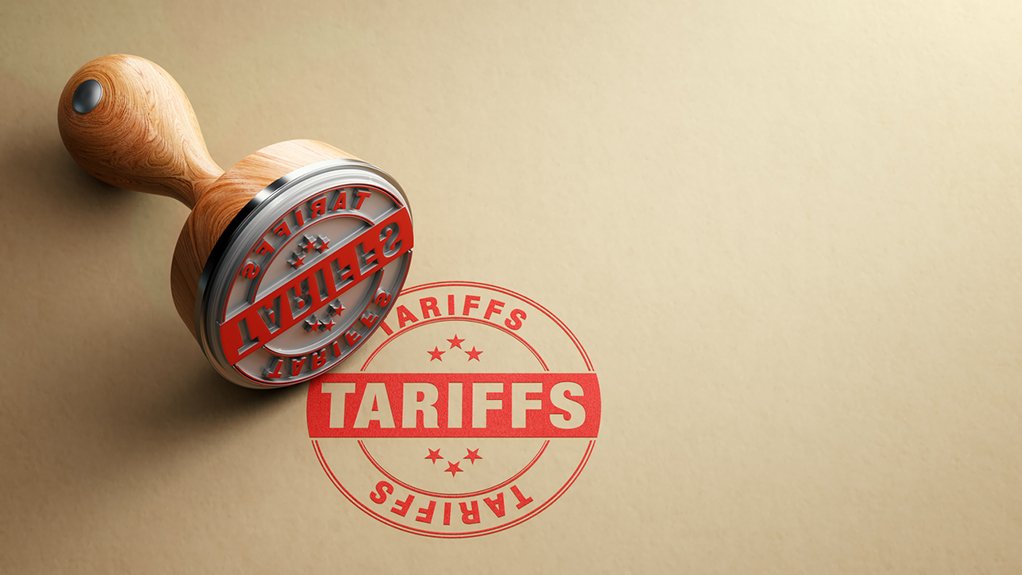


WASHINGTON - Several Latin American countries said on Tuesday they are working to prevent the import of goods produced with forced labor, urging the Trump administration to exempt them from proposed new US tariffs of 10% to 12.5% seeking to punish lax enforcement.
During a public hearing on the US Trade Representative's (USTR's) proposed tariffs on 59 countries and the EU, Ministers and representatives from Mexico, Peru, Guatemala and Ecuador rejected allegations they are failing to enforce laws against forced labor in their supply chains and said that they had laws and processes to combat the problem.
"Mexico has made the fight against forced labor a serious priority," Ernesto Acevedo Fernandez, an undersecretary in Mexico's Economy Ministry, told the hearing, adding an additional 10% tariff would unjustly punish thousands of law-abiding Mexican companies.
USTR's proposal would exempt goods from Mexico that are compliant with the US-Mexico-Canada Agreement on trade.
"The tariffs proposed by the USTR against Mexico are unjustified, since there is no evidence of imports made with forced labor entering the US through Mexico," Acevedo said.
Three days of hearings this week are part of the Trump administration's legal process to impose "Section 301" unfair trade practices duties over alleged failure to enforce import bans on products made with forced labor. USTR says forced labor in foreign supply chains leads to unfair competition for US workers.
But the new duties are widely seen as an effort to replace a 10% temporary tariff imposed in February after the Supreme Court struck down President Donald Trump's broad global tariffs imposed under an emergency law. Those duties are due to expire on July 24.
A group of 22 attorneys general from Democratic states lodged their objections to the forced labor tariffs on Monday, calling them "an attempt to paper over predetermined sweeping tariffs" that are an abuse of the Section 301 authority. Their letter to US Trade Representative Jamieson Greer previewed a potential future court challenge.
Peru's director of trade negotiations Jose Luis Castillo Mezarina requested that Peru be exempted from any tariffs, "since in the Peruvian case no concrete burden on US commerce has been established, nor has the evidentiary standard required under Section 301 been met, and the bilateral trade relationship does not justify a measure of this nature."
A simultaneous hearing on USTR's proposed 25% tariff on goods from Brazil under a separate unfair trade practices investigation concluded on Tuesday, with testimony from Brazilian right-wing Senator Flavio Bolsonaro, the son of former President Jair Bolsonaro who is planning to run in the country's October presidential election.
STEELMAKERS SEEK PIG IRON EXEMPTION
Some steelmakers and trade groups argued at the forced labor hearing for an exemption for imported pig iron, used in steel production from electric arc furnaces.
The raw material, not available for purchase from domestic integrated blast-furnace steel producers US Steel and Cleveland-Cliffs, was exempted from Trump's 50% "Section 232" national security steel tariffs but would be subject to the proposed forced labor tariff, adding costs for producers such as Nucor and Steel Dynamics.
Brandon Farris, executive vice president of the Steel Manufacturers Association, said that without exemptions, tariffs on imported pig iron from Brazil, a major supplier, could rise to 37.5% when combined with the proposed Brazil-specific tariffs, putting the majority of domestic steel production at a competitive disadvantage.
USTR is expected to consider the comments before issuing a final determination on the proposed tariffs and any exemptions.
Article Enquiry
Email Article
Save Article
Feedback
To advertise email advertising@creamermedia.co.za or click here
Projects
Latest Multimedia
Latest News
Showroom

At Airshrink - CiP, we surpass customer expectations with innovative MV and LV cable accessories, including heat shrink joints, terminations,...
VISIT SHOWROOM
Sulzer South Africa, established in 1922, partners with critical industries like power, oil & gas, water, mining, and chemicals to boost...
VISIT SHOWROOM
Announcements
What's On
Subscribe to improve your user experience...
Option 1 (equivalent of R125 a month):
Receive a weekly copy of Creamer Media's Engineering News & Mining Weekly magazine
(print copy for those in South Africa and e-magazine for those outside of South Africa)
Receive daily email newsletters
Access to full search results
Access archive of magazine back copies
Access to Projects in Progress
Access to ONE Research Report of your choice in PDF format
Option 2 (equivalent of R375 a month):
All benefits from Option 1
PLUS
Access to Creamer Media's Research Channel Africa for ALL Research Reports, in PDF format, on various industrial and mining sectors
including Electricity; Water; Energy Transition; Hydrogen; Roads, Rail and Ports; Coal; Gold; Platinum; Battery Metals; etc.
Already a subscriber?
Forgotten your password?
Receive weekly copy of Creamer Media's Engineering News & Mining Weekly magazine (print copy for those in South Africa and e-magazine for those outside of South Africa)
➕
Recieve daily email newsletters
➕
Access to full search results
➕
Access archive of magazine back copies
➕
Access to Projects in Progress
➕
Access to ONE Research Report of your choice in PDF format
RESEARCH CHANNEL AFRICA
R4500 (equivalent of R375 a month)
SUBSCRIBEAll benefits from Option 1
➕
Access to Creamer Media's Research Channel Africa for ALL Research Reports on various industrial and mining sectors, in PDF format, including on:
Electricity
➕
Water
➕
Energy Transition
➕
Hydrogen
➕
Roads, Rail and Ports
➕
Coal
➕
Gold
➕
Platinum
➕
Battery Metals
➕
etc.
Receive all benefits from Option 1 or Option 2 delivered to numerous people at your company
➕
Multiple User names and Passwords for simultaneous log-ins
➕
Intranet integration access to all in your organisation