Investment success hinges on market attractiveness

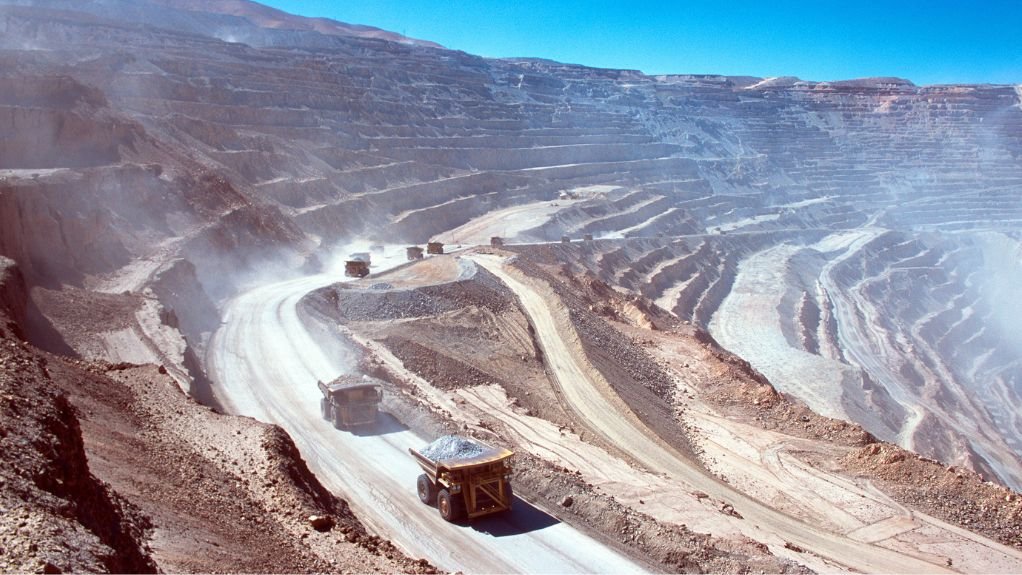

MAJOR ATTRACTION Zimbabwe’s policy to encourage the domestic processing of lithium is expected to influence investment decisions
TANIA MANDAZA Infrastructure remains a major investment requirement, with security of power supply being a major focus area for Zimbabwe’s mining sector



Zimbabwe’s ability to attract and retain mining investment depends on maintaining current economic stability, infrastructure development and access to long-term capital, says financial institution Stanbic Bank Zimbabwe mining and metals VP Tania Mandaza.
While the country’s mineral endowment remains a major attraction for investors, unlocking more value from the sector will require increased investment in processing, infrastructure and power.
Zimbabwe’s lithium export restrictions, intended to encourage domestic processing, are already influencing investor capital allocation, she adds.
Zimbabwe’s policy to encourage the domestic processing of lithium is also expected to influence investment decisions, and the policy “could move the country up the value chain”.
While domestic lithium beneficiation may require higher upfront capital investment for mining projects, the long-term benefits for both the country and investors are expected to far outweigh the initial costs. Increased export earnings, greater value addition, job creation and broader economic development are among the significant advantages that can be realised through local processing and beneficiation.
The lithium export restrictions policy could also encourage consolidation, with smaller mining companies looking to strategic partnerships with bigger operators through toll-processing arrangements, joint ventures or acquisitions.
Financing
From a banking perspective, Mandaza says financing requirements are shifting from being primarily focused on mining operations, towards the wider value chain.
“Stanbic Bank Zimbabwe provides funding for mine development and processing plants, including lithium facilities, ferrochrome smelters and platinum group metals (PGM) refineries. It can also participate in syndicated financing for large projects and provide trade finance, guarantees, letters of credit and working-capital facilities.”
Infrastructure remains another major investment requirement, with security of power supply being a major focus area for the country’s mining sector, adds Mandaza.
“The drive which the government is pushing is the correct one, where it’s asking mining companies to put together their own power solutions; as a bank, we remain available to provide the funding for those solutions as well. We are progressing renewable-energy transactions within the mining sector that will assist with ensuring security of power supply.”
With rail and logistics infrastructure also requiring investment for their revival, Mandaza adds that Stanbic Bank Zimbabwe continues to facilitate funding of public–private partnerships for major infrastructure projects in the country.
The bank is also seeing increased demand for longer-tenor structured project finance, with some mining projects requiring financing for up to seven years. Demand is particularly strong for gold mine expansions, supported by higher gold prices, while requests for financing processing plants are also increasing.
In addition to lithium, she identifies PGMs, gold, chrome and nickel as offering strong investment opportunities, with rare earth elements also representing a longer-term, higher-risk, higher-reward opportunity.
“The PGMs sector offers investment opportunities in mine expansion, processing and smelting, renewable energy and supply-chain financing, while chrome and ferrochrome present beneficiation investment opportunities. Nickel is benefiting from growing demand from electric vehicles and battery markets,” says Mandaza.
Gold is also attracting investor interest, with Zimbabwe’s gold production increasing from 38.5 t in 2024 to 50.5 t in 2025. Gold production of about 55 t is targeted for this year.
“Given where the price of gold is [about $4 000/oz], you find many investors are on the ground looking for gold assets in Zimbabwe,” she says.
Regulatory certainty is another main consideration for investors, says Mandaza.
“Regulatory certainty is often considered [to be] just as important as the quality of the mineral resource and the prevailing commodity prices,” she says, with investors less willing to commit substantial capital where mining rights, taxation, foreign-currency regulations or export policies are unpredictable.
Proposed reforms, including the Mines and Minerals Bill, and a digital mining permit system, are therefore significant in terms of providing that certainty, adds Mandaza.
Environmental, social and governance (ESG) requirements are also increasingly influencing mining finance, with investors assessing green energy, water and tailings management, emissions, community development, local economic participation and governance.
“ESG has become more of a financing requirement than a compliance exercise,” she says.
Meanwhile, investment interest is broadening beyond mining into processing and manufacturing as investors aim to secure critical mineral supply chains, says Mandaza, adding that Chinese investment is expected to remain significant in the country’s lithium sector, while interest from the Middle East, America and India is also emerging.
“Zimbabwe’s long-term opportunity lies in maintaining regulatory certainty, infrastructure, beneficiation, ESG performance and access to capital.”
Ultimately, the country could develop its mineral resources into a broader industrial base, particularly by positioning itself as a hub for battery material production rather than only a supplier of raw materials, she concludes.
Article Enquiry
Email Article
Save Article
Feedback
To advertise email advertising@creamermedia.co.za or click here

Projects
Latest Multimedia
Latest News
Showroom
For over 30 years, Werner South Africa Pumps & Equipment (PTY) LTD has been designing, manufacturing, supplying and maintaining specialist...
VISIT SHOWROOM
Established in 1933, EKATO is the world leader in agitation technology, supplying agitators for processes and applications such as chemicals and...
VISIT SHOWROOM
Press Office
Announcements
What's On
Subscribe to improve your user experience...
Option 1 (equivalent of R125 a month):
Receive a weekly copy of Creamer Media's Engineering News & Mining Weekly magazine
(print copy for those in South Africa and e-magazine for those outside of South Africa)
Receive daily email newsletters
Access to full search results
Access archive of magazine back copies
Access to Projects in Progress
Access to ONE Research Report of your choice in PDF format
Option 2 (equivalent of R375 a month):
All benefits from Option 1
PLUS
Access to Creamer Media's Research Channel Africa for ALL Research Reports, in PDF format, on various industrial and mining sectors
including Electricity; Water; Energy Transition; Hydrogen; Roads, Rail and Ports; Coal; Gold; Platinum; Battery Metals; etc.
Already a subscriber?
Forgotten your password?
Receive weekly copy of Creamer Media's Engineering News & Mining Weekly magazine (print copy for those in South Africa and e-magazine for those outside of South Africa)
➕
Recieve daily email newsletters
➕
Access to full search results
➕
Access archive of magazine back copies
➕
Access to Projects in Progress
➕
Access to ONE Research Report of your choice in PDF format
RESEARCH CHANNEL AFRICA
R4500 (equivalent of R375 a month)
SUBSCRIBEAll benefits from Option 1
➕
Access to Creamer Media's Research Channel Africa for ALL Research Reports on various industrial and mining sectors, in PDF format, including on:
Electricity
➕
Water
➕
Energy Transition
➕
Hydrogen
➕
Roads, Rail and Ports
➕
Coal
➕
Gold
➕
Platinum
➕
Battery Metals
➕
etc.
Receive all benefits from Option 1 or Option 2 delivered to numerous people at your company
➕
Multiple User names and Passwords for simultaneous log-ins
➕
Intranet integration access to all in your organisation