Hindalco aims to kick-start an alumina pricing revolution, columnist says

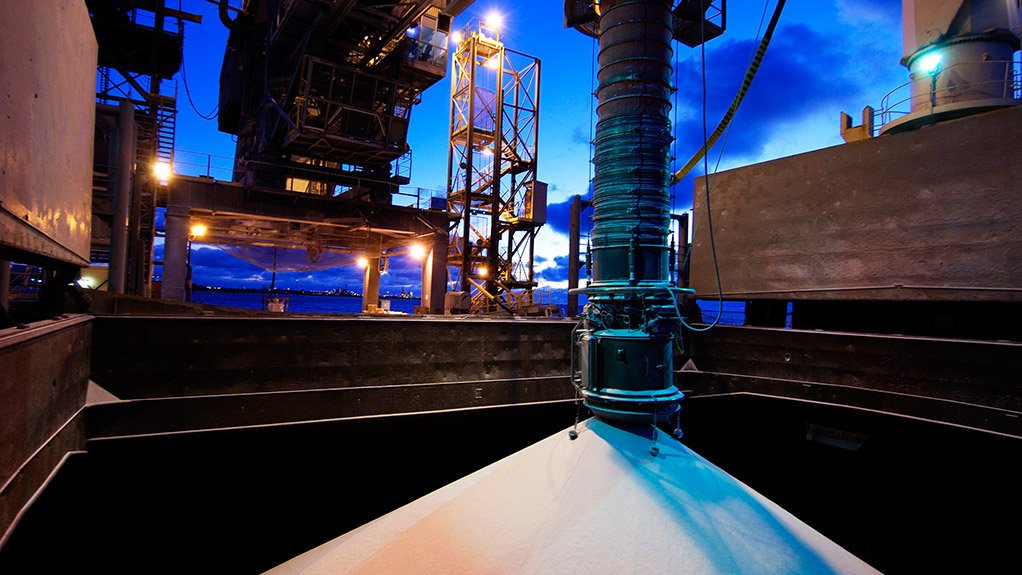


The market for the raw material needed to produce aluminium is both huge and highly opaque despite the best efforts of both exchanges and price reporting agencies.
The London Metal Exchange (LME) launched an alumina contract in 2019 but it hasn't traded since early 2020. The CME's product, trading since 2017, has seen only sporadic activity.
The only liquid alumina futures contract is that traded on the Shanghai Futures Exchange. But it has been prone to bouts of speculative excess and isn't much use to Western operators looking to hedge their price risk.
This is becoming an ever more problematic issue as alumina and aluminium prices follow increasingly divergent paths.
Indian producer Hindalco Industries is leading the industry response with a commitment to channel its spot tenders through digital platform Metalshub.
The aim is to "support greater transparency, broader market participation, and robust price discovery."
The LME will be paying particularly close attention.
PRICING PUZZLE
Until 15 or so years ago, alumina was priced as a percentage of the aluminium price, which made a lot of sense given the mutual market dependency of raw material and finished product.
US producer Alcoa, however, had other ideas and led a charge to break the linkage in favour of prices determined by spot sales. These, it was hoped, would become indices underpinning futures trading.
Both the LME and CME contracts work exactly like that, referencing assessments published by Platts, part of S&P Global.
The problem then, as now, is that there is very little spot business to assess.
Global metallurgical alumina production last year was 146-million metric tons, according to the International Aluminium Institute.
Much of that, though, is vertically integrated with captive smelters. Hindalco reckons only 55-million to 60-million tons are available for third-party trading, and only 10% of that tonnage is sold through the spot market.
Moreover, many traders are loath to disclose their transactions. Indeed, Hindalco itself has kept its tenders highly confidential in the past.
This leaves pricing agencies chasing shadows and the industry reliant on a limited subset of sales for benchmarks used in higher-volume, longer-term contracts.
Hindalco's allocation of tons for digital tendering is precisely what the alumina market has been lacking. The resulting prices will be based on actual transactions rather than voluntarily reported numbers.
JOINING THE DOTS
That, though, is only one component of the potential pricing revolution.
Metalshub has been working with the LME for some time on a similar template to generate transaction-based prices for low-carbon "green" nickel.
It has also been collaborating with LME Insight, part of Commodity Pricing and Analysis (CPAL). The new pricing agency began operations in Dubai at the end of last year.
CPAL is, like the LME itself, owned by Hong Kong Exchanges and Clearing.
There are clearly quite a lot of potential synergies here. Hindalco tenders alumina. The prices are captured by Metalshub and then fed to LME Insight for inclusion in a new alumina price index. The index can then be "futurised" by the LME to relaunch a new-look alumina contract.
It's perhaps telling that Hindalco's press release included comments from not just the head of its alumina business, Saurabh Khedekar, and Metalshub MD Dr Sebastian Kreft, but also Hugo Brodie, the LME's head of sustainability and physical market development.
"The development of independent, transaction-led price references will bring greater pricing transparency and overall market efficiency," according to Brodie.
The LME evidently has a stake in a positive outcome.
DIFFERENT PATHS
Alumina certainly merits a better pricing mechanism, particularly as the gap with aluminium is growing ever wider.
The Iran war has reduced Gulf metal production by an annualised 2-million tons, sending aluminium prices higher.
The flip side is reduced demand for alumina, which is weighing on an already weak market.
But the disconnect was already taking shape last year, reflecting a changing aluminium production landscape.
China's smelter capacity cap was never accompanied by a similar mandate on aluminium refineries, meaning while aluminium production growth has slowed, that of alumina hasn't.
Oversupply has been exacerbated by rapidly rising production in Indonesia, where alumina output is also running ahead of smelter demand.
Guinea's ambition to leverage its bauxite resources into alumina plants adds another layer of disruption to traditional trade flows.
This is a fast-evolving industry that needs both better pricing and a way of hedging price risk.
Between them, Hindalco, Metalshub and the LME think they might have an answer.
Article Enquiry
Email Article
Save Article
Feedback
To advertise email advertising@creamermedia.co.za or click here

Projects
Latest Multimedia
Latest News
Showroom
Roytec Global is an international company specializing in liquid / solid and mineral separation technologies for the Mining and Industrial sectors.
VISIT SHOWROOM
North Ridge Pumps is an independent manufacturer of pumps. We have a proven track record for product support and customer service throughout the...
VISIT SHOWROOM

Press Office
Announcements
What's On
Subscribe to improve your user experience...
Option 1 (equivalent of R125 a month):
Receive a weekly copy of Creamer Media's Engineering News & Mining Weekly magazine
(print copy for those in South Africa and e-magazine for those outside of South Africa)
Receive daily email newsletters
Access to full search results
Access archive of magazine back copies
Access to Projects in Progress
Access to ONE Research Report of your choice in PDF format
Option 2 (equivalent of R375 a month):
All benefits from Option 1
PLUS
Access to Creamer Media's Research Channel Africa for ALL Research Reports, in PDF format, on various industrial and mining sectors
including Electricity; Water; Energy Transition; Hydrogen; Roads, Rail and Ports; Coal; Gold; Platinum; Battery Metals; etc.
Already a subscriber?
Forgotten your password?
Receive weekly copy of Creamer Media's Engineering News & Mining Weekly magazine (print copy for those in South Africa and e-magazine for those outside of South Africa)
➕
Recieve daily email newsletters
➕
Access to full search results
➕
Access archive of magazine back copies
➕
Access to Projects in Progress
➕
Access to ONE Research Report of your choice in PDF format
RESEARCH CHANNEL AFRICA
R4500 (equivalent of R375 a month)
SUBSCRIBEAll benefits from Option 1
➕
Access to Creamer Media's Research Channel Africa for ALL Research Reports on various industrial and mining sectors, in PDF format, including on:
Electricity
➕
Water
➕
Energy Transition
➕
Hydrogen
➕
Roads, Rail and Ports
➕
Coal
➕
Gold
➕
Platinum
➕
Battery Metals
➕
etc.
Receive all benefits from Option 1 or Option 2 delivered to numerous people at your company
➕
Multiple User names and Passwords for simultaneous log-ins
➕
Intranet integration access to all in your organisation