Grid, market reform key for wind

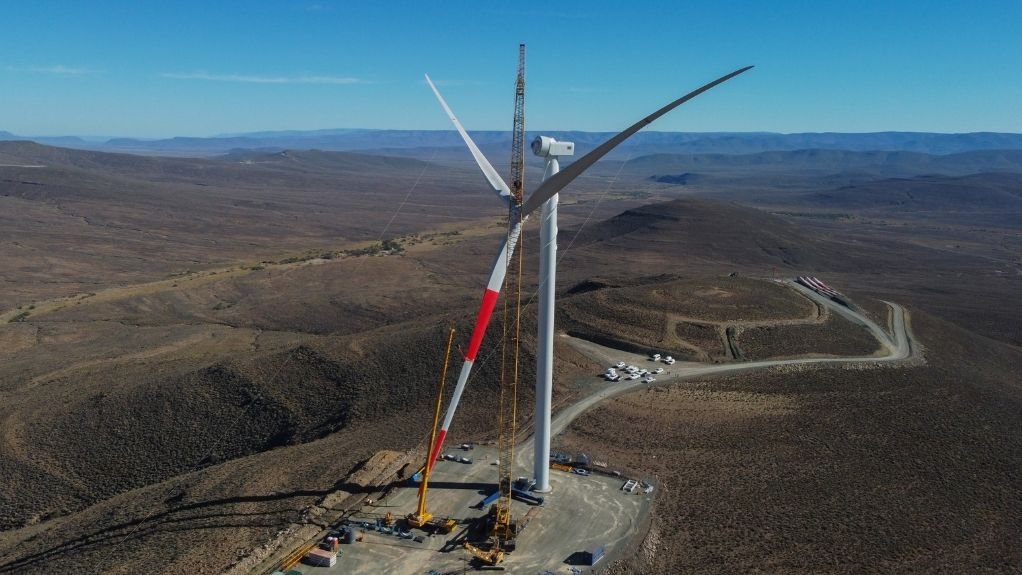

FUTURE OUTLOOK It is believed that standalone wind farms will continue to play a role in new renewable deployments over the next five to ten years
KILIAN HAGEMANN Standalone wind farms will continue to play a role in new renewable deployments over the next five to ten years, at least until the pricing signals for electricity customers change drastically



South Africa's electricity tariff structure, not generation technology, is what will determine how renewable-energy assets get built over the next decade, but for now that structure still favours standalone wind over hybrid plants, says independent power producer (IPP) G7 Renewable Energies CEO Kilian Hagemann.
While co-located wind, solar and battery hybrids are often described as the new default for IPPs, Hagemann pushes back on that framing.
"I wouldn't say that co-located wind, solar and battery hybrids are becoming the new default... we aren't seeing any new projects like this being announced in South Africa and the reasons are clear to me."
Chief among these reasons is the absence of a new procurement window. Building a hybrid plant of this kind, he says, would require a fresh technology agnostic bid round under the Risk Mitigation Independent Power Producer Procurement Programme for dispatchable power, which seems unlikely based on government's current plans.
Another reason is that private offtake market signals are "not pointing that way either" with electricity tariffs continuing to favour pure PV projects on economic grounds, he adds.
The bigger issue, in Hagemann's view, is pairing wind with batteries. Strong wind conditions typically persist for 12 to 48 hours at a time, which means storing the energy and dispatching it during equally long duration requires "large and expensive" batteries.
"It is for these reasons that I believe standalone wind farms will continue to play a role in new renewable deployments over the next five to ten years, at least until the pricing signals for electricity customers change drastically."
Design Approaches
When G7 builds hybrid plants, Hagemann says, the design always starts with the demand profile. He points to a hybrid wind-solar-battery plant that runs no more than two to three hours during the evening and then again during the early morning, noting that it would be completely different in technology mix to a hybrid that is supposed to provide baseload output 24/7, "even if they target the same megawatt output during those respective periods".
Once the generation pattern is set, G7 uses in-house optimisation software to find the most cost-efficient combination of PV, battery energy storage systems (BESS) and wind.
From a day-to-day perspective, Hagemann says that G7 optimises dispatchability using state-of-the-art AI assisted power forecasting and hybrid integration models.
"Where three technologies are present, each with their own unique production characteristics, capabilities and limitations, the decisions around when to charge and discharge the battery, when to curtail renewables and whether it should be the PV or wind system become very complex," he explains.
Ensuring grid code compliance is also more a matter of the wind turbine generator, PV and BESS inverter specifications, states Hagemann. Their individual capabilities determine aspects such as low-voltage ride-through, supply or absorption of sufficient reactive power and, ultimately, whether a hybrid system is grid compliant.
Further, to make up for any shortfalls, additional compensation equipment may be required at the project's substation. This is where detailed grid studies play a crucial role to ensure that the plant fulfils its legal requirements, he emphasises.
Hagemann says that batteries provide the system operator with ancillary services such as fast frequency response (instantaneous reserve), while affording offtakers the flexibility to shift production timing in line with any future shifts in peak tariff windows.
"With a PV- or wind-only plant providing electricity needs, the customer has no choice but to take the financial hit caused by such changes as the underlying production profiles are fixed... with a BESS it's simply a matter of adapting the discharge timings."
Regulatory Gaps
Hagemann says a successful South African Wholesale Electricity Market (SAWEM) that sets real, transparent supply and demand signals could further unlock wind and hybrid projects.
Based on the Draft Market Code published for public participation by the National Energy Regulator of South Africa in June 2025, Hagemann believes that the industry is "quite far down that road", but cites key details yet to be clarified, including vesting contracts and the ultimate split between fixed and variable tariffs.
Even so, it will take time for sellers, buyers and lenders to build familiarity and trust in SAWEM before financing solutions emerge in a liberalised market, he suggests.
Hagemann says the other issue concerns grid capacity applications for projects seeking to sell into SAWEM.
"[State-owned power utility Eskom's] Grid Access Unit currently refuses any application to sell into this day-ahead market, insisting on meter numbers for specific end-customers which do not exist in the SAWEM model."
However, given the delay in fully separating the National Transmission Company of South Africa (NTCSA) from Eskom, both Eskom's generation division and the NTCSA's market operator will continue to report to Eskom Holdings, creating real conflicts of interest as South Africa moves towards a competitive electricity market.
Hagemann says this reinforces the need for NTCSA, with it grid access, to be completely separated from Eskom Holdings, “not only in name but also in full ownership - transmission assets included”.
Article Enquiry
Email Article
Save Article
Feedback
To advertise email advertising@creamermedia.co.za or click here
Research Reports
Projects

Latest Multimedia
Latest News
Showroom

The Beneficiation Academy is a certified training institution that follows all compliance legislation and is accredited with various Sector...
VISIT SHOWROOM
Tsurumi Pumps Africa is a specialist supplier of Japanese-engineered submersible pumping solutions, serving customers across the African continent.
VISIT SHOWROOM


Announcements
What's On
Subscribe to improve your user experience...
Option 1 (equivalent of R125 a month):
Receive a weekly copy of Creamer Media's Engineering News & Mining Weekly magazine
(print copy for those in South Africa and e-magazine for those outside of South Africa)
Receive daily email newsletters
Access to full search results
Access archive of magazine back copies
Access to Projects in Progress
Access to ONE Research Report of your choice in PDF format
Option 2 (equivalent of R375 a month):
All benefits from Option 1
PLUS
Access to Creamer Media's Research Channel Africa for ALL Research Reports, in PDF format, on various industrial and mining sectors
including Electricity; Water; Energy Transition; Hydrogen; Roads, Rail and Ports; Coal; Gold; Platinum; Battery Metals; etc.
Already a subscriber?
Forgotten your password?
Receive weekly copy of Creamer Media's Engineering News & Mining Weekly magazine (print copy for those in South Africa and e-magazine for those outside of South Africa)
➕
Recieve daily email newsletters
➕
Access to full search results
➕
Access archive of magazine back copies
➕
Access to Projects in Progress
➕
Access to ONE Research Report of your choice in PDF format
RESEARCH CHANNEL AFRICA
R4500 (equivalent of R375 a month)
SUBSCRIBEAll benefits from Option 1
➕
Access to Creamer Media's Research Channel Africa for ALL Research Reports on various industrial and mining sectors, in PDF format, including on:
Electricity
➕
Water
➕
Energy Transition
➕
Hydrogen
➕
Roads, Rail and Ports
➕
Coal
➕
Gold
➕
Platinum
➕
Battery Metals
➕
etc.
Receive all benefits from Option 1 or Option 2 delivered to numerous people at your company
➕
Multiple User names and Passwords for simultaneous log-ins
➕
Intranet integration access to all in your organisation