Canadian steelmakers offset some US tariff pain with domestic demand

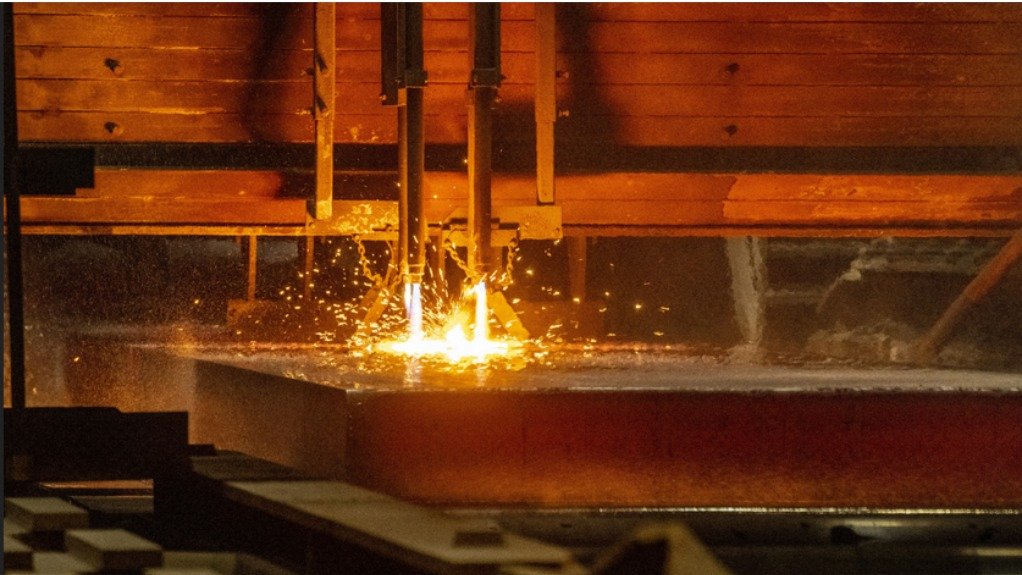


TORONTO - Canada's steel industry, among the sectors hit first and hardest by US President Donald Trump's tariffs, is starting to turn a corner thanks to an uptick in mining, energy and AI data center projects as well as government support, although the impact has not been even across the country.
While Canada is a small producer globally and steel contributes less than 1% to national GDP, it is one sector in which Prime Minister Mark Carney's efforts to make Canada's economy less reliant on the US appear to be having some success, albeit with a heavy dose of government intervention.
Steel companies have been diversifying away from the US and focusing on domestic demand since Trump increased tariffs on imported steel from 25% to 50% in June 2025, steelmakers, analysts and union representatives said.
Canada used to send around 90% of its steel exports to the US, but shipments plummeted by 60% in 2025, according to the Canadian Steel Producers Association. Hundreds of steelworkers have been laid off.
But the share of steel used in Canada that was produced domestically rose to 51% in 2025, up from 41% in 2024, according to United Steelworkers, the sector's main labour union. The import share declined from 59% to 49%. USW calculated the data based on World Steel Data and Canada’s imported steel data, said Guio Jacinto, an economic researcher for the union.
The green shoots are mostly appearing in western Canada, where some large industrial projects including a 1.2 gigawatt data center in Saskatchewan are under construction. Carney said a new oil pipeline to the Pacific Coast would also boost demand for steel.
Canadian steel demand is estimated to have grown around 2.7% in 2025 and is projected to increase by about 0.9% in 2026, according to an OECD report published in July.
"What we are seeing right now is that more Canadian companies are competing for domestic market, which means there is less space for steelmakers from outside," said David Fritz of Alberta-based Supreme Steel, which manufactures fabricated steel.
"I feel optimistic for the outlook of fabricated steel market in Canada, there are enough projects in pipeline to support this industry," Fritz added.
GOVERNMENT INTERVENTION
At a time of excess global capacity, Canadian steel would struggle to compete with lower-cost producers in China and South Korea without import quotas. Canada produces around 13-million tonnes of primary steel annually.
In May, the federal government announced C$1-billion ($700-million) in loans to the steel, aluminum and copper industries as working capital funding to get through the impact of US tariffs. The government extended a cap on foreign steel coming into the country, known as tariff rate quota, to address the issue of foreign steel dumping.
Canada's adaptation to Trump's tariffs has been closely watched internationally, as Carney is one of the few global leaders to retaliate against US tariffs despite his country’s overwhelming economic dependence on the US.
The prime minister also threatened legal action against US steel producer Cleveland-Cliffs over plans to cut hundreds of jobs at its Hamilton, Ontario, facility.
Cleveland-Cliffs, which acquired Canada's Stelco in 2024, said in its second-quarter earnings there was steep international competition for the galvanized steel produced at the Hamilton plant, but the market for its specific hot-rolled steel produced elsewhere in Canada contributed to improved guidance for the second half of 2026.
Cleveland-Cliffs will report quarterly results on October 19, potentially giving a clearer picture of the future of its Canadian operations.
DOMESTIC MARKET PIVOT
Luxembourg-headquartered Tenaris, which manufactures steel pipes for energy companies at its Sault Ste Marie, Ontario, facility, said it recently invested C$306-million to expand production of its Canadian-made products for Canadian customers.
"This strengthens Tenaris’s commitment to produce in Canada what Canada’s oil and gas industry needs. As a result, the company's exposure to the United States tariffs is limited," said Martín Castro, president of Tenaris in Canada, in an email.
The largest Canadian steel producer, Algoma, said in December it would lay off 1 000 workers in Ontario – accounting for nearly all of the sector layoffs nationally since tariffs were imposed. But the company’s CEO recently touted the strengthening domestic market, citing growing infrastructure, construction and defence demand for its discrete steel plate.
“While the 50% US Section 232 tariffs continue to effectively foreclose our traditional access to the US market, our pivot to a Canada-centric, plate-first strategy is working," CEO Rajat Marwah said on an earnings call in July.
Marty Warren, head of the Canadian branch of the USW, said there has been a turnaround in the industry but a bigger revival would require replacing even more imported steel with domestic production. The union also wants Canada to tighten the quota on imported steel and put tariffs on steel used in the US auto and aviation industries, which are currently exempt from broader retaliatory tariffs by Canada.
Canada's finance ministry said the steel sector remained exposed to tariffs and the government was encouraging investment through a number of policies, such as buying Canadian steel for infrastructure projects.
"This is evidenced by the domestic demand cycle we are enabling through the Buy Canadian policy and more generally the government’s growth agenda which will require Canadian steel and workers,” the ministry said in an emailed statement.
Article Enquiry
Email Article
Save Article
Feedback
To advertise email advertising@creamermedia.co.za or click here
Research Reports

Projects

Latest Multimedia

Latest News
Showroom
We are responsible manufacturers of essential components. Manufacturing 80 million parts a week, we have over 1 billion parts in stock.
VISIT SHOWROOM
Goodwin Submersible Pumps Africa is sole distributors for Goodwin electrically driven, submersible, abrasion resistance slurry pumps.
VISIT SHOWROOM


Announcements
What's On
Subscribe to improve your user experience...
Option 1 (equivalent of R125 a month):
Receive a weekly copy of Creamer Media's Engineering News & Mining Weekly magazine
(print copy for those in South Africa and e-magazine for those outside of South Africa)
Receive daily email newsletters
Access to full search results
Access archive of magazine back copies
Access to Projects in Progress
Access to ONE Research Report of your choice in PDF format
Option 2 (equivalent of R375 a month):
All benefits from Option 1
PLUS
Access to Creamer Media's Research Channel Africa for ALL Research Reports, in PDF format, on various industrial and mining sectors
including Electricity; Water; Energy Transition; Hydrogen; Roads, Rail and Ports; Coal; Gold; Platinum; Battery Metals; etc.
Already a subscriber?
Forgotten your password?
Receive weekly copy of Creamer Media's Engineering News & Mining Weekly magazine (print copy for those in South Africa and e-magazine for those outside of South Africa)
➕
Recieve daily email newsletters
➕
Access to full search results
➕
Access archive of magazine back copies
➕
Access to Projects in Progress
➕
Access to ONE Research Report of your choice in PDF format
RESEARCH CHANNEL AFRICA
R4500 (equivalent of R375 a month)
SUBSCRIBEAll benefits from Option 1
➕
Access to Creamer Media's Research Channel Africa for ALL Research Reports on various industrial and mining sectors, in PDF format, including on:
Electricity
➕
Water
➕
Energy Transition
➕
Hydrogen
➕
Roads, Rail and Ports
➕
Coal
➕
Gold
➕
Platinum
➕
Battery Metals
➕
etc.
Receive all benefits from Option 1 or Option 2 delivered to numerous people at your company
➕
Multiple User names and Passwords for simultaneous log-ins
➕
Intranet integration access to all in your organisation