Green industrialisation hinges on demand, infrastructure, skills and investment




South Africa’s transition to a lower-carbon economy could create significant opportunities for local manufacturing, but unlocking these opportunities will require predictable demand, suitable industrial infrastructure, access to finance and the development of relevant skills.
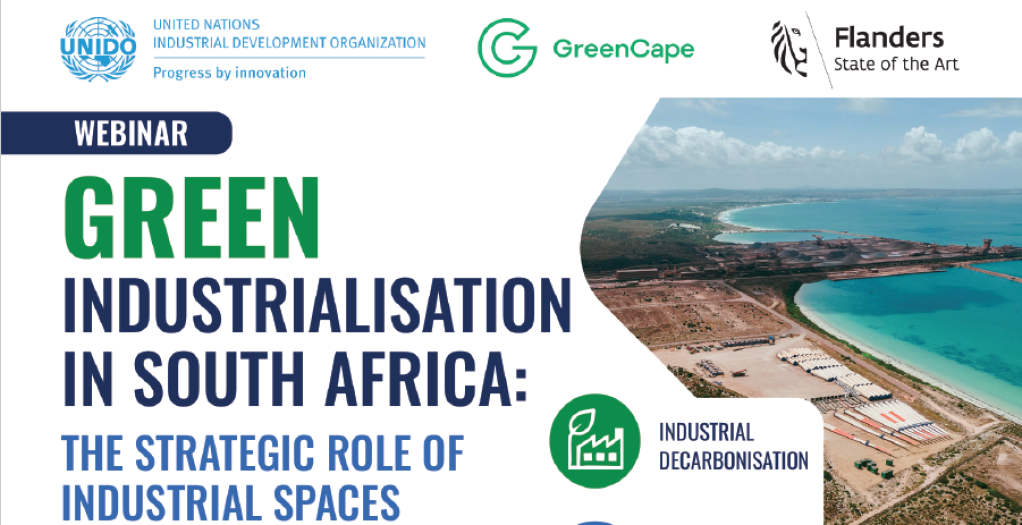
This was the key message highlighted by speakers during a webinar hosted by Creamer Media on behalf of specialised international agency the UN Industrial Development Organisation (UNIDO) and nonprofit company (NPC) GreenCape on green industrialisation and the strategic role of industrial spaces, held on September 22.
The webinar participants included Department of Trade, Industry and Competition (dtic) Green Industries chief director Gerhard Fourie, GreenCape CEO Mike Mulcahy, Department of Electricity and Energy (DEE) renewable-energy director Noma Qase, GreenCape Energy programme leader and climate finance lead Jack Radmore, UNIDO sustainable energy expert Rouba Onaissi, dtic Special Economic Zones (SEZs) acting chief director Shaun Moses, World Bank senior energy specialist Dominic Milazi, National Cleaner Production Centre South Africa (NCPC-SA) director Ndivhuho Raphulu, Manufacturing Circle South Africa executive director Philippa Rodseth and UNIDO programme manager Karin Reiss-Haimbala.
In his opening remarks, Fourie said the energy transition should be viewed as an industrial policy opportunity rather than an environmental programme only.
He added that predictable demand was essential to encourage manufacturers to invest, with demand creating a market, investment creating scale and scale building supply.
“What is more important is what we manufacture, what we import, what we export, where investments take place and what industrial capabilities we are going to build in South Africa in the next 20 to 30 years,” he said.
Mulcahy highlighted that GreenCape was currently focused on commercially viable opportunities within the green economy, including improving the efficiency and competitiveness of existing manufacturing, while also identifying new products that South Africa could manufacture for the future economy.
“Cost effective inputs through all the resources, [including] water, energy and raw materials, is the primary driver for competitiveness in the industrial space,” he said.
Mulcahy pointed to opportunities in cables, transformers, mounting structures, electric buses and minibuses, batteries and battery-control systems.
Meanwhile, Qase noted that the South African Renewable Energy Masterplan (SAREM), approved by Cabinet in March 2025, provided a framework for developing the renewable-energy components manufacturing sector.
The plan focuses on supporting demand, driving industrial development, fostering inclusive development and building capabilities, with localisation and skills development forming important elements of its implementation.
“We have already launched a very successful PowerUp platform which was developed with support from GreenCape and is currently being implemented and hosted by the energy and water sectors in South Africa where we are looking at matchmaking and allowing a demand-led skills curriculum,” Qase highlighted.
Meanwhile, Radmore noted that South Africa had opportunities to manufacture several components required for the renewable energy build programme.
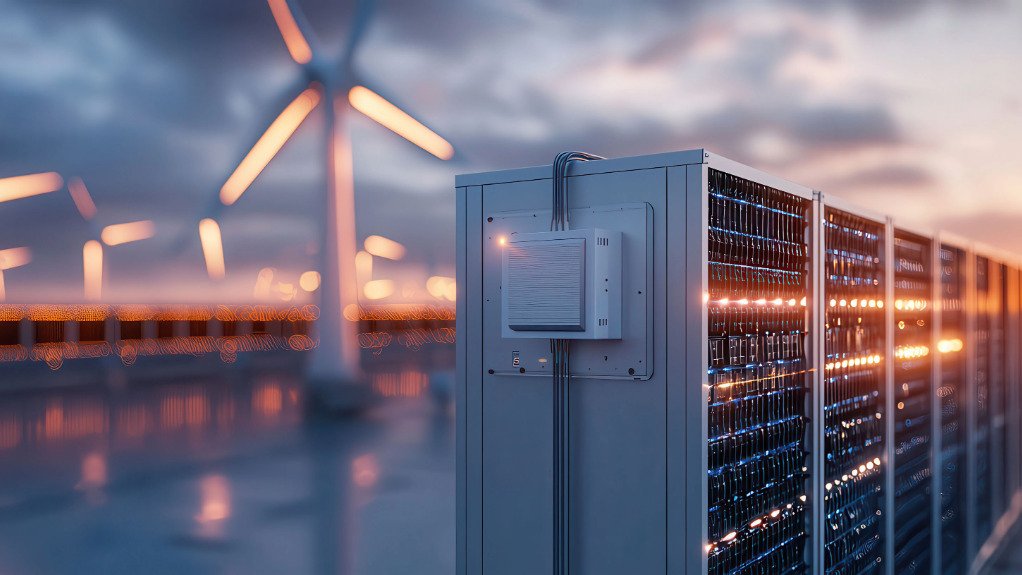
These included solar PV mounting and tracking structures, transformers, value-added mineral products, wind tower components, medium-voltage cabling, battery management systems and energy management systems.
“There are a number of manufacturing opportunities that exist in South Africa, where we can clearly manufacture these components at a competitive level and actually sell them into projects in South Africa and across Africa,” he said.
From a UNIDO point of view, Onaissi explained that the energy transition should be viewed as an opportunity to create industrial growth, particularly in developing economies.
“The question here is how the energy transition could become not just a climate agenda, but also an opportunity for industrial growth,” she said.
Onaissi also outlined the potential role of sustainable industrialisation hubs, which can concentrate energy demand, infrastructure and services while helping reduce costs and strengthen industrial competitiveness.
SEZs could play an important role in creating the industrial ecosystems required for green manufacturing, and Moses noted that the dtic’s spatial industrial development strategy sought to position SEZs as more than incentive platforms by combining infrastructure, logistics, skills and regulatory support in strategic locations.
“We need to sharpen the proposition of SEZs and, from my perspective, I’m also encouraging stakeholders to engage with the dtic to see how we can best put forward the value proposition to mobilise green industrialisation,” Moses said.
South Africa has 13 designated SEZs, although the current tax incentives apply to six of them. The incentives include a 15% corporate tax rate, building allowances and customs control areas.
He added that such a package could combine SEZ incentives with infrastructure and industrial finance, while the department was working with the Industrial Development Corporation of South Africa and the Development Bank of Southern Africa on financing energy security and decarbonisation projects.
Additionally, Milazi highlighted that financing would need to be tailored to the individual requirements and risk profile of projects.
He said a combination of concessional finance, commercial debt guarantees, insurance and refinancing could be used at different stages of project development.
“There isn't a one-size-fits-all answer to this and you have to understand what your specific project needs are,” Milazi noted.
He said the World Bank, together with the DEE, was preparing a national industrial development plan that could potentially deploy $250-million in concessional finance, in partnership with three multilateral development banks, towards decarbonisation projects in hard-to-abate sectors.
Sharing the NCPC-SA’s perspective, Raphulu said manufacturers’ readiness to transition varied considerably according to sector, company size and market exposure.
He also noted that export-oriented companies faced stronger incentives to decarbonise owing to international market requirements, while locally focused companies could face less immediate pressure.
“The experience we have varies from one sector to the other but it is also influenced by the size of the company or industry,” Raphulu said.
He highlighted that the NCPC-SA was, therefore, focused on building technical capacity, developing tools and advisory services and using practical pilot projects to help industry make the transition.
Moreover, Rodseth said South Africa already had manufacturing capabilities in areas such as transformers and conductors, but these were not being used at maximum capacity.
She added that the immediate priority was to create sufficient demand through the execution of transmission and renewable energy build programmes.
“If there is not demand-led offtake for [green industrialisation] projects it becomes difficult to make the various requirements or be able to make the arguments in terms of addressing the funding requirements,” Rodseth added.
She said strategic procurement and offtake arrangements would be needed to unlock local manufacturing and give companies sufficient visibility to justify investment.
Rodseth also stressed that decarbonisation was becoming a business imperative for maintaining industrial competitiveness, particularly in hard-to-abate sectors such as steel.
Reiss-Haimbala concluded the webinar by noting that South Africa’s energy transition represented a major industrialisation opportunity, with the growth of renewable energy, battery storage and green hydrogen creating new markets and value chains.
She also noted that industrial spaces could help address constraints such as energy reliability, infrastructure gaps and access to finance by bringing together industrial demand, infrastructure and energy solutions, while also supporting new clean technology industries.
“The opportunities we heard from the discussion today are not going to materialise automatically. They really require strong policy frameworks, access to finance, technology, intentional investment in workforce.
“We always hear how important skills are, but for industry, it’s really an intentional investment in the workforce development, which is critical, together with obviously effective partnerships between government, industry, financiers [and] development partners,” she said.
Article Enquiry
Email Article
Save Article
Feedback
To advertise email advertising@creamermedia.co.za or click here
Research Reports
Projects

Latest Multimedia
Latest News
Showroom

As a reticulator, Egoli Gas provides natural gas to homes and businesses via underground pipes.
VISIT SHOWROOM
Virtual Gas Network supplies compressed natural gas via a virtual gas distribution network.
VISIT SHOWROOM

Announcements
What's On
Subscribe to improve your user experience...
Option 1 (equivalent of R125 a month):
Receive a weekly copy of Creamer Media's Engineering News & Mining Weekly magazine
(print copy for those in South Africa and e-magazine for those outside of South Africa)
Receive daily email newsletters
Access to full search results
Access archive of magazine back copies
Access to Projects in Progress
Access to ONE Research Report of your choice in PDF format
Option 2 (equivalent of R375 a month):
All benefits from Option 1
PLUS
Access to Creamer Media's Research Channel Africa for ALL Research Reports, in PDF format, on various industrial and mining sectors
including Electricity; Water; Energy Transition; Hydrogen; Roads, Rail and Ports; Coal; Gold; Platinum; Battery Metals; etc.
Already a subscriber?
Forgotten your password?
Receive weekly copy of Creamer Media's Engineering News & Mining Weekly magazine (print copy for those in South Africa and e-magazine for those outside of South Africa)
➕
Recieve daily email newsletters
➕
Access to full search results
➕
Access archive of magazine back copies
➕
Access to Projects in Progress
➕
Access to ONE Research Report of your choice in PDF format
RESEARCH CHANNEL AFRICA
R4500 (equivalent of R375 a month)
SUBSCRIBEAll benefits from Option 1
➕
Access to Creamer Media's Research Channel Africa for ALL Research Reports on various industrial and mining sectors, in PDF format, including on:
Electricity
➕
Water
➕
Energy Transition
➕
Hydrogen
➕
Roads, Rail and Ports
➕
Coal
➕
Gold
➕
Platinum
➕
Battery Metals
➕
etc.
Receive all benefits from Option 1 or Option 2 delivered to numerous people at your company
➕
Multiple User names and Passwords for simultaneous log-ins
➕
Intranet integration access to all in your organisation