Green financing, mining must cohere better to drive sustainability

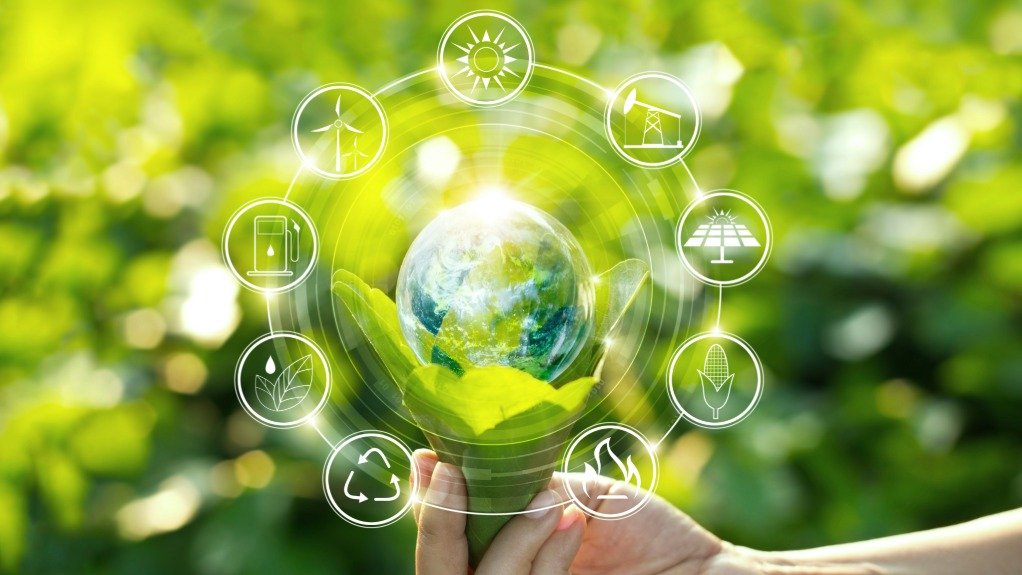
GREEN PRACTICES Aligned with global trends towards integrating more sustainable practices and supporting the transition to clean energy, green mining and green finances are gaining traction



With financial institutions increasingly becoming a key promoter of enhanced environmental performance in the mining sector, tertiary education institution University of Pretoria engineering and technology management associate professor Morteza Bagherpour says “green mining” and “green financing” can no longer be treated as separate domains, but could evolve in tandem.
Aligning with global trends towards integrating more sustainable practices and supporting the transition to clean energy, he says green financing is gaining traction, with green bonds and sustainability-linked loans growing rapidly.
In some instances, Bagherpour says, “potential financial institutions perhaps exert greater influence than regulators” through their capacity to shape investment decisions across multiple projects. As a result, sustainability practices are likely to become baseline requirements rather than differentiators in the next five to ten years.
In the near term, mining companies that are early adopters of green financing can gain a competitive advantage through better access to capital, premium offtake agreements for low-carbon minerals and faster permitting as a result of their stronger environmental performance.
Early adopter companies can also benefit from stronger sustainability capabilities, established reputations and more resilient market positioning, he says.
These influences and opportunities underscore the urgent need for robust sustainability frameworks and clear standards, says Bagherpour.
In support of this, green mining is a holistic approach that integrates environmental stewardship, resource efficiency, social responsibility and economic sustainability across the entire mine life-cycle, from exploration through to post-closure rehabilitation.
Operationally, he says this entails reducing greenhouse-gas emissions, optimising energy and water use, preventing pollution, reducing waste and managing land and biodiversity, responsibly. Green mining also applies circular economy principles, such as reprocessing historical tailings, recovering minerals from waste rock, recycling water and enhancing resource recovery to reduce reliance on virgin materials.
Green Mining
From a systems perspective, Bagherpour says green mining aligns with industrial ecology by treating mining operations as an integrated system whose material, energy and water flows are optimised as opposed to a linear process ending in disposal.
These processes enable the use of quantitative performance indicators, such as carbon emissions, water intensity, energy efficiency, waste generation and land disturbance, to support informed decision-making, he notes.
“While mining can never be entirely impact-free, the objective of green mining is to minimise environmental and social impacts while maximising resource efficiency, economic value and long-term sustainability,” says Bagherpour, emphasising that sustainability considerations must be embedded in mine planning and feasibility studies from the outset.
However, while mining companies are integrating more sustainable practices and targets in their operations, he says they seemingly remain underrepresented in green financing markets.
Bagherpour explains that while many green finance frameworks require clearly defined use of funds, mining investments can become difficult to classify even when cleaner technologies are adopted, resulting in a mismatch between sustainable finance criteria and mining investments.
Further, investors may consider the mining sector as medium-to-high risk owing to commodity price volatility, long project timelines and environmental liabilities, while in many emerging markets, limited environmental, social and governance (ESG) reporting capacity and insufficient third-party verification reduce investor confidence, he says.
On the topic of ESG reporting, Bagherpour points out that ESG rating agencies frequently appear to disagree substantially when assessing the same company. The resulting variety of ESG ratings reflect differences in methodology and what agencies choose to measure, rather than a consistent picture of a company’s actual sustainability performance, he explains.
In practice, Bagherpour says ESG scores often reward the existence of policies, committees and management systems, which are easier to verify, as opposed to demonstratable outcomes, such as reduced water consumption, improved biodiversity or successful land rehabilitation.
Aligning Green Mining with Green Finance
Given the potential reporting misalignment between the mining industry and financial institutions, Bagherpour explains that financial institutions may need to improve green financing structures to ensure that they can drive a more sustainable mining industry.
In particular, he says financial institutions could adopt clear standards, robust key performance indicators (KPIs) and consistent measurement frameworks, thereby improving the efficiency and credibility of green mining finance.
Financial institutions could also give greater weight to measurable environmental outcomes and improvement trends, with sustainability data subject to independent verification rather than relying solely on company policies and disclosures.
Meanwhile, given that sustainability-linked financing ties interest rates to ESG performance targets, Bagherpour encourages mining companies to carefully select KPIs to ensure they are effective.
Aligned to this, he says KPIs should address significant environmental and social impacts as opposed to focusing solely on improving disclosure.
Targets should be “ambitious and benchmarked against external standards”.
Article Enquiry
Email Article
Save Article
Feedback
To advertise email advertising@creamermedia.co.za or click here
Research Reports
Latest Multimedia
Latest News
Showroom
Axiom Hydraulics is a trusted leader in South Africa’s hydraulic industry, delivering world-class components, systems, and engineering expertise...
VISIT SHOWROOM
Press Office
Announcements
What's On
Subscribe to improve your user experience...
Option 1 (equivalent of R125 a month):
Receive a weekly copy of Creamer Media's Engineering News & Mining Weekly magazine
(print copy for those in South Africa and e-magazine for those outside of South Africa)
Receive daily email newsletters
Access to full search results
Access archive of magazine back copies
Access to Projects in Progress
Access to ONE Research Report of your choice in PDF format
Option 2 (equivalent of R375 a month):
All benefits from Option 1
PLUS
Access to Creamer Media's Research Channel Africa for ALL Research Reports, in PDF format, on various industrial and mining sectors
including Electricity; Water; Energy Transition; Hydrogen; Roads, Rail and Ports; Coal; Gold; Platinum; Battery Metals; etc.
Already a subscriber?
Forgotten your password?
Receive weekly copy of Creamer Media's Engineering News & Mining Weekly magazine (print copy for those in South Africa and e-magazine for those outside of South Africa)
➕
Recieve daily email newsletters
➕
Access to full search results
➕
Access archive of magazine back copies
➕
Access to Projects in Progress
➕
Access to ONE Research Report of your choice in PDF format
RESEARCH CHANNEL AFRICA
R4500 (equivalent of R375 a month)
SUBSCRIBEAll benefits from Option 1
➕
Access to Creamer Media's Research Channel Africa for ALL Research Reports on various industrial and mining sectors, in PDF format, including on:
Electricity
➕
Water
➕
Energy Transition
➕
Hydrogen
➕
Roads, Rail and Ports
➕
Coal
➕
Gold
➕
Platinum
➕
Battery Metals
➕
etc.
Receive all benefits from Option 1 or Option 2 delivered to numerous people at your company
➕
Multiple User names and Passwords for simultaneous log-ins
➕
Intranet integration access to all in your organisation