Aluminium's calm belies lingering supply-chain stress, Reuters column says

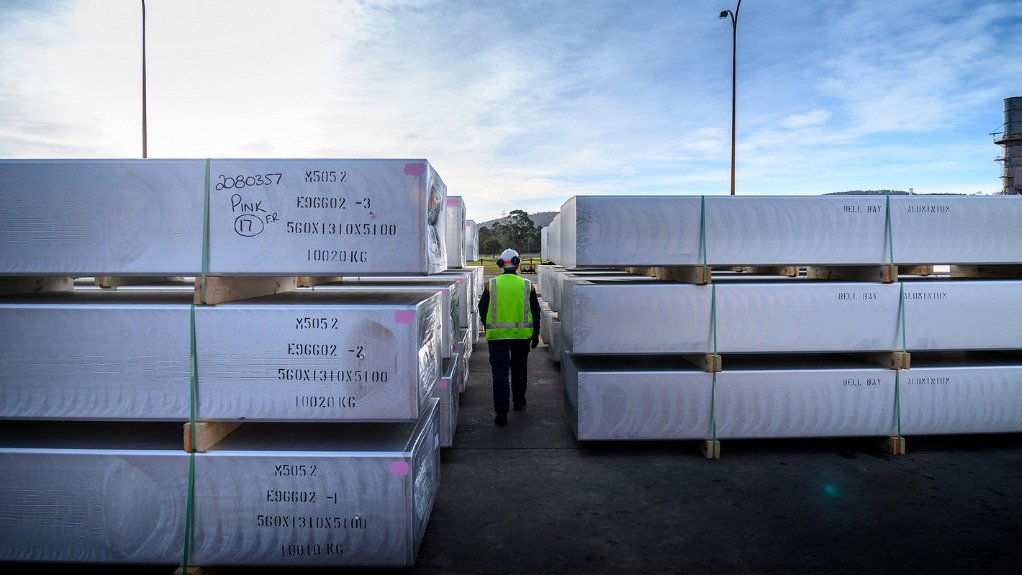


LONDON - Iranian missile attacks on Gulf smelters and the blocking of the Strait of Hormuz have knocked out almost 3-million metric tons of aluminium production capacity. Yet, eight months on, the market is seemingly unconcerned.
Indeed, London Metal Exchange (LME) three-month aluminium is now trading just above $3 000 a ton, which is where it was in early February before the US and Israel unleashed Operation Epic Fury against Iran.
Traders are betting that a combination of rising output in Indonesia and higher product exports from China can tide things over until the Gulf smelters are repaired and shipping fully resumes in the Strait of Hormuz.
The surface calm, however, masks lingering stress in a physical supply chain that is still reeling from the unprecedented disruption.
PLUGGING THE GAPS
Gulf production of primary aluminium slumped by an annualized 2.8-million tons between February and May, according to the International Aluminium Institute.
The collapse reflected the forced shutdown of Emirates Global Aluminium's Al-Taweelah smelter and damage to Aluminium Bahrain's facility, as well as logistics problems at other Gulf operators.
Regional production has since been creeping higher as both plants undergo repairs and ramp production back up, but the August run-rate of 3.5-million tons annualised was still 2.6-million tons below pre-hostility levels.
China and Indonesia have stepped in to plug the gap.
China's exports of primary metal are constrained by a hefty 30% export duty, but outbound volumes of alloy doubled year-on-year to 349 000 tons in the January to August period.
Exports of semi-finished products such as aluminium plate, sheet and strip surged by 774 000 tons to 4.46-million tons over the same period.
Indonesia's new Chinese-owned smelters are also ramping up at speed. The country exported 114 000 tons of primary metal in July, a fresh monthly record.
Around half of last year's Indonesian aluminium exports went to China but shipments since the Iran war have been dispersed across Asia, Europe and even the US.
PHYSICAL STRESS
Improved availability in Asia has caused physical premiums to ease from their June highs.
Japanese buyers have negotiated a fourth-quarter delivery premium of $255 a ton over the LME cash price, which marks a 35% decline from the previous quarter.
However, that's still higher than the $200-a-ton premium that was trading at the start of the Iran war, attesting to continued tension even in this relatively well-supplied part of the market.
European buyers are paying significantly more for their physical metal.
The CME European duty-paid premium EPDc1 is trading at $559 a ton over LME cash, double the level at the end of February.
US buyers, of course, are paying more than anyone else for their aluminium with the US Midwest premium trading at an elevated $2 312 a ton over LME cash, though this is as much about President Donald Trump's 50% import tariffs as anything else.
LOW INVENTORY
Elevated premiums are sucking available metal into the physical supply chain, leaving LME stocks at multi-year lows.
Registered inventory of 238 625 tons is the lowest level this century. Most of what remains is Russian metal, which reduces its appeal to most Western buyers.
LME off-warrant inventory has also been steadily shrinking since February and now totals just 73 509 tons, which is the lowest reading since the LME introduced this category of stocks reporting in 2020.
Time-spreads have eased considerably since June, when the cash premium over three-month metal jumped to over $100 a ton.
But there is lingering tightness in the front part of the curve. After a period of mild contango, cash has just returned to a small premium over three-month metal again.
Time-spread tension is likely to remain a feature of the London market as long as physical premiums remain so high.
The aluminium market has proved highly resilient to the sudden loss of so much production, but the stress lines are still there beneath the calm surface.
Article Enquiry
Email Article
Save Article
Feedback
To advertise email advertising@creamermedia.co.za or click here
Research Reports
Latest Multimedia
Latest News


Showroom
The Steel Tube Export Association of South Africa was established to develop sustainable, internationally competitive carbon steel tube and pipe...
VISIT SHOWROOM
At Airshrink - CiP, we surpass customer expectations with innovative MV and LV cable accessories, including heat shrink joints, terminations,...
VISIT SHOWROOM

Press Office
Announcements
What's On
Subscribe to improve your user experience...
Option 1 (equivalent of R125 a month):
Receive a weekly copy of Creamer Media's Engineering News & Mining Weekly magazine
(print copy for those in South Africa and e-magazine for those outside of South Africa)
Receive daily email newsletters
Access to full search results
Access archive of magazine back copies
Access to Projects in Progress
Access to ONE Research Report of your choice in PDF format
Option 2 (equivalent of R375 a month):
All benefits from Option 1
PLUS
Access to Creamer Media's Research Channel Africa for ALL Research Reports, in PDF format, on various industrial and mining sectors
including Electricity; Water; Energy Transition; Hydrogen; Roads, Rail and Ports; Coal; Gold; Platinum; Battery Metals; etc.
Already a subscriber?
Forgotten your password?
Receive weekly copy of Creamer Media's Engineering News & Mining Weekly magazine (print copy for those in South Africa and e-magazine for those outside of South Africa)
➕
Recieve daily email newsletters
➕
Access to full search results
➕
Access archive of magazine back copies
➕
Access to Projects in Progress
➕
Access to ONE Research Report of your choice in PDF format
RESEARCH CHANNEL AFRICA
R4500 (equivalent of R375 a month)
SUBSCRIBEAll benefits from Option 1
➕
Access to Creamer Media's Research Channel Africa for ALL Research Reports on various industrial and mining sectors, in PDF format, including on:
Electricity
➕
Water
➕
Energy Transition
➕
Hydrogen
➕
Roads, Rail and Ports
➕
Coal
➕
Gold
➕
Platinum
➕
Battery Metals
➕
etc.
Receive all benefits from Option 1 or Option 2 delivered to numerous people at your company
➕
Multiple User names and Passwords for simultaneous log-ins
➕
Intranet integration access to all in your organisation