Green building shift progressing slowly – association

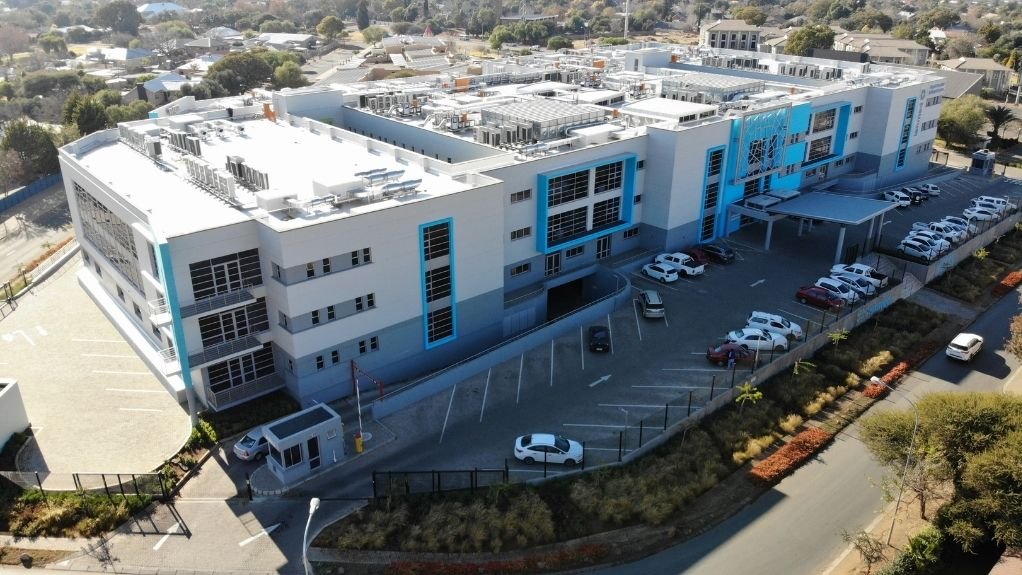

LINKING OUTCOMES SAIA says that a genuinely mission-oriented approach to green building would deliberately link decarbonisation targets to local manufacturing, skills development and job creation
PETA DE JAGER Energy insecurity has made resilience a direct financial variable, as buildings that can operate independently of grid instability are simply lower-risk assets




The local commercial and industrial property sector is being shaped by energy insecurity and water stress, as well as rising environmental, social and governance expectations from tenants and financiers. The result is a fundamental shift in the way green building is approached, says association of architectural professionals the South African Association of Architects (SAIA).
Green building is moving from a “compliance afterthought” to a design-first principle, but the pace of the shift depends on whether sustainability is treated as a cost to be minimised or an industry-wide goal to be pursued collectively, says SAIA.
“The built environment sector is at its best when green transition targets function like a mission: a clear, measurable, cross-sectoral goal that pulls architects, engineers, developers, financiers and regulators in a shared direction,” says SAIA CEO Peta de Jager.
She believes that the association’s role is to help set the pathway – from the establishment of practice standards and continuing professional development programmes to advocacy on building regulations and ensuring that architects are equipped to lead early- stage design decisions to lock in real efficiency gains.
Rather than policing compliance, SAIA is focused on enabling those serving in the profession. Therefore, SAIA regards its function less as gatekeeping than as supporting the profession, which helps to create the conditions, skills and standards that “make ambitious green design the default, not the exception”.
De Jager adds that a genuinely mission- oriented approach to green building would deliberately link environmental goals to socioeconomic outcomes, rather than treating them as separate policy silos – thereby linking environmental goals to socioeconomic outcomes.
“Architects, contractors, developers and government all have a role in ensuring that the value created by the green transition is shared broadly across the economy.”
Efficiency and Smart Integration
From a design perspective, De Jager says the biggest opportunities are at the concept stage – building orientation, passive solar design, natural ventilation, material selection and water-sensitive site design – as these decisions determine 60% to 80% of a building's lifetime performance.
Retrofitting improves efficiency, but it is reactive rather than proactive.
Other key opportunities are the adaptive reuse of existing stock, embodied carbon reduction and designing for climate resilience as a baseline, rather than an add-on, she comments.
Smart systems should be integrated from the outset, from site layout to building handover and operation. This entails planning for sub-metering, electrical vehicle charging infrastructure and space for future monitoring equipment.
Energy and water systems should be designed for sub-metering from day one, with data-enabled management embedded across irrigation, sanitary fittings, greywater and process water. Users should have ready access to near-real time data on energy and water consumption, as well as indoor air quality and comfort, she notes.
Architects have a role to play in ensuring that buildings are handed over with real-time dashboards that are already live, and capacitating operators to maximise the benefit of installed technologies.
Business Case and Building Resilience
Despite the opportunities, adoption remains slow in some areas, particularly industrial properties, notes De Jager.
“Cost is the most obvious barrier. Certifi-cation is an added expense, seen as discretionary rather than an investment in long-term value.”
The problem, she says, is misaligned incentives, where developers that take on the upfront cost may be unsure of how to capture the value created: “Much of that value flows to occupiers, financiers or society more broadly”.
Other issues include limited industrial- sector benchmarks, skills shortages and inconsistent policy.
This is where the national framework for industrial property becomes critical. The Department of Trade, Industry and Competition’s guidelines for eco-industrial parks (EIPs) provide the operational framework for transitioning South Africa's industrial parks into internationally recognised EIPs.
The guidelines align with the Green Star SA and Excellence in Design for Greater Efficiencies (EDGE) certification, encourage low-carbon materials and shared infrastructure, and position design as a driver for resource productivity, investment attraction and job retention in historically disadvantaged industrial areas.
The EIP guidelines, De Jager argues, “are not widely adopted or known”.
Nevertheless, the financial case for developers has shifted from “nice to have” to “risk management”, given the country’s challenges with energy and water security, and rising utility costs. Green and smart buildings reduce operating cost volatility, improve asset resilience and, increasingly, command better rental and resale value.
“Crucially, energy and climate resilience are now central, not peripheral. Energy insecurity has made resilience a direct financial variable, as buildings that can operate independently of grid instability are simply lower-risk assets.”
To scale investment, SAIA argues risk must be shared, as private developers are more likely to invest ambitiously when they do not have to carry all the risk. Blended finance, green bonds and clear, stable government policy signals in this regard are key as they derisk the initial investment and help to shift green building from an exception to the market norm.
“In their coordination and specifier roles, architects are one of the key actors positioned to hold that whole chain together, from design to operation. If we get that right, commercial and industrial property can deliver efficiency, resilience, and real socioeconomic value,” she concludes.
Article Enquiry
Email Article
Save Article
Feedback
To advertise email advertising@creamermedia.co.za or click here
Research Reports
Projects

Latest Multimedia
Latest News
Showroom
Roytec Global is an international company specializing in liquid / solid and mineral separation technologies for the Mining and Industrial sectors.
VISIT SHOWROOM
Rittal is a world leading provider of top-quality integrated systems for enclosures, power distribution, climate control, IT infrastructure and...
VISIT SHOWROOM

Announcements
What's On
Subscribe to improve your user experience...
Option 1 (equivalent of R125 a month):
Receive a weekly copy of Creamer Media's Engineering News & Mining Weekly magazine
(print copy for those in South Africa and e-magazine for those outside of South Africa)
Receive daily email newsletters
Access to full search results
Access archive of magazine back copies
Access to Projects in Progress
Access to ONE Research Report of your choice in PDF format
Option 2 (equivalent of R375 a month):
All benefits from Option 1
PLUS
Access to Creamer Media's Research Channel Africa for ALL Research Reports, in PDF format, on various industrial and mining sectors
including Electricity; Water; Energy Transition; Hydrogen; Roads, Rail and Ports; Coal; Gold; Platinum; Battery Metals; etc.
Already a subscriber?
Forgotten your password?
Receive weekly copy of Creamer Media's Engineering News & Mining Weekly magazine (print copy for those in South Africa and e-magazine for those outside of South Africa)
➕
Recieve daily email newsletters
➕
Access to full search results
➕
Access archive of magazine back copies
➕
Access to Projects in Progress
➕
Access to ONE Research Report of your choice in PDF format
RESEARCH CHANNEL AFRICA
R4500 (equivalent of R375 a month)
SUBSCRIBEAll benefits from Option 1
➕
Access to Creamer Media's Research Channel Africa for ALL Research Reports on various industrial and mining sectors, in PDF format, including on:
Electricity
➕
Water
➕
Energy Transition
➕
Hydrogen
➕
Roads, Rail and Ports
➕
Coal
➕
Gold
➕
Platinum
➕
Battery Metals
➕
etc.
Receive all benefits from Option 1 or Option 2 delivered to numerous people at your company
➕
Multiple User names and Passwords for simultaneous log-ins
➕
Intranet integration access to all in your organisation