Export restrictions create tax, transfer pricing challenges

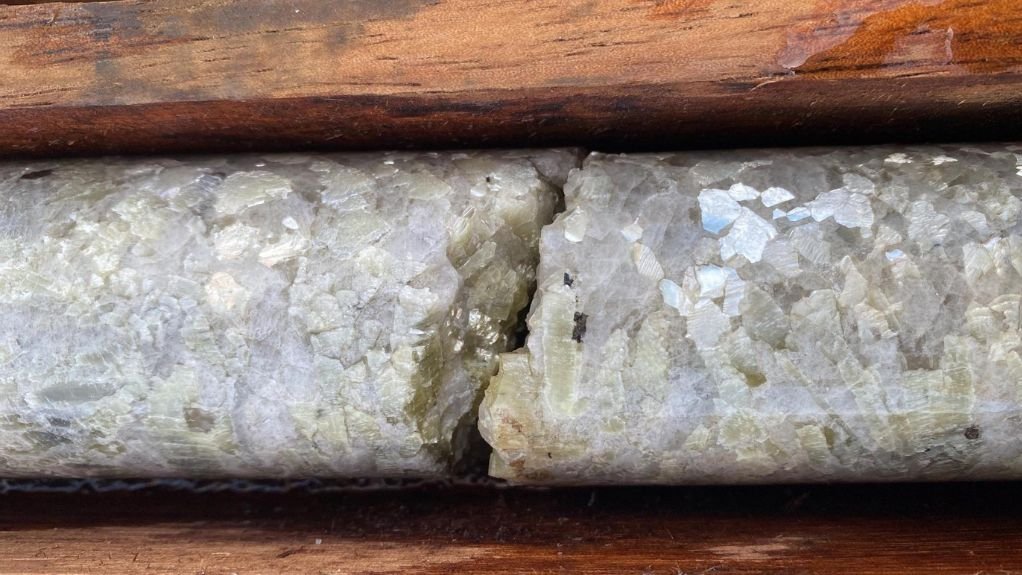
RAW MINERALS Zimbabwe suspended exports of all raw minerals and lithium concentrates with immediate effect in late February 2026, after the government alleged malpractices and leakages


Zimbabwe’s tightening of export restrictions on unbeneficiated lithium and other raw minerals is creating operational, tax and transfer pricing challenges for multinational companies, reports transfer pricing firm Graphene Economics director Michael Hewson.
Zimbabwe suspended exports of all raw minerals and lithium concentrates with immediate effect in late February 2026, after the government alleged malpractices and leakages. The ban on lithium concentrates had previously been expected to take effect only in 2027, while a ban on unprocessed lithium ore had been introduced in 2022, he says.
Hewson says the measures reflect Zimbabwe’s aim of limiting raw mineral exports to encourage in-country beneficiation and to bolster the retention of more downstream value derived from lithium.
“Zimbabwe is a clear example of this trend, but it is not unique,” he says, noting that similar policies are emerging across Africa and other resource-rich regions. However, Hewson notes the tax and transfer pricing implications of these changes are less often discussed.
The shift towards local processing can create disruption because companies cannot immediately move from exporting raw lithium to operating beneficiation facilities.
In-country beneficiation plants are capital-intensive and technically complex operations that require time, expertise and infrastructure to establish, he points out.
In the short term, Hewson says mining companies may be unable to export under new rules while also being unable to process minerals locally, resulting in stalled revenue, higher costs and changes or pauses to mining operations.
Infrastructure constraints, including a lack of a reliable electricity supply, can add to these challenges, he says, adding that companies may also need to import skills and technology, creating a gap between policy objectives and operational readiness.
Hewson says these operational changes can affect companies’ tax outcomes as they establish or invest in local processing entities. This can create new intercompany transactions involving funding, technical and management services, technology licensing and the onward sale of beneficiated products.
“Each of these transactions must be priced and each introduces transfer pricing risk,” he says, adding that regulation can further complicate pricing where limits are placed on management or technical service fees.
In Zimbabwe, such fees may be capped at a percentage of revenue, while limits on deductibility can add to the complexity, he says.
Setting up Shop
Early-stage beneficiation operations would typically require significant technical and management support from the wider group. However, where regulatory caps apply, Hewson says the price charged may not reflect the economic value of the service.
“This creates a tension between the commercial reality of the business and the regulatory framework,” he says, adding, however, that the issue is not necessarily incorrect pricing, but that pricing may be externally constrained. Companies therefore need to explain why the pricing outcome differs from the underlying economic value.
Additional challenges can arise when beneficiation operations are being established. For instance, Hewson says a newly established lithium beneficiation entity in Zimbabwe may incur losses owing to startup costs, delays in reaching full production or disruption caused by the policy change.
“From a commercial perspective, this may be entirely reasonable. From a tax perspective, it can raise red flags,” he says.
In addition, Hewson points out that revenue authorities in other jurisdictions may question whether such losses reflect genuine economic conditions or inappropriate pricing, thereby placing the onus on the taxpayer to show that the outcomes result from external constraints rather than transfer pricing mis- alignment.
Therefore, companies need to document the factors behind their financial results, including policy changes, timing delays, infrastructure constraints and the establishment of new operations.
As beneficiation capacity develops, Hewson says mining companies will also face questions about the pricing of processed lithium, the allocation of value within a group and which entities perform key functions, assume risks and use critical assets.
“These are not straightforward questions, particularly in markets where comparable data is limited and the industry itself is evolving rapidly,” he notes.
The risk of tax disputes therefore increases, while the importance of a well-supported transfer pricing position also grows, adds Hewson.
Zimbabwe’s lithium policy illustrates how government intervention can affect both the operations and tax profile of a business, says Hewson, highlighting that as more countries seek to capture greater value from their natural resources, similar challenges are likely to arise and that, for multinational companies, transfer pricing therefore needs to be considered alongside operational and investment decisions from the outset rather than treated as an afterthought.
Article Enquiry
Email Article
Save Article
Feedback
To advertise email advertising@creamermedia.co.za or click here


Projects

Latest Multimedia

Latest News
Showroom

For over 30 years, Werner South Africa Pumps & Equipment (PTY) LTD has been designing, manufacturing, supplying and maintaining specialist...
VISIT SHOWROOM
Established in 1933, EKATO is the world leader in agitation technology, supplying agitators for processes and applications such as chemicals and...
VISIT SHOWROOM



Press Office
Announcements
What's On
Subscribe to improve your user experience...
Option 1 (equivalent of R125 a month):
Receive a weekly copy of Creamer Media's Engineering News & Mining Weekly magazine
(print copy for those in South Africa and e-magazine for those outside of South Africa)
Receive daily email newsletters
Access to full search results
Access archive of magazine back copies
Access to Projects in Progress
Access to ONE Research Report of your choice in PDF format
Option 2 (equivalent of R375 a month):
All benefits from Option 1
PLUS
Access to Creamer Media's Research Channel Africa for ALL Research Reports, in PDF format, on various industrial and mining sectors
including Electricity; Water; Energy Transition; Hydrogen; Roads, Rail and Ports; Coal; Gold; Platinum; Battery Metals; etc.
Already a subscriber?
Forgotten your password?
Receive weekly copy of Creamer Media's Engineering News & Mining Weekly magazine (print copy for those in South Africa and e-magazine for those outside of South Africa)
➕
Recieve daily email newsletters
➕
Access to full search results
➕
Access archive of magazine back copies
➕
Access to Projects in Progress
➕
Access to ONE Research Report of your choice in PDF format
RESEARCH CHANNEL AFRICA
R4500 (equivalent of R375 a month)
SUBSCRIBEAll benefits from Option 1
➕
Access to Creamer Media's Research Channel Africa for ALL Research Reports on various industrial and mining sectors, in PDF format, including on:
Electricity
➕
Water
➕
Energy Transition
➕
Hydrogen
➕
Roads, Rail and Ports
➕
Coal
➕
Gold
➕
Platinum
➕
Battery Metals
➕
etc.
Receive all benefits from Option 1 or Option 2 delivered to numerous people at your company
➕
Multiple User names and Passwords for simultaneous log-ins
➕
Intranet integration access to all in your organisation