Critical minerals drive Central, East African exploration - consultant

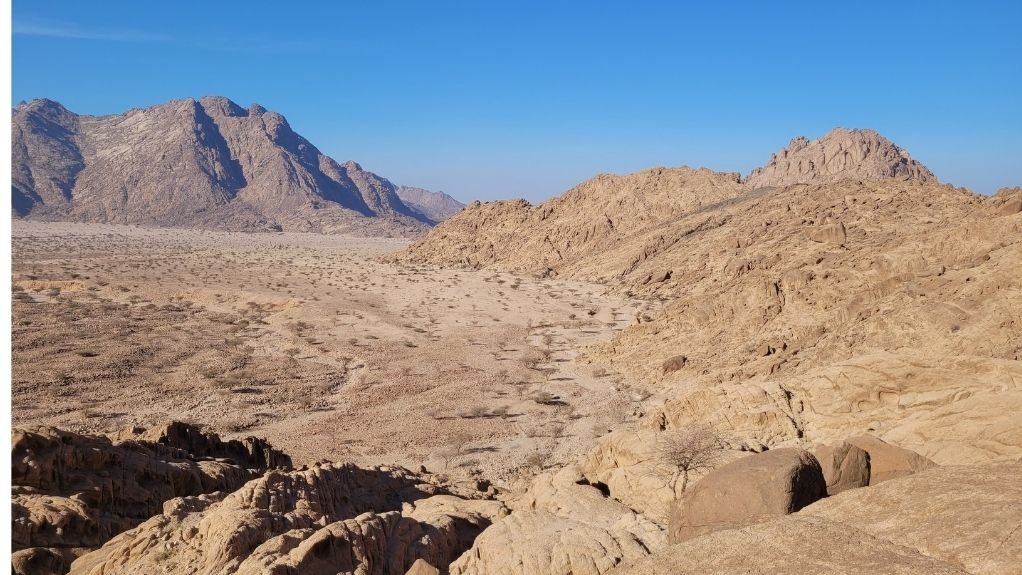
GEOLOGICAL PROSPECTS The Arabian-Nubian Shield is highly prospective owing to its arc-related volcanogenic massive sulphide deposits, orogenic gold, and porphyry-style mineralisation


The Central African Copperbelt (CAC), spanning parts of the Democratic Republic of Congo (DRC) and Zambia, remains a primary focus for exploration driven by global demand for copper and cobalt, says geological consultant Dr Nicolaas Steenkamp.
He says the region’s stratiform copper-cobalt deposits, which are hosted within Neoproterozoic metasedimentary sequences and represent some of the world's largest and highest-grade occurrences, are currently attracting exploration attention, owing to the commodities’ importance to the global energy transition and development of battery technologies.
Steenkamp also cites emerging interest in regions with potential for rare earth elements (REEs) and other battery metals, with the metals often associated with carbonatite complexes and alkaline intrusions.
"The East African Orogen, with its complex collage of Neoproterozoic terranes, holds potential for a variety of commodities, including gold, base metals and critical minerals, yet remains largely underexplored outside of specific belts," he says.
Similarly, parts of the Tanzanian Craton and its margins, while known for gold, may host undiscovered potential for other deposit types, he adds.
Steenkamp says the market often focuses on established trends, overlooking areas where geological understanding is still evolving or where perceived political and logistical hurdles overshadow genuine prospectivity, but argues that “a deeper, more nuanced geological assessment, coupled with improved investment climates, could unlock significant value in these overlooked terrains”.
He says genuine development potential hinges on a confluence of factors beyond the mineralisation. It requires scale and grade sufficient to withstand market fluctuations, metallurgical amenability to ensure economic extraction and a favourable operating environment, including stable regulatory frameworks, access to power, water and transport infrastructure, a skilled workforce and a supportive community.
“Without these, even a world-class geological endowment can languish, as we often see with projects stuck in perpetual study phases owing to funding gaps or perceived risks.”
Discovery Potential
Steenkamp states that new-generation exploration technologies have significantly refined geological targeting, moving beyond an in-field-only approach.
“Advances in remote sensing, high-resolution geophysics and sophisticated geochemical sampling techniques allow for more efficient and precise identification of prospective areas, especially under cover.”
Additionally, data integration and three-dimensional (3D) modelling software enable geologists to build more accurate subsurface interpretations, reducing drilling costs and improving success rates, he notes. These technologies help derisk early-stage exploration by providing a clearer picture of the geological structure and potential mineralisation before capital is deployed.
Geological settings are foundational, dictating both the type and tenor of mineralisation as well as impacting on every subsequent stage. Other factors that could impact include remote and rugged terrains, which necessitate extensive infrastructure planning, resulting in substantial capital expenditure, he notes.
A “dangerous pitfall” to avoid, Steenkamp highlights, is that of avoiding overreliance on isolated high-grade assay results or narrow drilling intersections without understanding the broader geological framework.
He emphasises that geological interpretation should be integrated with environmental and geotechnical planning from the outset.
“Understanding rock mass characteristics, hydrogeology and potential for acid mine drainage – all rooted in geology – directly informs pit slope design, waste rock management, tailings storage facility siting and water management strategies.”
An example he provides is the Arabian-Nubian Shield which is highly prospective owing to its arc-related volcanogenic massive sulphide deposits, orogenic gold and porphyry-style mineralisation. However, he also points to significant exploration challenges, including extensive sand cover in many areas, which obscures bedrock geology.
Further, other factors such as weathering profiles, cover sequences and supergene processes present considerable challenges to exploration and geological interpretation.
“Without a robust geological model that integrates structural geology, alteration patterns, lithological controls and mineralisation styles, one risks misinterpreting the true scale and continuity of a deposit.”
This can lead to over-optimistic resource estimations and ultimately, project failure. “The context provides the 'why' and 'how' of mineralisation, guiding intelligent follow-up and preventing costly mistakes.”
Steenkamp stresses that supergene enrichment processes can create high-grade zones near the surface, often leading to an overestimation of the primary hypogene resource.
Accurate interpretation demands a thorough understanding of these surficial processes to differentiate true primary targets from secondary enrichments or false anomalies, which, in turn, requires careful integration of geochemistry, geophysics, and drilling data.
“This comprehensive analysis is particularly critical in regions like the CAC, where supergene processes play a significant role in ore genesis,” he concludes.
Article Enquiry
Email Article
Save Article
Feedback
To advertise email advertising@creamermedia.co.za or click here
Research Reports
Projects
Latest Multimedia
Latest News
Showroom
Roytec Global is an international company specializing in liquid / solid and mineral separation technologies for the Mining and Industrial sectors.
VISIT SHOWROOM
Rittal is a world leading provider of top-quality integrated systems for enclosures, power distribution, climate control, IT infrastructure and...
VISIT SHOWROOM
Announcements
What's On
Subscribe to improve your user experience...
Option 1 (equivalent of R125 a month):
Receive a weekly copy of Creamer Media's Engineering News & Mining Weekly magazine
(print copy for those in South Africa and e-magazine for those outside of South Africa)
Receive daily email newsletters
Access to full search results
Access archive of magazine back copies
Access to Projects in Progress
Access to ONE Research Report of your choice in PDF format
Option 2 (equivalent of R375 a month):
All benefits from Option 1
PLUS
Access to Creamer Media's Research Channel Africa for ALL Research Reports, in PDF format, on various industrial and mining sectors
including Electricity; Water; Energy Transition; Hydrogen; Roads, Rail and Ports; Coal; Gold; Platinum; Battery Metals; etc.
Already a subscriber?
Forgotten your password?
Receive weekly copy of Creamer Media's Engineering News & Mining Weekly magazine (print copy for those in South Africa and e-magazine for those outside of South Africa)
➕
Recieve daily email newsletters
➕
Access to full search results
➕
Access archive of magazine back copies
➕
Access to Projects in Progress
➕
Access to ONE Research Report of your choice in PDF format
RESEARCH CHANNEL AFRICA
R4500 (equivalent of R375 a month)
SUBSCRIBEAll benefits from Option 1
➕
Access to Creamer Media's Research Channel Africa for ALL Research Reports on various industrial and mining sectors, in PDF format, including on:
Electricity
➕
Water
➕
Energy Transition
➕
Hydrogen
➕
Roads, Rail and Ports
➕
Coal
➕
Gold
➕
Platinum
➕
Battery Metals
➕
etc.
Receive all benefits from Option 1 or Option 2 delivered to numerous people at your company
➕
Multiple User names and Passwords for simultaneous log-ins
➕
Intranet integration access to all in your organisation