Competing rights: different mineral, same land





Nothing in the Mineral and Petroleum Resources Development Act (MPRDA) precludes a third party from applying for a mineral that is not included in an existing holder's applicant or right. Put differently, an applicant can apply for a mining right, prospecting right or a mining permit, in respect of a different mineral, in relation to the same piece of land.
Here is a practical example: a company holding a mining right for platinum group metals cannot, by the mere fact of holding that right, prevent another party from applying for, for example, a prospecting right or mining right in respect of chrome over the very same ground. Provided that the chrome applicant meets the relevant requirements, the Regional Manager of the Department of Mineral and Petroleum Resources must accept the relevant application, and, once the requirements set out in the MPRDA are met, the Minister must grant the relevant right. Accordingly, it could be argued that the initial holder's right is effectively an irrelevant consideration for the Regional Manager and the Minister, because the application concerns a different mineral.
The effect of this gap in the MPRDA gives rise to an “overlapping” or “competing” rights scenario.
The practical consequences of granting “incompatible” and “competing” rights over the same land have been illustrated in the recent Platmin matter. The court acknowledged that our law has not fully developed to address such predicaments and that it must evolve to address competing mineral rights, capturing the dilemma in the question whether, “if A holds the right to the flour that makes up a cake and B holds the right to the sugar that sweetens the same cake, can A be prevented from selling the cake in order to protect B's right?”.
The Potential Solution
It would appear that going forward there are potentially a couple of approaches applicants, or rights holders could consider when faced with this issue.
First, it is unlikely that the applicant for the “second” relevant right would be able to comply with its prospecting or mining work programme where there is an existing mine operating on the underlying land. The same will apply for the original rights holder. It cannot comply with its prospecting or mining work programme if there is another mining operation in the mix. Accordingly, were the Minister to grant the “second” right, it would give rise to absurdity from a practical perspective, and the original right holder could potentially argue that the Minister did not consider relevant facts when he assessed the application. This will constitute a reviewable error.
Second – and this one is slightly tricky – the Minister could potentially grant the right, and attach conditions to that right (which are binding on the right holder), in an attempt to address the conflict from a practical perspective. However, it is not clear that the power to impose conditions was designed to resolve a practical conflict between two lawfully-held rights to different minerals. This approach could potentially make the Minister’s decision vulnerable to challenge from a review perspective.
And lastly, in practice, where the second application is granted, holders could potentially consider exercising their respective rights civiliter modo (reasonably, and with the least possible prejudice to one another). In the Platmin case, the court held that this common-law principle is akin to ubuntu, in that it requires a holder to act with reasonableness and due care and to cause the other party the least possible harm or inconvenience. In other words, competing rights holders should try to be “good neighbours”. This proposition, however, can be quite complex and, sometimes, unrealistic (depending on the counterparty).
Another alternative is to negotiate a co-existence or tolling arrangement.
Conclusion
The Platmin case is illustrative of the difficulties that arise for rights holders and the courts, where the practical exercise of co-existing rights is not weighed at the point of granting the second mining right. Even though the conflict in this matter was initially triggered by a Section 102 amendment that resulted in two mining rights holders having rights over the same minerals, the underlying lesson is the same: wherever two rights cannot, as a practical matter, be exercised over the same land (even if the rights relate to different minerals), the limited discretionary powers provided for in the MPRDA mean that the resulting deadlock will have to be resolved through expensive and operationally disruptive litigation.
Accordingly, when the Regional Manager accepts applications where, as a practical matter, rights to different minerals cannot realistically be exercised together over the same land, the burden then shifts to the Minister, who must assess such applications through a practical lens, applying the factors set out in the MPRDA (limited as they might be) with an eye to whether the competing rights can in fact co-exist on the ground.
Article Enquiry
Email Article
Save Article
Feedback
To advertise email advertising@creamermedia.co.za or click here
Research Reports
Projects
Latest Multimedia
Latest News
Showroom

CMTS is a leading, well-established EC&I contractor with 37+ years of mining and industrial experience. We execute full-scope EC&I projects with...
VISIT SHOWROOM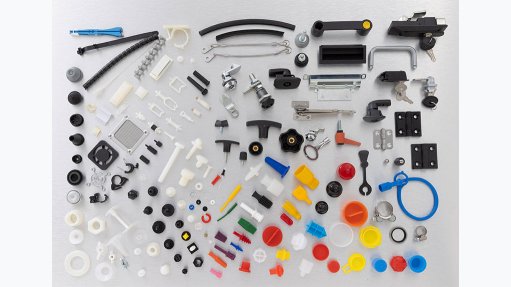
We are responsible manufacturers of essential components. Manufacturing 80 million parts a week, we have over 1 billion parts in stock.
VISIT SHOWROOM
Announcements
What's On
Subscribe to improve your user experience...
Option 1 (equivalent of R125 a month):
Receive a weekly copy of Creamer Media's Engineering News & Mining Weekly magazine
(print copy for those in South Africa and e-magazine for those outside of South Africa)
Receive daily email newsletters
Access to full search results
Access archive of magazine back copies
Access to Projects in Progress
Access to ONE Research Report of your choice in PDF format
Option 2 (equivalent of R375 a month):
All benefits from Option 1
PLUS
Access to Creamer Media's Research Channel Africa for ALL Research Reports, in PDF format, on various industrial and mining sectors
including Electricity; Water; Energy Transition; Hydrogen; Roads, Rail and Ports; Coal; Gold; Platinum; Battery Metals; etc.
Already a subscriber?
Forgotten your password?
Receive weekly copy of Creamer Media's Engineering News & Mining Weekly magazine (print copy for those in South Africa and e-magazine for those outside of South Africa)
➕
Recieve daily email newsletters
➕
Access to full search results
➕
Access archive of magazine back copies
➕
Access to Projects in Progress
➕
Access to ONE Research Report of your choice in PDF format
RESEARCH CHANNEL AFRICA
R4500 (equivalent of R375 a month)
SUBSCRIBEAll benefits from Option 1
➕
Access to Creamer Media's Research Channel Africa for ALL Research Reports on various industrial and mining sectors, in PDF format, including on:
Electricity
➕
Water
➕
Energy Transition
➕
Hydrogen
➕
Roads, Rail and Ports
➕
Coal
➕
Gold
➕
Platinum
➕
Battery Metals
➕
etc.
Receive all benefits from Option 1 or Option 2 delivered to numerous people at your company
➕
Multiple User names and Passwords for simultaneous log-ins
➕
Intranet integration access to all in your organisation