Building stronger foundations for South Africa



As a scientific research council, the Council for Geoscience is mandated to promote research, extend knowledge in the field of geoscience and provide specialised geoscientific services.
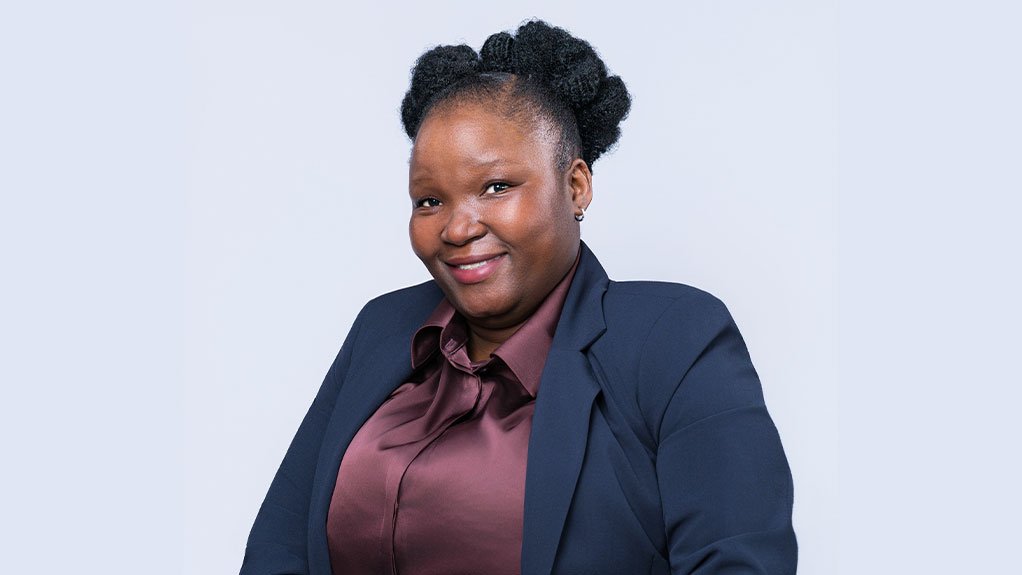
For more than 13 years, engineering geologist Nkosizanokusa Nqobile Mankayi has dedicated her career to ensuring that South Africa's infrastructure is built on safe, scientifically sound foundations. As a scientist in the Infrastructure and Land Use Unit at the Council for Geoscience (CGS), she works at the intersection of engineering, geology and public safety, providing the technical expertise that helps prevent costly infrastructure failures and protects communities from geotechnical hazards.
While engineering geology is often unseen by the public, it plays a critical role in every successful infrastructure project. Before roads, housing developments, pipelines, schools or industrial facilities are constructed, engineers need to understand the ground conditions beneath them. Mankayi's work provides that understanding, ensuring that infrastructure development is informed by accurate scientific data and geotechnical assessments.
The CGS serves as South Africa's national geoscience organisation, conducting geological mapping, geoscientific research, hazard assessments and advisory services that support sustainable development and economic growth. Within this environment, Mankayi has spent several years contributing to projects that improve infrastructure resilience while helping government departments, municipalities and developers make informed decisions before construction begins.
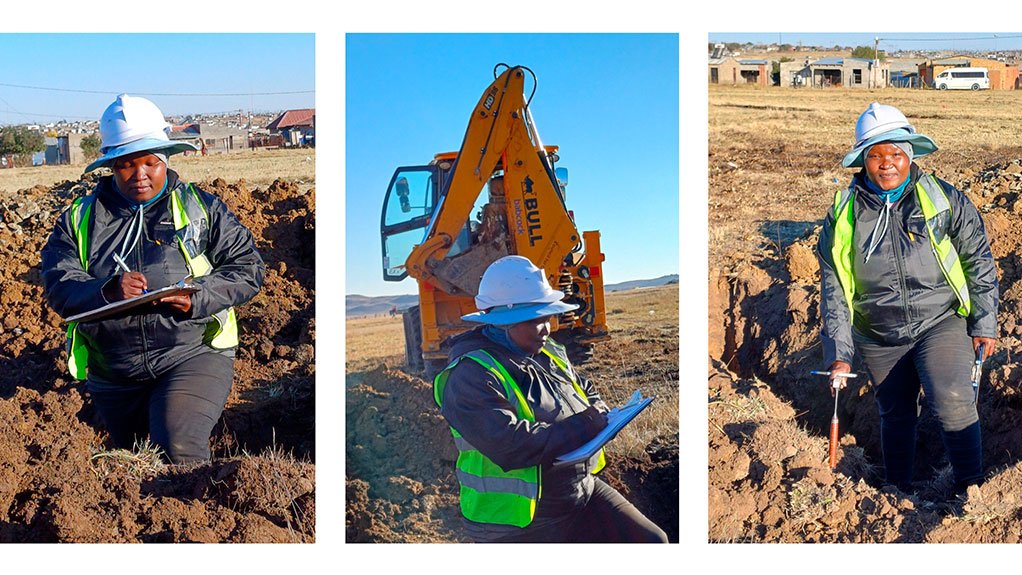
Her responsibilities are extensive and technically demanding. She conducts engineering geological investigations, geotechnical mapping, terrain evaluations and hazard assessments to identify geological conditions that could affect infrastructure performance. Much of her work focuses on dolomitic land, where sinkholes and ground instability can pose serious risks if not properly understood before development takes place. She also assesses expansive and collapsible soils, slope instability and other ground-related hazards that have the potential to compromise buildings, roads, pipelines and other critical infrastructure.
The findings from these investigations form an essential part of the planning process, enabling engineers, town planners, municipalities and developers to design infrastructure that is both safe and sustainable. Rather than reacting to failures after construction, her work helps identify risks early enough for them to be managed effectively, ultimately protecting both public investment and human lives.
"What inspires me most about my work is knowing that every investigation and every scientific recommendation I provide contributes to protecting communities, supporting sustainable development and leaving a legacy through safer infrastructure for future generations," she says.
Born in Empangeni, KwaZulu-Natal, Mankayi developed an interest in earth sciences that eventually led her into engineering geology. She completed her matric at James Nxumalo Agricultural High School in the uLundi region before pursuing undergraduate and honours degrees in Engineering Geology and Hydrogeology at the University of Pretoria. Recognising the importance of continually expanding her technical expertise, she later completed a Master of Engineering in Civil Engineering (Geotechnical Engineering) at Stellenbosch University, strengthening her specialist knowledge of ground behaviour and infrastructure development.
That commitment to lifelong learning continues to shape her career. She believes that engineering geology is constantly evolving as new technologies, analytical methods and infrastructure challenges emerge, making continuous professional development essential for delivering the best possible outcomes.
Throughout her career at CGS, Mankayi has contributed to numerous national geotechnical investigations undertaken for government departments, State-owned entities and municipalities. Her work extends well beyond field investigations to include technical and scientific reporting, stakeholder engagement, reviewing engineering geological data and collaborating with multidisciplinary teams to develop practical geoscientific solutions. She also mentors junior professionals, helping develop the next generation of engineering geologists and sharing the knowledge gained through years of practical experience.
Her leadership style reflects the collaborative nature of her work. She describes her approach as supportive, inclusive and results-driven, believing that the best outcomes are achieved when team members feel valued and empowered to contribute their expertise. Open communication, integrity, accountability and mutual respect are, in her view, the foundations of high-performing teams capable of tackling complex technical challenges.
Looking back on her career, one of Mankayi's greatest achievements is not a single project but the cumulative impact of more than 13 years spent improving infrastructure resilience and public safety across South Africa. Knowing that her work helps inform decisions that protect communities gives her a deep sense of purpose, while mentoring younger colleagues has become an equally rewarding aspect of her professional journey.
She draws inspiration from World Trade Organisation Director-General Dr Ngozi Okonjo-Iweala, admiring her resilience, integrity and commitment to driving meaningful economic development and good governance. For Mankayi, effective leadership is not simply about authority but about creating lasting positive change through service, integrity and a willingness to learn continuously.
This philosophy also underpins her approach to life. She believes success is built on integrity, perseverance, continuous learning and service to others. Every challenge presents an opportunity for growth, while every achievement becomes more meaningful when it positively impacts the lives of other people.
As South Africa continues investing in infrastructure development, engineering geologists such as Mankayi play an increasingly important role in ensuring projects are resilient, sustainable and built on a sound scientific understanding of the country's complex geological conditions. Although much of this work happens before construction begins and often goes unnoticed by the public, it is fundamental to the long-term success of infrastructure projects and the safety of the communities they serve.
Her advice to women pursuing careers in science, engineering and leadership is both practical and encouraging.
"Never underestimate your abilities. Believe in yourself and embrace every opportunity to grow. Never allow fear or self-doubt to define your potential. Leadership is not about having all the answers; it is about having the courage to learn, inspire and uplift those around you. Continue to support and mentor other women, celebrate one another's successes, and lead with authenticity, excellence and compassion. Together we can create industries where future generations of women are empowered to thrive and lead with confidence."
With a career built on technical excellence, collaboration and public service, Mankayi continues to demonstrate that engineering geology is about far more than understanding rocks and soil. It is about creating safer communities, enabling sustainable development and ensuring that the infrastructure on which society depends is built to stand the test of time.
Article Enquiry
Email Article
Save Article
Feedback
To advertise email advertising@creamermedia.co.za or click here

Projects
Latest Multimedia
Latest News
Showroom
TEBA is a trusted workforce solutions partner to the mining and industrial sectors, providing end-to-end SLP compliant recruitment, candidate...
VISIT SHOWROOM
Sweet-Orr, established in 1871, is a global leader in superior protective workwear, known for quality, innovation, and performance.
VISIT SHOWROOM
Press Office
Announcements
What's On
Subscribe to improve your user experience...
Option 1 (equivalent of R125 a month):
Receive a weekly copy of Creamer Media's Engineering News & Mining Weekly magazine
(print copy for those in South Africa and e-magazine for those outside of South Africa)
Receive daily email newsletters
Access to full search results
Access archive of magazine back copies
Access to Projects in Progress
Access to ONE Research Report of your choice in PDF format
Option 2 (equivalent of R375 a month):
All benefits from Option 1
PLUS
Access to Creamer Media's Research Channel Africa for ALL Research Reports, in PDF format, on various industrial and mining sectors
including Electricity; Water; Energy Transition; Hydrogen; Roads, Rail and Ports; Coal; Gold; Platinum; Battery Metals; etc.
Already a subscriber?
Forgotten your password?
Receive weekly copy of Creamer Media's Engineering News & Mining Weekly magazine (print copy for those in South Africa and e-magazine for those outside of South Africa)
➕
Recieve daily email newsletters
➕
Access to full search results
➕
Access archive of magazine back copies
➕
Access to Projects in Progress
➕
Access to ONE Research Report of your choice in PDF format
RESEARCH CHANNEL AFRICA
R4500 (equivalent of R375 a month)
SUBSCRIBEAll benefits from Option 1
➕
Access to Creamer Media's Research Channel Africa for ALL Research Reports on various industrial and mining sectors, in PDF format, including on:
Electricity
➕
Water
➕
Energy Transition
➕
Hydrogen
➕
Roads, Rail and Ports
➕
Coal
➕
Gold
➕
Platinum
➕
Battery Metals
➕
etc.
Receive all benefits from Option 1 or Option 2 delivered to numerous people at your company
➕
Multiple User names and Passwords for simultaneous log-ins
➕
Intranet integration access to all in your organisation