BESSs now a grid asset

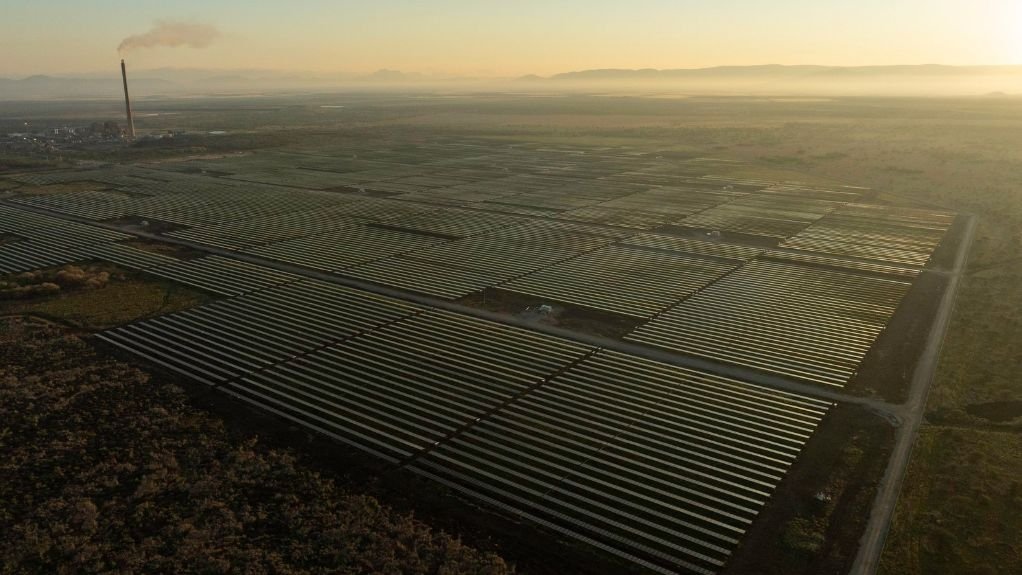

BESS SOLUTIONS Energy Group recently brought 100 MW of behind-the-meter PV into operation, and has about 800 MWh of battery energy storage systems in development, including over 300 MWh under construction
TIM HILL Behind-the-meter demand for utility-scale PV and battery energy storage systems is driven by cost pressure, storage economics, and the coming wholesale electricity market



Behind-the-meter demand for utility- scale PV and battery energy storage systems (BESSs) is accelerating among South Africa’s large industrial power users, driven by rising energy costs, declining storage capital costs and preparation for wholesale market reform, says industrial clean energy projects company Energy Group.
The company recently brought 100 MW of behind-the-meter PV into operation, the largest project of its type in South Africa, and has about 800 MWh of BESSs in development, including over 300 MWh under construction.
The shift is because of cost pressure, as rising energy costs threaten industrial sustainability; and storage economics, with decreasing battery costs making tariff arbitrage compelling, depending on attractive paybacks and market readiness – with storage providing flexibility for new tariff structures and hourly reconciliation – and the wholesale electricity market, explains Energy Group director Tim Hill.
For users, batteries allow for demand to be shaped in response to price signals, with prediction models central to users’ matching their load against available generation.
Forecasting is no longer “an Excel reconciliation against a [State-owned power utility] Eskom invoice”, but an accurate prediction and real-time response, he says.
For commercial and industrial clients, the business case for PV incorporating BESSs rests on tariff arbitrage. Ancillary and market services “undoubtedly” add value in developed markets, while the value of batteries rises sharply with the added risks and opportunities in a traded market.
For a utility, the benefit lies in relieving constrained infrastructure. By discharging at peak hours and charging when PV output is highest or demand is lowest, BESSs relieve heavily constrained transmission, “buy time” for the generation and transmission build-out that the energy transition requires, reduce curtailment payments, make more connections available in constrained hotspots, such as the Northern Cape, and make the grid more responsive as renewable-energy solutions proliferate, Hill elaborates.
Intelligent Management
Hill says standard time-of-use scheduling no longer captures the complexity facing industrial users that buy electricity from multiple sources through wheeled contracts.
Energy Group has, therefore, developed Clarity, an intelligent energy management system in addition to its BESS pipeline to address that gap.
Clarity ties PV, BESS and existing infrastructure together to maximise savings within grid and connection limits. It forecasts generation at every asset, as well as on-site generation and wheeling. Additionally, it manages battery charge and discharge to absorb oversupply, reduce charging costs and recover revenue that would otherwise be lost under legacy contracts as netting moves to hourly reconciliation.
“We built Clarity from the ground up, working with the energy and management teams of some of South Africa’s largest energy users. It meets a real operational need, rather than imposing a prescriptive tool, and integrates with the systems clients already use, easing their transition to the new market.”
Clarity plans and manages the interface of loads and generators for a significant portion of the energy used on the South African grid.
Moreover, as the system is not “tied” to any trader or aggregator, it can optimise across all of them, with every decision made in clients’ best interests.
Hill adds that industrial users must now allocate energy correctly in every billing period. Hourly reconciliation being implemented turns every hour of mismatch into a financial loss. Under the South African Wholesale Electricity Market, power will be bought and sold by the hour.
“That brings risk, through hourly prices and imbalance penalties, but also opportunity: to buy smarter, shift load and sell flexibility into the market,” he says.
Hurdles
Energy Group develops utility-scale PV and battery projects behind the meter and while the technologies are complementary, their integration challenges differ.
For PV, the primary challenge is land availability – utility-scale PV needs one to two hectares per megawatt, depending on the terrain. The 100 MW plants need about 200 ha, ideally located near a client’s operations, states Hill.
A BESS has a much smaller footprint. At about 50 m2/MWh, it is much easier to integrate, he adds. The company connects the BESS directly into clients’ existing medium-voltage infrastructure, often avoiding costly new substations and overhead lines.
Both systems face regulatory hurdles, including environmental permitting, grid compliance and connection agreements with Eskom or the municipality, as well as other site-specific requirements that are determined based on site location, and existing connection capacity and grid congestion.
With the carbon tax now in its second, stricter phase, and the National Energy Regulator of South Africa’s rules on wheeling, trading and tariffs still evolving, advisory work is central to derisking exposure.
Hill says that 20- to 25-year assets entering a market will look very different within five years, so the commercial model must be built for change, “not today’s tariff book”.
Such a model relies on the ability to deliver savings “from day one” to provide headroom for market changes, and diversification across on-site generation, wheeled supply and the grid, across technologies and suppliers.
For Energy Group, flexibility is built into contracts, enabling parties to avoid “being stranded”. Behind-the-meter assets complement wheeling to combine scale with certainty, while real-time control is accessible through Clarity, paired with on-site BESS, thereby facilitating live visibility and response capability.
“The work helps clients quantify exposure, prioritise projects that reduce it fastest and build regulatory changes into contracts and operating strategies before they take effect,” he concludes.
Article Enquiry
Email Article
Save Article
Feedback
To advertise email advertising@creamermedia.co.za or click here
Research Reports

Projects


Latest Multimedia

Latest News


Showroom

Sulzer South Africa, established in 1922, partners with critical industries like power, oil & gas, water, mining, and chemicals to boost...
VISIT SHOWROOM
SABAT Batteries is a renowned brand in the battery industry, manufacturing a wide range of batteries at its state-of-the-art production facility in...
VISIT SHOWROOM


Announcements
What's On
Subscribe to improve your user experience...
Option 1 (equivalent of R125 a month):
Receive a weekly copy of Creamer Media's Engineering News & Mining Weekly magazine
(print copy for those in South Africa and e-magazine for those outside of South Africa)
Receive daily email newsletters
Access to full search results
Access archive of magazine back copies
Access to Projects in Progress
Access to ONE Research Report of your choice in PDF format
Option 2 (equivalent of R375 a month):
All benefits from Option 1
PLUS
Access to Creamer Media's Research Channel Africa for ALL Research Reports, in PDF format, on various industrial and mining sectors
including Electricity; Water; Energy Transition; Hydrogen; Roads, Rail and Ports; Coal; Gold; Platinum; Battery Metals; etc.
Already a subscriber?
Forgotten your password?
Receive weekly copy of Creamer Media's Engineering News & Mining Weekly magazine (print copy for those in South Africa and e-magazine for those outside of South Africa)
➕
Recieve daily email newsletters
➕
Access to full search results
➕
Access archive of magazine back copies
➕
Access to Projects in Progress
➕
Access to ONE Research Report of your choice in PDF format
RESEARCH CHANNEL AFRICA
R4500 (equivalent of R375 a month)
SUBSCRIBEAll benefits from Option 1
➕
Access to Creamer Media's Research Channel Africa for ALL Research Reports on various industrial and mining sectors, in PDF format, including on:
Electricity
➕
Water
➕
Energy Transition
➕
Hydrogen
➕
Roads, Rail and Ports
➕
Coal
➕
Gold
➕
Platinum
➕
Battery Metals
➕
etc.
Receive all benefits from Option 1 or Option 2 delivered to numerous people at your company
➕
Multiple User names and Passwords for simultaneous log-ins
➕
Intranet integration access to all in your organisation