
Battery storage strengthens case for solar minigrids across West Africa

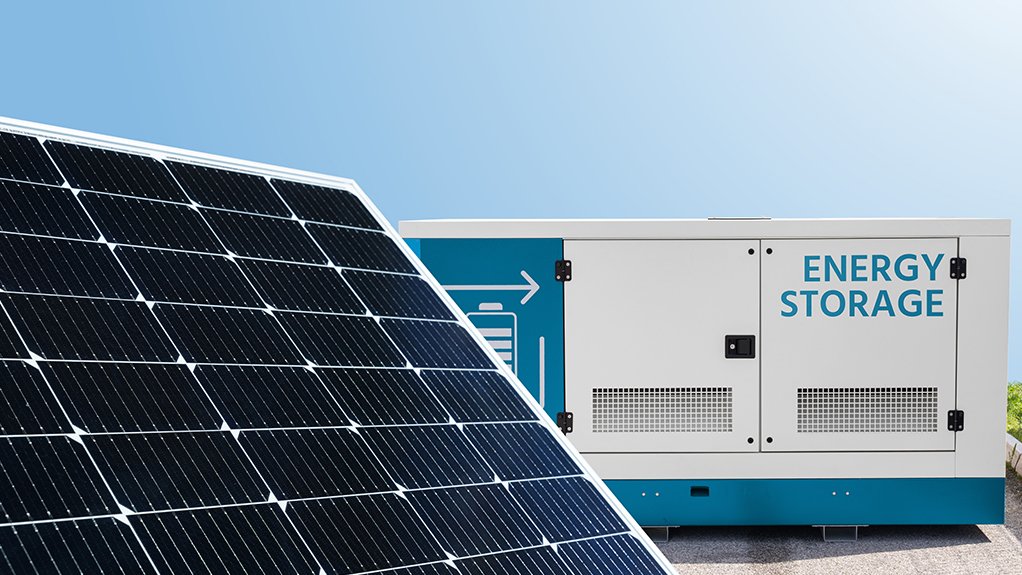


Battery storage could become a critical component of efforts to expand electricity access across West Africa, with solar PV minigrids offering a potentially lower-cost and more resilient alternative to diesel-based generation in remote communities, according to the International Renewable Energy Agency (Irena).
An August 2026 Irena assessment of Burkina Faso, Mali, Nigeria and Senegal identifies a minimum addressable market of about 568 MW of mini-grid capacity across 42 700 settlements, potentially providing electricity to about 21-million people.
The analysis forms part of Irena’s Strategic Energy Access Planning Support (SEAPS) programme and assesses how solar PV minigrids, supported by battery storage, could contribute to least-cost rural electrification in the four countries. The modelling considers different levels of electricity demand, or tiers, with Tier 1 representing basic electricity service and Tier 5 the highest level of service.
The findings come as African countries face pressure to accelerate electricity access while reducing exposure to volatile fossil-fuel prices. Irena notes that 451-million people in rural areas of sub-Saharan Africa remained without electricity in 2023, with many living in communities where extending the conventional grid is not economically viable.
The agency’s analysis shows that solar PV dominates the potential minigrid technology mix in the four countries, accounting for more than 98% of identified minigrid capacity. Hydropower accounts for less than 2%, while wind contributes less than 0.1%.
Nigeria represents the largest opportunity. At a basic Tier 2 electricity-access level, the country would require almost 400 MW of minigrid capacity, compared with 91.7 MW for Burkina Faso, 56.3 MW for Mali and 20.3 MW for Senegal.
The scale of the opportunity varies significantly depending on assumptions about future electricity demand, grid expansion and minigrid costs. Total minigrid capacity ranges from less than 1GW where grid expansion is unconstrained to about 34 GW in higher-demand scenarios where grid expansion is restricted and minigrid costs are more favourable.
Irena finds that minigrids become particularly important where utilities face technical or financial constraints to extending the grid. Under such conditions, they could provide more than half of new electricity connections, serving between 47-million and 110-million people out of a potential 171-million people considered in the scenarios.
Storage Value
The case for battery storage strengthens as the cost of solar PV and batteries falls. Irena calculates that, across the scenarios assessed, fuel savings from reduced diesel consumption are on average about twice the incremental investment required for battery storage. In some Tier 2 and Tier 3 scenarios, the ratio rises to between three and four dollars of avoided fuel costs for every dollar invested in storage.
In the highest-value scenario – involving restricted grid expansion, optimistic minigrid costs and Tier 5 electricity demand – the potential value of battery storage approaches $25-billion. Battery deployment in this scenario reaches about 130 GWh, compared with less than 8 GWh in scenarios where grid expansion is unconstrained. Irena points to the 93% decline in battery prices between 2010 and 2024 as an important factor underpinning the improved economics of storage.
Even at a lower Tier 2 demand level, achieving universal supply across the four countries by 2030 would require about 2.25 GWh of battery storage. Nigeria would account for about 1.59 GWh, followed by Burkina Faso at 367 MWh, Mali at 220 MWh and Senegal at 75 MWh.
Irena argues that the benefits of storage extend beyond lowering operating costs. Batteries can reduce dependence on diesel and provide a hedge against fuel-price and supply disruptions, a particularly important consideration for landlocked countries in the Sahel, where fuel must be transported overland from coastal ports.
The agency’s sensitivity analysis reinforces this point. At baseline diesel prices, each dollar invested in battery capacity avoids between $1.94 and $2.85 in lifetime diesel costs. If diesel prices double, the avoided costs increase to between $3.72 and $5.89, with Mali reaching a ratio of almost six dollars in avoided costs for every dollar invested.
The impact is also evident in the cost of electricity with a doubling of diesel prices increasing the levelised cost of hybrid PV-battery minigrids by only about 10% to 15%, as greater deployment of storage is offset by reduced generator runtime.
Irena further finds that storage value can increase much faster than storage capacity as diesel prices rise. In Nigeria, for example, a 10% increase in diesel prices raises the calculated value of storage from $4.9-billion to $13.2-billion – a 170% increase – while storage capacity rises by only 21%.
Energy Security Instrument
The findings suggest that battery-backed minigrids should not be viewed solely as an electrification technology, but also as an energy-security instrument.
This is particularly relevant as oil-price volatility exposes diesel-dependent electricity systems to higher operating costs and supply risks. Irena says electrification strategies that depend heavily on diesel generation leave remote communities vulnerable to fuel-price shocks and disruptions.
The agency therefore recommends that national electrification planning incorporate offgrid technologies alongside conventional grid expansion rather than treating them as separate pathways.
It also calls for greater use of geospatial planning tools to identify the least-cost combination of grid extension, minigrids and standalone solar systems. Electricity access should be treated as a progressive process, with households potentially moving from solar home systems to minigrids and eventually to grid connections as electricity demand and ability to pay increase.
However, financing remains a major obstacle. Although technology costs have fallen sharply, renewable minigrids and storage continue to face high upfront capital requirements and elevated costs of capital in many African markets.
Irena recommends blended finance and other derisking mechanisms to mobilise investment, alongside stronger technical standards, skills development, battery safety and end-of-life regulations, interoperable metering systems and measures to develop regional manufacturing and recycling capabilities.
The agency also highlights the potential for African countries to move beyond raw mineral exports towards higher-value activities in the minigrid supply chain, including component manufacturing and the recycling of PV panels and batteries. Regional cooperation on local-content rules could help countries build scale rather than developing fragmented national markets.
Article Enquiry
Email Article
Save Article
Feedback
To advertise email advertising@creamermedia.co.za or click here
Research Reports

Projects

Latest Multimedia
Latest News
Showroom

The SAIMM started as a learned society in 1894 after the invention of the cyanide process that saved the South African gold mining industry of the...
VISIT SHOWROOM
Multotec, recognised industry leaders in metallurgy and process engineering help mining houses across the world process minerals more efficiently,...
VISIT SHOWROOM
Announcements
What's On
Subscribe to improve your user experience...
Option 1 (equivalent of R125 a month):
Receive a weekly copy of Creamer Media's Engineering News & Mining Weekly magazine
(print copy for those in South Africa and e-magazine for those outside of South Africa)
Receive daily email newsletters
Access to full search results
Access archive of magazine back copies
Access to Projects in Progress
Access to ONE Research Report of your choice in PDF format
Option 2 (equivalent of R375 a month):
All benefits from Option 1
PLUS
Access to Creamer Media's Research Channel Africa for ALL Research Reports, in PDF format, on various industrial and mining sectors
including Electricity; Water; Energy Transition; Hydrogen; Roads, Rail and Ports; Coal; Gold; Platinum; Battery Metals; etc.
Already a subscriber?
Forgotten your password?
Receive weekly copy of Creamer Media's Engineering News & Mining Weekly magazine (print copy for those in South Africa and e-magazine for those outside of South Africa)
➕
Recieve daily email newsletters
➕
Access to full search results
➕
Access archive of magazine back copies
➕
Access to Projects in Progress
➕
Access to ONE Research Report of your choice in PDF format
RESEARCH CHANNEL AFRICA
R4500 (equivalent of R375 a month)
SUBSCRIBEAll benefits from Option 1
➕
Access to Creamer Media's Research Channel Africa for ALL Research Reports on various industrial and mining sectors, in PDF format, including on:
Electricity
➕
Water
➕
Energy Transition
➕
Hydrogen
➕
Roads, Rail and Ports
➕
Coal
➕
Gold
➕
Platinum
➕
Battery Metals
➕
etc.
Receive all benefits from Option 1 or Option 2 delivered to numerous people at your company
➕
Multiple User names and Passwords for simultaneous log-ins
➕
Intranet integration access to all in your organisation