AVEVA underscores importance of digitalisation in African mining operations





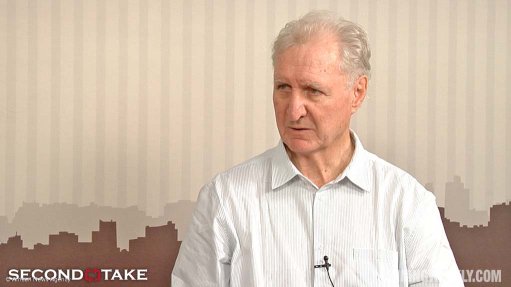
Global industrial software company AVEVA is seeing “significant interest” in digitalisation across Africa, especially where it addresses immediate operating challenges, and the company has proffered its solutions and services to assist, AVEVA MMM Global Industry principal Glenn Kerkhoff says, speaking to Mining Weekly in an exclusive interview.
“Mining companies want to improve production reliability, reduce operating costs and get more value from existing assets. Energy and water management are also major priorities, especially in operations where infrastructure limitations can directly affect production,” he pointed out.
Kerkhoff identified a challenge as moving beyond individual digital projects.
While many companies had successfully implemented technology at a particular site or on a specific piece of equipment, extending those benefits across the organisation could be difficult, he explained.
Therefore, Kerkhoff outlined AVEVA’s approach, which entailed starting with a specific operational problem, such as improving pump efficiency, reducing equipment failures or understanding why a processing plant was not achieving its targeted throughput.
Once the data was available and the improvement demonstrated, the company built on this foundation and extended the capability to other equipment, processes or sites, he highlighted.
“Local expertise is particularly important in Africa. Through our regional teams and partners, we’re focused on developing solutions that reflect local operating conditions, infrastructure and available skills. The objective is to build sustainable capability within the customer’s organisation, not simply deploying technology,” Kerkhoff stressed.
He also mentioned information silos as a problem area, noting that while most established mining operations generated considerable information, this sat in separate systems that were not easily accessible.
“Mining, processing, maintenance and logistics teams often work with different information systems, making it difficult to understand how problems in one area affect the rest of the operation,” Kerkhoff pointed out.
Legacy equipment, connectivity limitations and cybersecurity requirements added complexity, particularly at remote sites, and there were also practical constraints around specialist skills and competing capital priorities, he added.
Moreover, digital projects were sometimes treated primarily as IT initiatives. “Unless the operational teams own the problem and are involved in developing the solution, it’s difficult to achieve lasting results,” he cautioned.
Kerkhoff advised starting with a clearly defined operating problem and building on the established systems. “Demonstrate the value, involve the people responsible for making operational decisions and establish an approach that can be repeated elsewhere.”
He advocated for architecture to reflect the site’s connectivity, security and operational requirements, and not necessary needing to be centralised or cloud-based.
Kerkhoff suggested starting with the most important operational problems.
“Whether the priority is improving equipment availability, increasing mineral recovery, reducing energy consumption or addressing production bottlenecks, the first step is understanding what information is needed to make better decisions.”
Kerkhoff said technology was readily available to the mining industry and that the challenge lay in applying it in ways that delivered measurable operational improvements.
His view is that the future of mining will depend increasingly on how well companies connect their operations.
“Mining, processing, maintenance, energy, water and logistics can’t be optimised independently if the objective is to improve the performance of the entire business.
“Thats where industrial intelligence becomes particularly valuable. It helps companies make better use of the systems and information they already have, while establishing the foundation for more advanced analytics, AI and autonomous operations,” Kerkhoff emphasised.
He posited that, for Africa, and globally, the opportunity sat in producing minerals more efficiently, reliably and sustainably.
“Looking ahead, I believe real change and transformation will come not from making individual machines and processes automated or autonomous, but from making the entire mining operation more intelligent, connected and ultimately autonomous.”
Kerkhoff called on Africa to capitalise on its considerable minerals resources by creating additional value through more efficient processing, improved mineral recovery, better product quality and stronger integration between mines, processing facilities and transport infrastructure.
“This is particularly relevant as countries look to develop more downstream processing and mineral beneficiation infrastructure.
“However, building additional processing capacity only makes sense when the underlying economics and infrastructure support it. Reliable electricity, water availability, logistics and operating efficiency are critical,” he pointed out.
Kerkhoff emphasised the importance of digital technology to make this investment more productive.
He hypothesised that understanding how ore characteristics affect processing performance can help operators improve blending strategies, recovery and energy efficiency, while connecting production information with water and energy consumption can provide operators a better understanding of the actual cost and resource requirements of production.
“AVEVA supports these activities across the asset lifecycle, from engineering and simulation for new facilities through to operational data management, analytics and performance optimisation,” Kerkhoff acclaimed.
He posited that mining companies that established a strong industrial data foundation now would be better positioned to take advantage of analytics, AI and increasingly autonomous operations.
“The starting point is reliable, contextualised operational information. Without that, even sophisticated analytics applications struggle to deliver consistent value.”
AVEVA SUPPORT
Kerkhoff expressed AVEVA’s vision of an intelligent, connected mining operation where mining, processing, maintenance, energy, water and logistics were coordinated and optimised as a whole, rather than individual machines operating independently.
“This starts with industrial data, analytics and AI generating insights that support intelligent decisions. As these capabilities mature, decisions can be connected directly back into equipment, mine planning and operational processes, progressively moving towards truly autonomous operations,” he averred.
Kerkhoff believes AVEVA's engineering, operational data, analytics and digital twin capabilities help enable this shift. “We envision the future mine as an autonomous open-air factory, where intelligence coordinates the entire operation, not just individual machines.”
Kerkhoff outlined the AVEVA PI System as the foundation for collecting, storing and contextualising operational data from equipment and control systems, with this giving mining companies a consistent record of what was happening through their operations and how equipment and processes were performing over time.
Meanwhile, the AVEVA Unified Operations Centre for Mining bolsters this by bringing information from multiple operational and business systems into a common view, which may include production data, fleet performance, equipment condition, maintenance activities, material quality, inventory and logistics.
AVEVA CONNECT adds another dimension by enabling secure data sharing between sites, corporate teams, technology partners and analytics applications.
“The aim isn’t to replace existing control systems. It’s to make better use of the information they generate and give operational teams a clearer understanding of the entire business.”
LOCAL REFERENCE
Kerkhoff cited a South African example of a mining company working with pump specialist TAS Online to improve pumping system performance.
"The challenge was bringing live operating data from multiple sources into one secure environment, allowing specialists to monitor performance, identify problems and recommend improvements,” he explained.
AVEVA’s CONNECT enabled the mining company and TAS Online to collaborate using the same operational information, which assisted with improving energy efficiency, equipment reliability and preventive maintenance, Kerkhoff highlighted.
“It’s a good example of how sharing industrial data with the right technical specialists can deliver practical operational benefits.”
Kerkhoff acclaimed that the immediate benefits of deploying such solutions included improved equipment availability, more stable production and better resources use.
He also outlined a broader opportunity when considering more than individual equipment.
“A mining operation is a connected system. Improving crusher performance, for example, has limited value if the concentrator or downstream logistics cannot handle the additional material.
“This is where better operational visibility makes a difference. Connecting information from mining, processing, maintenance and logistics helps operators identify the real constraints on production rather than simply optimising individual assets,” Kerkhoff avers.
At the corporate level, consistent information across multiple sites streamlined the comparison of performance and enabled easier identification of improvement opportunities, he noted.
“Ultimately, the value needs to be measurable. Whether we’re talking about throughput, recovery, availability, energy consumption or water use, there should be a clear operational baseline and demonstrated improvement,” Kerkhoff emphasises.
Article Enquiry
Email Article
Save Article
Feedback
To advertise email advertising@creamermedia.co.za or click here
Projects
Latest Multimedia
Latest News
Showroom


Willard Batteries is one of the leading brands in automotive battery power products. With a rich history spanning over 70 years, Willard batteries...
VISIT SHOWROOM
Press Office
Announcements
What's On
Subscribe to improve your user experience...
Option 1 (equivalent of R125 a month):
Receive a weekly copy of Creamer Media's Engineering News & Mining Weekly magazine
(print copy for those in South Africa and e-magazine for those outside of South Africa)
Receive daily email newsletters
Access to full search results
Access archive of magazine back copies
Access to Projects in Progress
Access to ONE Research Report of your choice in PDF format
Option 2 (equivalent of R375 a month):
All benefits from Option 1
PLUS
Access to Creamer Media's Research Channel Africa for ALL Research Reports, in PDF format, on various industrial and mining sectors
including Electricity; Water; Energy Transition; Hydrogen; Roads, Rail and Ports; Coal; Gold; Platinum; Battery Metals; etc.
Already a subscriber?
Forgotten your password?
Receive weekly copy of Creamer Media's Engineering News & Mining Weekly magazine (print copy for those in South Africa and e-magazine for those outside of South Africa)
➕
Recieve daily email newsletters
➕
Access to full search results
➕
Access archive of magazine back copies
➕
Access to Projects in Progress
➕
Access to ONE Research Report of your choice in PDF format
RESEARCH CHANNEL AFRICA
R4500 (equivalent of R375 a month)
SUBSCRIBEAll benefits from Option 1
➕
Access to Creamer Media's Research Channel Africa for ALL Research Reports on various industrial and mining sectors, in PDF format, including on:
Electricity
➕
Water
➕
Energy Transition
➕
Hydrogen
➕
Roads, Rail and Ports
➕
Coal
➕
Gold
➕
Platinum
➕
Battery Metals
➕
etc.
Receive all benefits from Option 1 or Option 2 delivered to numerous people at your company
➕
Multiple User names and Passwords for simultaneous log-ins
➕
Intranet integration access to all in your organisation