Safety as the foundation of successful underground mining

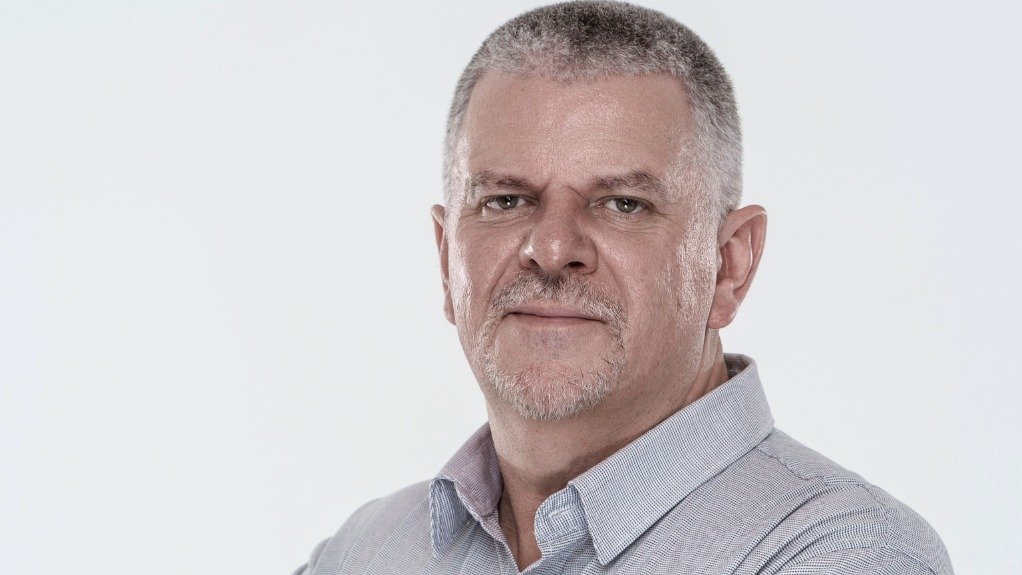



This article has been supplied.
Underground mining is an inherently complex operating environment. Conditions can change rapidly and production pressures can create competing priorities. In this environment, safety cannot be treated as a separate compliance requirement. It must be embedded in the way people plan, communicate, make decisions and execute work every day.
For Redpath Africa Limited, this is captured in the simple principle of ‘Safety First, Last and Always’. A strong safety culture exists when every employee and leader understands that production can never come at the expense of people.
Making safety part of every decision
Safety culture becomes meaningful when it influences everyday operational decisions. Safety should be the first item on the agenda at meetings and should be integrated into planning, scheduling, risk assessments and operational discussions.
Every task should begin with a fundamental question: How can we do this safely? This approach influences decisions about mining methodology, equipment selection, resource allocation and production priorities.
It also requires open communication, trust, visible leadership and accountability, supported by a willingness to learn continuously. Importantly, a mature safety culture empowers crews to make safe and quality decisions even when a first-line supervisor is not immediately present.
Planning for safety from the outset
Safety needs to be considered from the earliest stages of project design and planning, with hazard identification and risk assessment incorporated into the project lifecycle.
Experienced project teams typically consider factors including the appropriate mining methodology, ground support and ventilation, ore management, emergency response, equipment and competency requirements, traffic management and travelling time to and from the workface.
This is particularly important because inherent constraints in mine design can create production pressures, which may in turn encourage risk-taking behaviour. By addressing these issues during planning, operations can be designed to be both safer and still meet production requirements.
Leadership must be visible
Leadership is one of the most important factors in establishing and sustaining a safety culture, particularly when operational pressures increase. Employees pay close attention to what leaders prioritise and, ultimately, actions speak louder than policies.
This is why Redpath embarked on its Safety Strong campaign, with a strong focus on leadership supporting crews in exercising their rights under Sections 22 and 23 of the Mines Health and Safety Act. The campaign reinforces the principle that employees have both the responsibility and the authority to act when conditions are unsafe.
Visible Felt Leadership is an important part of this approach. Leaders need to spend time in the workplace, participate in safety conversations, conduct field inspections, engage with employees and respond to concerns. When leaders consistently reinforce the message that safe production is productive production, safety becomes a business value rather than simply a requirement.
Empowering the people closest to the work
Employees at the sharp end of operations often have the strongest understanding of the hazards associated with the work. Their experience and observations therefore need to form part of hazard identification, risk assessment and problem-solving. Accountability is equally important, but it needs to be focused on improving behaviours rather than assigning blame.
Effective training and skills development build not only technical competence but also the confidence and decision-making ability needed to respond when conditions change. A competent and engaged workforce is one of the strongest defences against serious incidents.
Using technology to anticipate risk
Technology is creating new opportunities to improve underground safety. Artificial intelligence and digital technologies can support applications ranging from autonomous equipment and predictive maintenance to geotechnical monitoring, collision avoidance, fatigue detection, wearable safety devices and data analytics.
One of the most significant opportunities lies in predictive risk management. By analysing data from equipment, sensors and operational activities, AI can help identify trends and potential hazards before they develop into incidents. Technology should therefore complement, rather than replace, the knowledge, judgement and engagement of the workforce.
Collaboration removes the ‘us and them’
Safety performance depends on everyone working towards the same objective. This is particularly important in environments where mine owners, contractors and employees work together. Integrated owner teams can help eliminate the traditional ‘us’ and ‘them’ mentality by establishing common goals and aligned strategies.
Effective collaboration includes operational planning, shared safety expectations, joint risk assessments, common standards and procedures, and learning from incidents and near misses. Everyone involved should feel empowered to identify risks, raise concerns and contribute to continuous improvement.
Combining global expertise with local knowledge
Operating across Africa also requires a balance between global expertise and local understanding. Redpath’s global experience provides access to established safety systems, best practices and lessons learned from mining projects around the world. These provide consistency and help ensure that critical risks are managed effectively.
However, successful implementation also requires an understanding of local conditions, regulatory requirements, workforce capabilities and cultural considerations. The most effective approach is therefore to combine global standards with local engagement. This can include transferring specialist knowledge and skills when new technologies or equipment are introduced, allowing global expertise to enrich and strengthen local talent.
Safety and performance are mutually reinforcing
The mining industry should not view safety and operational performance as competing priorities. Redpath’s experience demonstrates that strong safety performance and operational excellence are mutually reinforcing.
Operations that manage risk effectively can benefit from greater workforce stability, improved productivity, reduced downtime and better project outcomes. Safe workplaces tend to be more disciplined, organised and consistent, while employees who trust that their wellbeing is valued are more likely to be engaged and perform effectively.
Strengthening safety culture therefore requires sustained commitment to visible leadership, open learning and knowledge sharing, critical risk management, workforce development, appropriate technology adoption and continuous improvement.
Ultimately, achieving zero harm is not a once-off initiative or a destination that can be reached and then left behind. It is a continuous journey involving leaders, employees and contractors alike. Safety must remain at the centre of every decision we make.
Article Enquiry
Email Article
Save Article
Feedback
To advertise email advertising@creamermedia.co.za or click here
Projects

Latest Multimedia

Showroom
SafeQuip is a leading distributor and manufacturer of fire safety solutions, offering a comprehensive range of products designed to meet all...
VISIT SHOWROOM
EIMS is an independent specialised environmental consulting firm offering the full spectrum of environmental management services across all sectors...
VISIT SHOWROOM
Announcements
What's On
Subscribe to improve your user experience...
Option 1 (equivalent of R125 a month):
Receive a weekly copy of Creamer Media's Engineering News & Mining Weekly magazine
(print copy for those in South Africa and e-magazine for those outside of South Africa)
Receive daily email newsletters
Access to full search results
Access archive of magazine back copies
Access to Projects in Progress
Access to ONE Research Report of your choice in PDF format
Option 2 (equivalent of R375 a month):
All benefits from Option 1
PLUS
Access to Creamer Media's Research Channel Africa for ALL Research Reports, in PDF format, on various industrial and mining sectors
including Electricity; Water; Energy Transition; Hydrogen; Roads, Rail and Ports; Coal; Gold; Platinum; Battery Metals; etc.
Already a subscriber?
Forgotten your password?
Receive weekly copy of Creamer Media's Engineering News & Mining Weekly magazine (print copy for those in South Africa and e-magazine for those outside of South Africa)
➕
Recieve daily email newsletters
➕
Access to full search results
➕
Access archive of magazine back copies
➕
Access to Projects in Progress
➕
Access to ONE Research Report of your choice in PDF format
RESEARCH CHANNEL AFRICA
R4500 (equivalent of R375 a month)
SUBSCRIBEAll benefits from Option 1
➕
Access to Creamer Media's Research Channel Africa for ALL Research Reports on various industrial and mining sectors, in PDF format, including on:
Electricity
➕
Water
➕
Energy Transition
➕
Hydrogen
➕
Roads, Rail and Ports
➕
Coal
➕
Gold
➕
Platinum
➕
Battery Metals
➕
etc.
Receive all benefits from Option 1 or Option 2 delivered to numerous people at your company
➕
Multiple User names and Passwords for simultaneous log-ins
➕
Intranet integration access to all in your organisation