What Does Our Heritage Say About Who We Are? Prof Rozena Maart Reflects

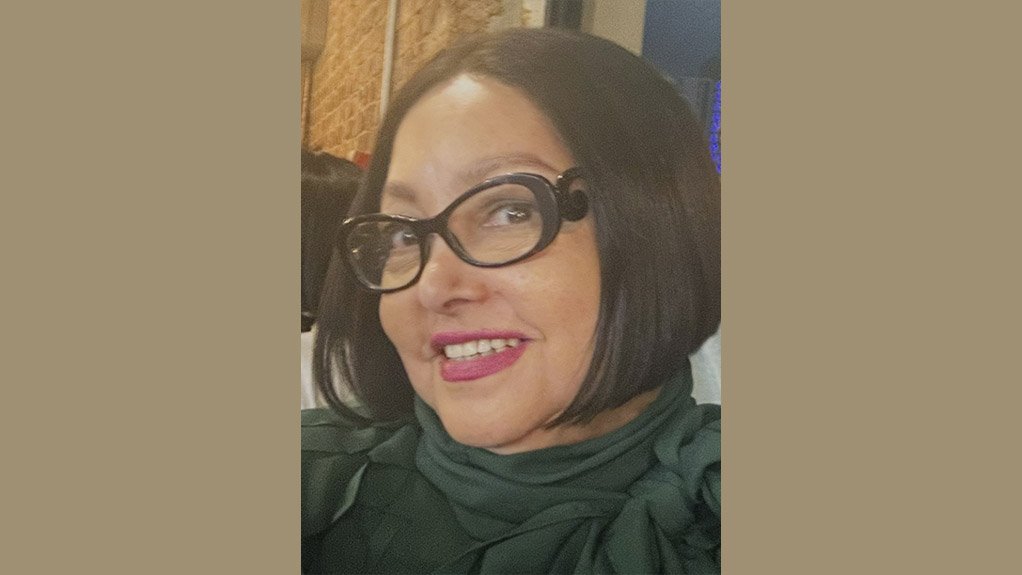


As we mark Heritage Day and Heritage Month, the South African Research Chairs Initiative (SARChI) in the Study of the National Question explores the meaning of heritage. SARChI Chair in the Study of the National Question, Professor Rozena Maart, reflects on what heritage means to her and how her research contributes to our understanding of South Africa’s national question, history, redress and identity. Established in 2006 by the Department of Science, Technology and Innovation (DSTI) and the National Research Foundation (NRF), the SARChI strengthens research and innovation capacity at South African public universities by supporting leading researchers and establishing Research Chairs that produce high-quality research, innovation outputs and postgraduate graduates. It also helps attract and retain research talent, improve South Africa’s international competitiveness and create pathways for emerging and mid-career researchers, while addressing the country’s social and economic challenges. SARChI Chairs represent a leading cohort of researchers within the country’s 26 public universities, which are home to more than 60 000 researchers, with more than 370 Research Chairs awarded to date and approximately 250 currently operational. Prof Maart is the first SARChI Chair on the National Question. She is based at the University of KwaZulu-Natal (UKZN), which co-funds her Research Chair with the NRF.
Prof Maart shares her reflections in a question-and-answer format.
How do you position your SARChI Chair on the National Question, which you’ve held since June 2025, and how does your Chair address the history of Heritage Day?
I enter the National Question as a child of forced removal – a child who grew up in District Six, the old slave quarter of the Cape, raised by two grandparents who each have histories of enslavement. My maternal grandmother’s heritage is from Bengal and Indonesia, where her ancestors were cargoed to the Cape by the Dutch East India Company, and were named, September, the month of their enslavement. The Dutch usurped and colonised Indonesia in 1595, Mauritius in 1598, Bengal in 1605 and Malaysia in 1641. These acts of colonisation set the basis for the transport of my maternal ancestors as human cargo to the Cape from 1662 onwards, the majority of whom arrived during the 1700s. My father’s family, whom I met the week I turned 19 in East London, have a similar history to his maternal Matthews’ side. All the Matthews were born in District Six, and trace one strand of their ancestors to Mauritius and the other to St Helena Island in the middle of the Atlantic, 2000km west of Angola. What is not taught and, as a result, often forgotten, is the history of the enslavement of Xhosa people from the Eastern Cape to District Six, some of which were seen recently by colleagues across the country who joined me for our histories of enslavement walks in Stellenbosch, Pniel and Cape Town. My colleagues saw images of Xhosa women with traditional dresses, photographed in District Six in some of the small heritage museums at the castle, and they were shocked. This moment is precisely the moment when the heritage of South Africa that has been hidden is revealed because these small museums are stocked with family photos – and they carry no agenda except the revelation of the truth of their lived experiences. It is what makes the ignorant allegations of African nationals as foreigners by many at the Cape so preposterous because the early ancestors of the Cape, especially to District Six, were enslaved people from Angola, Mozambique where the Portuguese traded enslaved people with our Dutch colonisers. Young Xhosa men like my grandfather and his brothers and cousins, named Maart and April after the month of their enslavement, were legally barred from fishing in the sea to continue their ancestral tradition by the 1910 government that worked in favour of Irvin and Johnson, a colonial British and Swedish duo who seized sovereignty from our ancestors and now show itself as a company that provides a salary to local fishermen. Heritage Day is the commemoration of our buried, hidden and masked histories that the settler colonial governments and Apartheid education system kept out of representation of our history, our reclaiming of it, and the dissemination of its content across our country in order for communities of struggle and communities of scholars to thrive in the knowledge of our dignified past.
How does your portfolio on the National Question address Heritage Day?
The historical development of the National Question is our heritage, and we practice it every day at our research space at UKZN. From Pixley ka Isaka Seme to Langalibalele John Dube, who was the first president of the African National Congress and shaped the narrative and language of nationhood in our country, to Jabulani Nxumalo (known as Mzala), Anton Lembede, Robert Mangaliso Sobukwe, Bantu Stephen Biko and finally Charlotte Mannya Maxeke. For example, we hosted a series of workshops and discussions on Charlotte Maxeke’s life and contributions to the country on her birthday, as the first Black South African woman who obtained a university degree. What is less known is Maxeke’s work at Wilberforce University in the United States, where she was taught and mentored by W.E.B. du Bois, the founder of “double consciousness.” So, for the programme that we run, it is not just about the annual commemoration of the 1956 women’s march or Freedom Day, both of which are important and groundbreaking historical moments in our history and heritage, but of the lesser-known events that shape our intellectual history and determine the scope of our research as we build knowledge production towards excellence at UKZN.
What are your key focus areas and how do they speak to the heritage of the country?
There are five key areas that the SARChI Chair on the National Question focuses on. They are as follows:
Race and the Nation,
National and class struggles,
Gender and Gender Inequality,
Coloniality, Decoloniality and Africanisation, and
The Land Question: 1913 and Beyond
We run workshops and seminars, invite experts from the local and academic community to engage with staff and students, and generate conversations, research portfolios and publications that reflect the heritage and history of our country. Knowledge is in our hands when we take charge of what was withheld and teach our students that we have a country rich in historical knowledge and varied in its contemporary scope. From histories of enslavements, histories of forced removal, gender-based violence, historical trauma and questions of identity, we are building scholarship by broadening the parameters of thinking and ensuring that the heritage of our country remains central to the way we study the National Question.
What are your thoughts on redress in our country and how do you go about creating this awareness?
The SARChI Chair on the National Question just turned one year. We have already hosted events on the Land Question in both semesters, hosted discussions and seminars on our 1996 constitution, brought experts onto the campus to engage students on redress and reparations and have conducted several writing and research workshops. Mentoring and steering the programme of teaching and learning is crucial to the process of developing critical skills within the programme; without these skills, we cannot successfully address matters of historical significance in our country. And, whilst many of us as older, more seasoned researchers are aware of the slow pace of redress and reparations, for the SARChI Chair on the National Question this has meant having workshops and seminars on histories of colonialism, nation building, national identity, etcetera to facilitate awareness. Our aim is to broaden the horizons of thinking and critical engagement so that the discussions are countrywide, and that at UKZN, in hosting the SARChI Chair on the National Question, we further the aims of knowledge production and knowledge dissemination. Close to 100 000 land claims have already been settled under Section 25 of the Constitution. Whilst various critics argue that this is not enough, our focus is to offer students the knowledge, skills and the research facilities to effectively participate in the process of redress so that they enter the debate as informed and participate in nation building fully equipped.
- Professor Rozena Maart, the SARChI Chair on the Study of the National Question, received her undergraduate education at University of the Western Cape, her Masters’ at the University of York in the UK and her PhD at the Centre for Contemporary Cultural Studies at the University of Birmingham, UK, in Political Philosophy and Psychoanalysis. She writes fiction and non-fiction. She edited Decoloniality and Decolonial Education: South Africa and the World (Alternation 2020), which includes the contributions of 27 contributors from South Africa and across the world. More recently, as one of three editors, she published Black Existentialism and Decolonizing Knowledge: The work of Lewis Gordon (Bloomsbury 2023). Prof Maart has been recognised with two lifetime achievement awards in philosophy and literature, respectively from Philosophy Born of Struggle (2016) and the Nicolás Cristóbal Guillén Batista Lifetime Achievement Award for her contribution to literature and Philosophy by the Caribbean Philosophical Association (2021). Prof Maart is also a Research Ambassador to the University of Bremen in Germany, and a Mercator Fellow to the first Contradiction Studies programme, hosted at the same University. Prof Maart is an award-winning writer, and a national and international critical race theorist and a scholar of decolonial thought. Her latest book on the history of colonialism and its relationship to food, PALATES OF PLEASURE (2025), was published with Routledge.
Article Enquiry
Email Article
Save Article
Feedback
To advertise email advertising@creamermedia.co.za or click here
Research Reports
Projects

Latest Multimedia
Latest News
Showroom
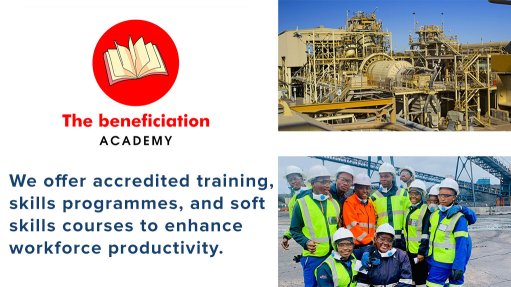
The Beneficiation Academy is a certified training institution that follows all compliance legislation and is accredited with various Sector...
VISIT SHOWROOM
AirNox (Pty) Ltd is a level 1 BBBEE manufacturer of complete AdBlue® solutions for operators of SCR diesel engines and AUS40 across South Africa...
VISIT SHOWROOM


Announcements
What's On
Subscribe to improve your user experience...
Option 1 (equivalent of R125 a month):
Receive a weekly copy of Creamer Media's Engineering News & Mining Weekly magazine
(print copy for those in South Africa and e-magazine for those outside of South Africa)
Receive daily email newsletters
Access to full search results
Access archive of magazine back copies
Access to Projects in Progress
Access to ONE Research Report of your choice in PDF format
Option 2 (equivalent of R375 a month):
All benefits from Option 1
PLUS
Access to Creamer Media's Research Channel Africa for ALL Research Reports, in PDF format, on various industrial and mining sectors
including Electricity; Water; Energy Transition; Hydrogen; Roads, Rail and Ports; Coal; Gold; Platinum; Battery Metals; etc.
Already a subscriber?
Forgotten your password?
Receive weekly copy of Creamer Media's Engineering News & Mining Weekly magazine (print copy for those in South Africa and e-magazine for those outside of South Africa)
➕
Recieve daily email newsletters
➕
Access to full search results
➕
Access archive of magazine back copies
➕
Access to Projects in Progress
➕
Access to ONE Research Report of your choice in PDF format
RESEARCH CHANNEL AFRICA
R4500 (equivalent of R375 a month)
SUBSCRIBEAll benefits from Option 1
➕
Access to Creamer Media's Research Channel Africa for ALL Research Reports on various industrial and mining sectors, in PDF format, including on:
Electricity
➕
Water
➕
Energy Transition
➕
Hydrogen
➕
Roads, Rail and Ports
➕
Coal
➕
Gold
➕
Platinum
➕
Battery Metals
➕
etc.
Receive all benefits from Option 1 or Option 2 delivered to numerous people at your company
➕
Multiple User names and Passwords for simultaneous log-ins
➕
Intranet integration access to all in your organisation