Water stewardship momentum building

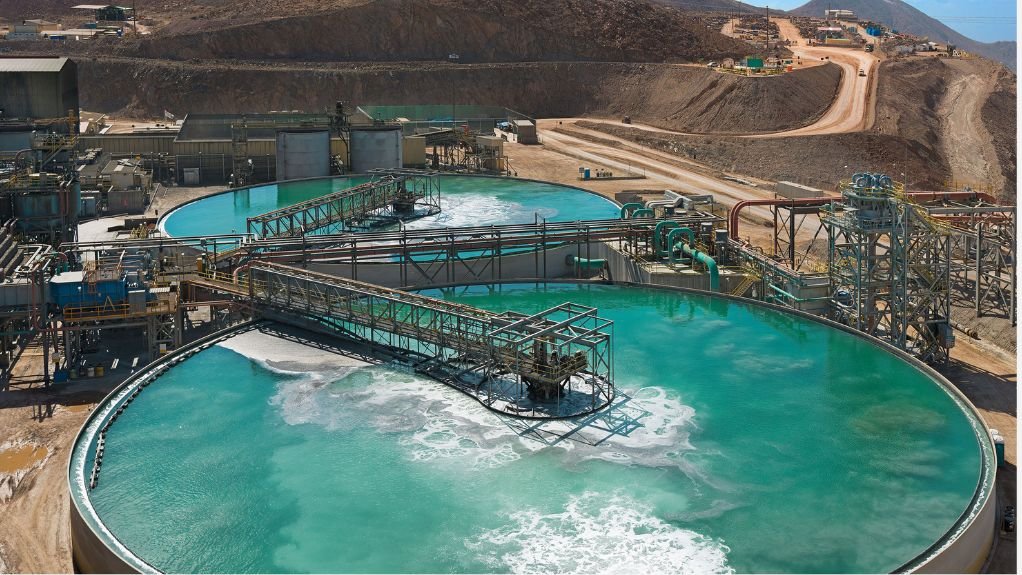
INFLUENTIAL FACTORS Progress in mine water management continues to be influenced by factors such as commodity type, catchment conditions, operating scale, water security constraints, cost pressures, infrastructure security, mine closure requirements and stakeholder consensus


Water management across South Africa’s mining sector has improved over the past five to ten years, although implementation continues to vary between operations, say the mine water division experts of water sector industry body the Water Institute of Southern Africa (WISA).
While advances in technology, stronger regulatory compliance, improved reporting and greater consideration of water-related social issues have strengthened mine water management, WISA mine water division representatives Richard Garner and Bashan Govender note that progress continues to be influenced by factors such as commodity type, catchment conditions, operating scale, water security constraints, cost pressures, infrastructure security, mine closure requirements and stakeholder consensus.
Nonetheless, mines have improved water management technologies, infrastructure, planning and water security, while existing operations are becoming more water resilient and new mines are better positioned to incorporate newer technologies into their designs.
“Water management is also incorporated into business decision-making alongside greenhouse-gas emissions, energy use and mine closure liabilities,” add Garner and Govender.
From a regulatory perspective, they point out that compliance has improved through stronger monitoring and management responses, with water management being incorporated into social and labour plans, mine closure plans and community engagement processes; environmental, social and governance reporting has also become more consistent.
“Many mines now maintain detailed water balances ranging from yearly assessments to real-time monitoring systems,” they say.
In terms of treatment options, they advise that treatment technology should be selected according to the quality of the contaminated water and its intended end-use, with active water treatment generally being regarded as a last resort after other water management measures have been exhausted, owing to its high capital, operating and energy requirements, as well as the need to manage concentrated waste streams over the long term.
In this regard, reverse osmosis (RO), while widely used, is not always the most suitable option because it produces hazardous brine requiring dedicated storage facilities, Garner and Govender point out. They estimate that brine storage can account for up to 33% of the capital cost of a new RO plant servicing contaminated water from mines.
They note that membrane filtration technologies, including RO, have improved significantly since the 1990s, with more reliable membranes, mobile treatment units and the deployment of solar power to address power requirements. However, concentrated waste disposal remains a major limitation for the technology and unless this can become integrated into another revenue stream, the implementation of high-end water treatment will remain a cost to companies.
More generally, Garner and Govender state that no single treatment technology can address every water quality challenge and that most treatment plants combine multiple technologies to target different contaminants and protect downstream processes.
“Water with higher salinity, altered pH, elevated biological activity or high metal concentrations generally requires more complex treatment, while silica, boron, organic material, biological compounds, transition-group metals and radioactive isotopes remain particularly difficult to remove,” they explain.
Common Treatment Options
The most widely used treatment approach in South African mining remains sediment removal using screening, filtration and settling, reflecting the extensive use of water in mineral processing, Garner and Govender point out.
Neutralisation is also widely applied, particularly where acid-generating rock affects water quality, although treatment requirements vary according to commodity type and host geology.
For removing dissolved salts and metals, they identify four principal approaches: chemical treatment, filtration, electro-magnetic systems and biological or passive treatment.
Electro-magnetic technologies continue to evolve and may offer future solutions for concentrated brines, while biological and passive systems are better suited to polishing pretreated water rather than treating heavily contaminated water. Although passive systems require less mechanical intervention, they still depend on careful design, maintenance and contaminant removal, they add.
Meanwhile, many mines also operate domestic wastewater treatment plants, with treated effluent frequently reused in mineral beneficiation to improve water efficiency.
The Department of Water and Sanitation’s water management hierarchy is helping mines to improve water efficiency throughout the mining life cycle by prioritising avoiding unnecessary water use, reducing consumption, reusing and recycling water, and treating water only when the preceding measures are insufficient, Garner and Govender elaborate.
Examples of emerging best practice include intercepting clean groundwater before contamination, using filter presses to remove water from slurries and thus retain water within processing plants, improving water-intensive dust suppression technologies with additives, installing dam liners to reduce seepage losses, switching to poorer quality water sources in processing and, in some cases, avoiding social conflict over water resources by providing solar-powered community water infrastructure where mining activities may affect local water access.
Garner and Govender identify the National Water Act, including its Water Use Licence requirements for Water Conservation and Water Demand Management, together with the National Environmental Management Act’s mine closure financial provisioning regulations, as the principal regulatory drivers currently influencing investment in mine water management.
They point out that long-term water treatment costs can account for as much as 50% of mine closure financial provisioning, which should encourage mining companies to improve operational water management and planning to reduce future liabilities.
While international water stewardship expectations have influenced many listed mining companies, Garner and Govender cite the Emalahleni water reclamation plant, Witwatersrand basin water treatment plants, the De Hoop dam and Lebalelo Water Users Association’s bulk water supply scheme as examples of related collaborative water stewardship initiatives with hopefully more to come.
Article Enquiry
Email Article
Save Article
Feedback
To advertise email advertising@creamermedia.co.za or click here
Research Reports
Projects
Latest Multimedia
Latest News
Showroom
Rio Carb is an OEM (Original Equipment Manufacturer) of R-C700 Chromium Carbide (CrC) alloy clad wear plates and pipes used for heavy materials...
VISIT SHOWROOM
ALBIS FLANGES — founded in 1965 — is a petro-chemical approved manufacturer of flanges and fittings in most grades of steel, listed with Sasol,...
VISIT SHOWROOM
Announcements
What's On
Subscribe to improve your user experience...
Option 1 (equivalent of R125 a month):
Receive a weekly copy of Creamer Media's Engineering News & Mining Weekly magazine
(print copy for those in South Africa and e-magazine for those outside of South Africa)
Receive daily email newsletters
Access to full search results
Access archive of magazine back copies
Access to Projects in Progress
Access to ONE Research Report of your choice in PDF format
Option 2 (equivalent of R375 a month):
All benefits from Option 1
PLUS
Access to Creamer Media's Research Channel Africa for ALL Research Reports, in PDF format, on various industrial and mining sectors
including Electricity; Water; Energy Transition; Hydrogen; Roads, Rail and Ports; Coal; Gold; Platinum; Battery Metals; etc.
Already a subscriber?
Forgotten your password?
Receive weekly copy of Creamer Media's Engineering News & Mining Weekly magazine (print copy for those in South Africa and e-magazine for those outside of South Africa)
➕
Recieve daily email newsletters
➕
Access to full search results
➕
Access archive of magazine back copies
➕
Access to Projects in Progress
➕
Access to ONE Research Report of your choice in PDF format
RESEARCH CHANNEL AFRICA
R4500 (equivalent of R375 a month)
SUBSCRIBEAll benefits from Option 1
➕
Access to Creamer Media's Research Channel Africa for ALL Research Reports on various industrial and mining sectors, in PDF format, including on:
Electricity
➕
Water
➕
Energy Transition
➕
Hydrogen
➕
Roads, Rail and Ports
➕
Coal
➕
Gold
➕
Platinum
➕
Battery Metals
➕
etc.
Receive all benefits from Option 1 or Option 2 delivered to numerous people at your company
➕
Multiple User names and Passwords for simultaneous log-ins
➕
Intranet integration access to all in your organisation