Vesconite strengthens pump reliability and efficiency across pump systems

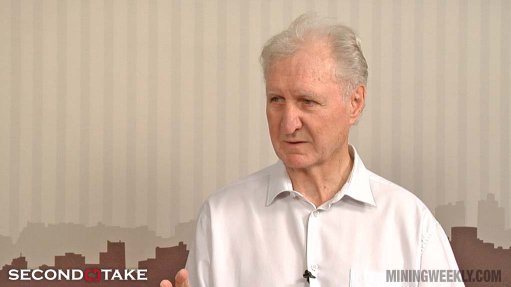
Vesconite Bearings’ engineered bushings and wear rings are proving their value, boosting performance and extending the life of vertical turbine and horizontal split-case pumps. Camerawork and Editing: Nicholas Boyd.



Engineered bearings and wear parts manufacturer Vesconite Bearings continues to expand its presence in critical water-pumping applications globally, with growing evidence that its bushings and wear rings significantly improve the performance and lifespan of both vertical turbine pumps and horizontal split-case pumps.
“Vesconite Bearings’ materials are proving resilient in environments that place severe stress on conventional bearings,” notes Vesconite Bearings mechanical engineer and consultant Joané Odendaal.
She explains that vertical turbine pumps are designed for deep pumping applications, often using shafts that extend 20 m or more into groundwater, reservoirs or municipal storage dams. These multi-stage centrifugal pumps require precise shaft alignment and tight tolerances to operate efficiently.
Odendaal says that Vesconite Bearings supplies two key components for vertical turbine pumps. The first is a range of bushings installed at intervals along the shaft, while the second is wear rings fitted within the pump casing, with the impeller shroud rotating against their internal diameter. Both components rely heavily on Vesconite’s exceptional dimensional stability.
“We design our bushings with very tight diametrical clearances,” she says. “The tight gap between the shaft and the bushing reduces shaft deflection and vibration. For pump manufacturers and operators, that translates into less mechanical stress on the pump and motor, fewer failures and longer intervals between maintenance cycles.”
Wear rings, which are also machined to tight clearances, reduce internal leakage around the impeller, helping to maintain the pressure head across each stage. The result is improved pumping efficiency, particularly in multi-stage installations where leakage losses can be significant.
Odendaal notes that Vesconite’s resistance to abrasion and corrosion makes it well-suited to handling sandy, silty or dirty water. In regions such as Texas, in the US, where groundwater conditions vary dramatically from one side of the Mississippi to the other, Vesconite’s grooves can be machined deeper to flush sand particles through the system without causing scoring or premature wear.
“Operators there have seen increases in efficiency, reductions in vibration and significant savings in maintenance costs,” she adds.
Reducing Downtime
Maintenance costs are a key challenge in vertical turbine pumping systems. Extracting a pump from a deep borehole requires cranes, specialised pump technicians and considerable downtime.
Pumps industry veteran Eric Bruggeman, who has worked extensively with vertical turbines in industrial and municipal applications, notes that this is where Vesconite made the most dramatic impact.
“These pumps used to come out after three or four months,” he recalls. “Once we switched to Vesconite bearings, pumps started running for two years before they needed to be removed. In some cases, pumps we installed in the late 1990s were still running ten years later without a major issue.”
Bruggeman emphasises that even “clean water” from municipal sources contains abrasive particles such as sand, dust and iron filings. Over time, traditional bearings tend to wear down the shaft, causing it to run off-centre.
“The shaft starts looking like a camshaft in a car,” he explains. “Once that happens, vibration increases, bearings fail and maintenance becomes unavoidable.”
Vesconite resists swelling, reduces abrasion and allows shafts to stay centred, dramatically lowering the vibration levels that typically lead to premature pump failures.
Perhaps most compelling is Vesconite’s performance in dirty water applications, where high abrasion traditionally cuts pump life dramatically.
“In places like Richards Bay Minerals and Arcelor Mittal, you’re pumping what is basically sludge,” Bruggeman says. “If you poured it into a glass and let it settle, you’d see incredible amounts of solids. Vesconite was the only bearing material we found that could handle that environment.”
Dirty water in mining and industrial environments typically carries coarse sand, grit, clay, fine metals or chemical contaminants. These destroy softer bearing materials and degrade metals rapidly.
According to Bruggeman, Vesconite’s resistance to wear and chemicals consistently outperformed copper-based bearings, elastomers and other polymers in these harsh conditions.
“When we talk about dirty water in the pump industry, we mean dirty water,” he highlights. “And Vesconite handled it better than anything else we tried.”
Horizontal Split-Case Pumps
Horizontal split-case pumps differ from vertical turbine pumps in layout and purpose, but they face similar challenges in handling abrasive water.
These pumps are not submerged but rather operate above water, feeding through inlet and outlet pipes. They are widely used in high-volume transfer applications such as municipal pumping, mine dewatering, industrial water supply and high-rise building circulation systems.
Odendaal notes that Vesconite performs strongly here as well, particularly in multi-stage split-case pumps where shaft deflection must be controlled. In these pumps, Vesconite Bearings supplies precisely engineered inter-stage bushings positioned between the impellers to stabilise the shaft, as well as large-diameter wear rings that help maintain pressure by controlling internal leakage.
As in vertical turbines, the wear rings play a crucial role by reducing back-flow. Odendaal explains that when Vesconite is used, the ability to machine extremely tight clearances results in increased operational efficiency.
Bruggeman notes that even in supposedly “clean” water applications, horizontal pumps still process sand, dust and particulates. Vesconite bearings consistently outlast other materials, reducing lifecycle costs for pump owners.
Across both pump types, the advantages of Vesconite materials remain consistent. The material provides exceptional dimensional stability, which enables tight machining tolerances. It exhibits very low or no swelling and low friction during operation. Vesconite also offers a high level of abrasion and wear resistance, even in abrasive slurries or sandy groundwater. The material’s broad chemical resistance makes it suitable for handling industrial fluids present in processing plants and mining operations. In addition, Vesconite reduces vibration and limits shaft wear, contributing to smoother-running pumps. Finally, the combination of these properties results in extended maintenance intervals and lower total cost of ownership for pump operators.
Odendaal notes that Vesconite’s various material grades allow engineers to tailor solutions across a wide spectrum of operating conditions — from potable water and desalination plants to slurry-laden mine process circuits. Vesconite’s engineering team performs a full analysis before confirming suitability, but the range of grades makes it possible to accommodate many different applications.
Both Odendaal and Bruggeman agree that the most powerful endorsements come from end users. Across agriculture, water utilities, mining, industrial plants and international installations, operators who have upgraded from conventional bearing materials to Vesconite consistently report measurable improvements.
“For pumps running 24/7, especially those operating deep underground or in remote areas, reliability is everything. And that’s exactly where Vesconite delivers its greatest value,” Odendaal concludes.
Article Enquiry
Email Article
Save Article
Feedback
To advertise email advertising@creamermedia.co.za or click here

Projects
Latest Multimedia
Latest News
Showroom
We partner growth of our select clients through our comprehensive and competitive integrated international logistics, trade finance and information...
VISIT SHOWROOM
Your global lifecycle technology & service partner for materials & minerals processing equipment for coal, iron ore, copper, manganese & other...
VISIT SHOWROOM

Announcements
What's On
Subscribe to improve your user experience...
Option 1 (equivalent of R125 a month):
Receive a weekly copy of Creamer Media's Engineering News & Mining Weekly magazine
(print copy for those in South Africa and e-magazine for those outside of South Africa)
Receive daily email newsletters
Access to full search results
Access archive of magazine back copies
Access to Projects in Progress
Access to ONE Research Report of your choice in PDF format
Option 2 (equivalent of R375 a month):
All benefits from Option 1
PLUS
Access to Creamer Media's Research Channel Africa for ALL Research Reports, in PDF format, on various industrial and mining sectors
including Electricity; Water; Energy Transition; Hydrogen; Roads, Rail and Ports; Coal; Gold; Platinum; Battery Metals; etc.
Already a subscriber?
Forgotten your password?
Receive weekly copy of Creamer Media's Engineering News & Mining Weekly magazine (print copy for those in South Africa and e-magazine for those outside of South Africa)
➕
Recieve daily email newsletters
➕
Access to full search results
➕
Access archive of magazine back copies
➕
Access to Projects in Progress
➕
Access to ONE Research Report of your choice in PDF format
RESEARCH CHANNEL AFRICA
R4500 (equivalent of R375 a month)
SUBSCRIBEAll benefits from Option 1
➕
Access to Creamer Media's Research Channel Africa for ALL Research Reports on various industrial and mining sectors, in PDF format, including on:
Electricity
➕
Water
➕
Energy Transition
➕
Hydrogen
➕
Roads, Rail and Ports
➕
Coal
➕
Gold
➕
Platinum
➕
Battery Metals
➕
etc.
Receive all benefits from Option 1 or Option 2 delivered to numerous people at your company
➕
Multiple User names and Passwords for simultaneous log-ins
➕
Intranet integration access to all in your organisation