US aluminium landfill loss can become domestic supply opportunity, says waste intelligence firm

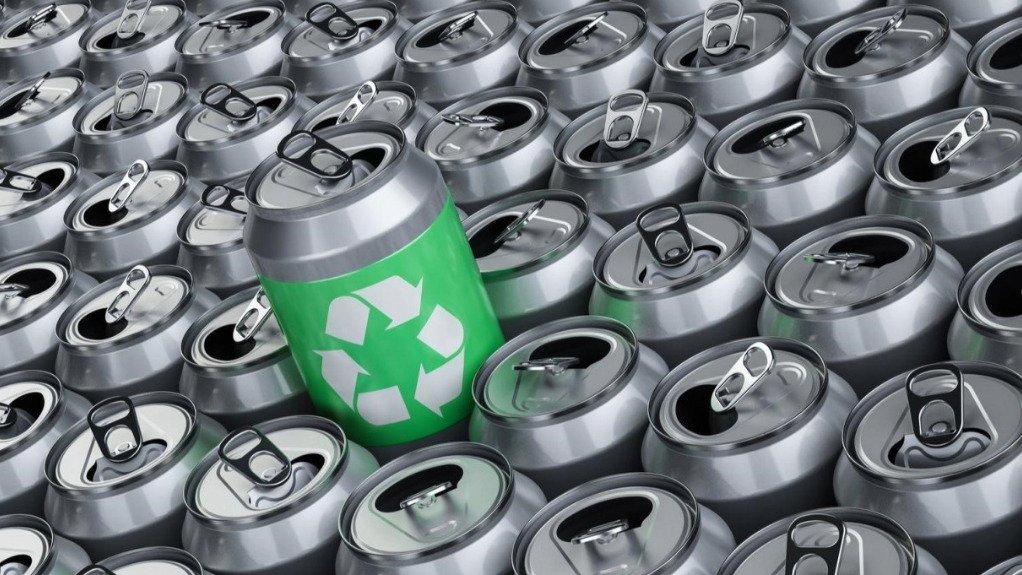



The US is paying record prices to import aluminium, yet it discards more than $1-billion worth of aluminium cans into landfills every year, finds AI waste intelligence company Greyparrot.
The cans represent about 11-million megawatt hours wasted a year, or enough to power more than one-million homes.
Most of that aluminum is recoverable using AI software that tracks waste in real time. Data collected from AI systems running in a New York-based recycling facility shows 89% of aluminum is recoverable once it reaches the sorting line, Greyparrot states.
The findings, which Greyparrot timed for a Climate Week event in New York, highlight the disparity between the outcry over the vast amounts of electricity that go into fueling the data centers that power AI, which most of the world is watching, and the significant electricity required to produce aluminium, which far fewer people consider.
The US tossed $1.2-billion of aluminium in 2023, while landfilling 61-billion of the 107-billion total aluminium cans shipped, a 43% recycling rate that is the lowest the US has seen in decades, according to the Aluminum Association and the Can Manufacturers Institute.
Greyparrot provides operators visibility into what’s being recovered, what’s being lost and where to improve in real time, bringing data-driven manufacturing to recycling and cutting material, cost and energy losses. The company says aluminium is costly but hard to track once tossed.
The US continues to import aluminium, which is molded into everything from beverage cans to cooking foil, amid rising prices for the metal in the US owing to tariffs.
In 2025, the country imported $26.5-billion of aluminium, with net imports covering 60% of supply.
Greyparrot says recovery of aluminium cans can ensure that every can recovered doesn’t have to be manufactured, reducing the strain on US power grids.
Recycled aluminium takes about 95.5% less energy to produce than aluminium made from raw ore, according to the International Aluminum Institute.
Greyparrot deploys its Analyzer AI-powered camera systems above the sorting belts in recycling facilities in seven US states and more than 20 countries globally, turning every discarded object into a data point by characterising the material, product and brand in real time.
To date, Analyzer has surpassed one-trillion waste detections for recyclers such as WM, Circular Services, Veolia, Biffa and FCC.
In partnership with Circular Services, Greyparrot Analyzer AI computer vision reads the sorting lines for the Brooklyn-based Sunset Park Material Recovery Facility in real time. It measured that the plant recovers 89% of the aluminium that passes through the facility, totaling about 91 000 cans a day, or 514 t/y.
Sunset Park recovers nearly nine in ten of the cans that cross its belts. Nationally, fewer than four in ten cans are recycled at all. Sorting is not the bottleneck, but collection is. The cans that make it to a facility get recovered; the problem is how many never make it, Greyparrot points out.
"Every era of computing has made something invisible legible, and waste is the last unindexed system in the global economy.
"The world is counting the energy going into AI to the last megawatt-hour. Nobody is counting the energy going into landfill. Aluminium is the clearest case: recycling it takes 95% less energy, because the energy is already in the metal. Waste intelligence makes that visible for the first time, and what it shows is domestic supply hiding in plain sight," says Greyparrot cofounder Ambarish Mitra.
Greyparrot has pioneered waste intelligence, the category of AI systems that measure waste streams in real time. Facilities using Analyzer's verified data are seeing 10% to 30% efficiency gains, delivering more than $2-million in savings in a single year, driven largely by recovering more high-value plastics and aluminum material previously lost to residue. The bottom line, according to Mitra, is that AI-measured recovery turns a landfill loss into domestic supply.
"Recycling has been treated as a public service when it is a supply chain. The aluminium moving through our facilities is a domestic commodity stream, and now we can measure it in real time. That changes what we can recover, and what we can prove to the customers who buy it," concludes Circular Services CEO Ron Gonen.
Article Enquiry
Email Article
Save Article
Feedback
To advertise email advertising@creamermedia.co.za or click here
Research Reports

Projects
Latest Multimedia

Latest News

Showroom

Stewarts & Lloyds is a leading steel, tube, and engineering product supplier in South Africa.
VISIT SHOWROOM


Announcements
What's On
Subscribe to improve your user experience...
Option 1 (equivalent of R125 a month):
Receive a weekly copy of Creamer Media's Engineering News & Mining Weekly magazine
(print copy for those in South Africa and e-magazine for those outside of South Africa)
Receive daily email newsletters
Access to full search results
Access archive of magazine back copies
Access to Projects in Progress
Access to ONE Research Report of your choice in PDF format
Option 2 (equivalent of R375 a month):
All benefits from Option 1
PLUS
Access to Creamer Media's Research Channel Africa for ALL Research Reports, in PDF format, on various industrial and mining sectors
including Electricity; Water; Energy Transition; Hydrogen; Roads, Rail and Ports; Coal; Gold; Platinum; Battery Metals; etc.
Already a subscriber?
Forgotten your password?
Receive weekly copy of Creamer Media's Engineering News & Mining Weekly magazine (print copy for those in South Africa and e-magazine for those outside of South Africa)
➕
Recieve daily email newsletters
➕
Access to full search results
➕
Access archive of magazine back copies
➕
Access to Projects in Progress
➕
Access to ONE Research Report of your choice in PDF format
RESEARCH CHANNEL AFRICA
R4500 (equivalent of R375 a month)
SUBSCRIBEAll benefits from Option 1
➕
Access to Creamer Media's Research Channel Africa for ALL Research Reports on various industrial and mining sectors, in PDF format, including on:
Electricity
➕
Water
➕
Energy Transition
➕
Hydrogen
➕
Roads, Rail and Ports
➕
Coal
➕
Gold
➕
Platinum
➕
Battery Metals
➕
etc.
Receive all benefits from Option 1 or Option 2 delivered to numerous people at your company
➕
Multiple User names and Passwords for simultaneous log-ins
➕
Intranet integration access to all in your organisation