UCT-led study reveals clues to the origin of the world’s largest diamonds

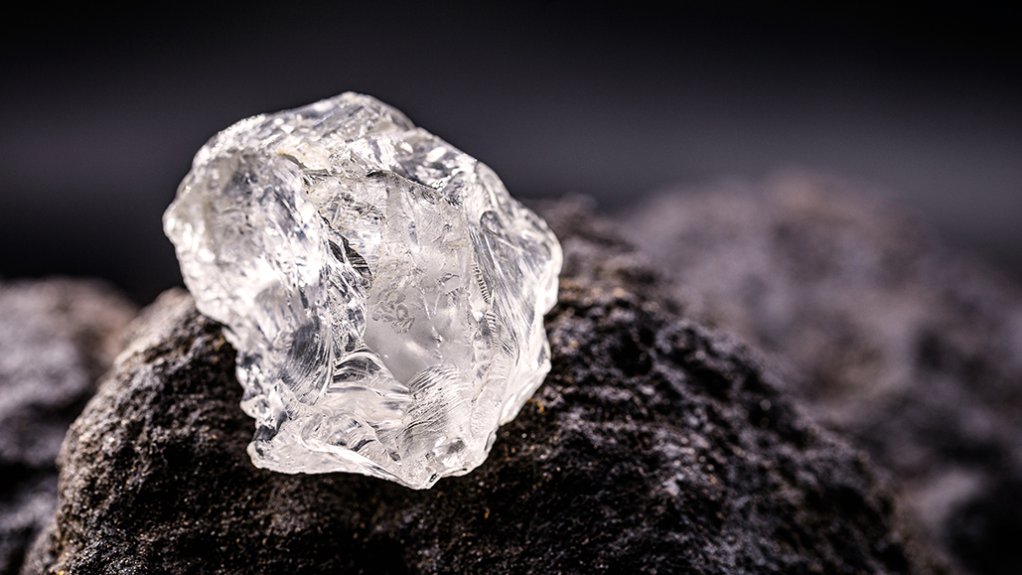


The conditions under which the world's rarest and most valuable gem-quality diamonds – referred to as Cullinan-like, large, inclusion-poor, pure, irregular and resorbed (CLIPPIR) – form have remained poorly understood.
With this in mind, a University of Cape Town- (UCT-) led study by the Kimberlite Research Group (KRG) at the Department of Geological Sciences, published in the journal Nature Communications, has used the chemistry of the mineral olivine in kimberlites as a window into the deep mantle, revealing that kimberlites carrying CLIPPIR diamonds consistently sample anomalous, iron-rich domains at the base of the lithosphere, more than 150 km beneath the surface.
The study was conducted in collaboration with researchers from the Carnegie Institution for Science, based in Washington, in the US, and the China University of Geoscience, based in Beijing, China.
It reveals that these iron-rich domains carry light-oxygen and heavy-iron isotopic signatures that are the hallmark of hydrothermally altered oceanic crust – material that was subducted into the deep Earth and accreted to the base of the continent by buoyant mantle upwelling.
Associate Professor Geoffrey Howarth from the KRG and lead author says interaction between rising kimberlitic melts and these iron-rich domains produced the large olivine and garnet megacrysts that are characteristic of CLIPPIR-bearing kimberlites, while the CLIPPIR diamonds themselves crystallised within these unusual substrates at pressures exceeding 11 GPa, in the mantle transition zone.
Beyond explaining the origin of the world's most exceptional diamonds, these findings show that such iron-rich, isotopically anomalous domains are a widespread and important source of geochemical heterogeneity in volcanic rocks erupted across the planet.
"These extraordinary diamonds – some of the largest and most valuable gems on Earth – have long been a mystery.
“Our study shows that they grew in an unusual iron-rich environment deep beneath the continents, formed from ancient oceanic crust that was dragged down by subduction and then accreted at the base of the lithosphere,” says Howarth.
“By reading the chemical fingerprints preserved in the mineral olivine brought up by kimberlite eruptions, we can now trace where these exceptional diamonds come from and how to find more of them,” he states.
Article Enquiry
Email Article
Save Article
Feedback
To advertise email advertising@creamermedia.co.za or click here
Research Reports


Projects
Latest Multimedia
Showroom

SmartMine IoT has been developed with the mining industry in mind, to provides our customers with powerful business intelligence and data modelling...
VISIT SHOWROOM
As a reticulator, Egoli Gas provides natural gas to homes and businesses via underground pipes.
VISIT SHOWROOM
Press Office
Announcements
What's On
Subscribe to improve your user experience...
Option 1 (equivalent of R125 a month):
Receive a weekly copy of Creamer Media's Engineering News & Mining Weekly magazine
(print copy for those in South Africa and e-magazine for those outside of South Africa)
Receive daily email newsletters
Access to full search results
Access archive of magazine back copies
Access to Projects in Progress
Access to ONE Research Report of your choice in PDF format
Option 2 (equivalent of R375 a month):
All benefits from Option 1
PLUS
Access to Creamer Media's Research Channel Africa for ALL Research Reports, in PDF format, on various industrial and mining sectors
including Electricity; Water; Energy Transition; Hydrogen; Roads, Rail and Ports; Coal; Gold; Platinum; Battery Metals; etc.
Already a subscriber?
Forgotten your password?
Receive weekly copy of Creamer Media's Engineering News & Mining Weekly magazine (print copy for those in South Africa and e-magazine for those outside of South Africa)
➕
Recieve daily email newsletters
➕
Access to full search results
➕
Access archive of magazine back copies
➕
Access to Projects in Progress
➕
Access to ONE Research Report of your choice in PDF format
RESEARCH CHANNEL AFRICA
R4500 (equivalent of R375 a month)
SUBSCRIBEAll benefits from Option 1
➕
Access to Creamer Media's Research Channel Africa for ALL Research Reports on various industrial and mining sectors, in PDF format, including on:
Electricity
➕
Water
➕
Energy Transition
➕
Hydrogen
➕
Roads, Rail and Ports
➕
Coal
➕
Gold
➕
Platinum
➕
Battery Metals
➕
etc.
Receive all benefits from Option 1 or Option 2 delivered to numerous people at your company
➕
Multiple User names and Passwords for simultaneous log-ins
➕
Intranet integration access to all in your organisation