Electricity Reform Won’t Fix the Networks Customers Actually Depend On


This article has been supplied.
President Cyril Ramaphosa’s endorsement of the Phase I report of the Eskom Restructuring Task Team (ERTT) marks a significant step towards an independent Transmission System Operator and a competitive electricity market. The report also identifies municipal arrears to Eskom as a threat to the sustainability of the broader electricity sector.
But while restructuring can change how electricity is traded, administered and financed, it cannot by itself address the physical condition of the infrastructure that delivers electricity to customers.
That distinction matters because redistributors, primarily municipalities, accounted for 44% of electricity sales in South Africa in 2024, according to Stats SA. These local distribution networks are the final link between the electricity system and millions of customers.
"Restructuring addresses how electricity is traded, administered and paid for, and those are real problems that need solving," notes Dr Andrew Dickson, engineering executive at CBi-electric: low voltage. "But when a feeder trips or a substation fails, the cause is physical. A breaker that has been in service for decades, a deteriorating cable or a connection that has degraded under repeated stresses will not be repaired by changing the structure of the electricity market."
The condition of South Africa’s electricity infrastructure has been documented for years. The South African Institution of Civil Engineering's (SAICE) Infrastructure Report Card has highlighted a significant disparity between the condition of the national transmission network and local electricity distribution infrastructure, while research supporting the report card has pointed to weaknesses in the information available about the condition of municipal electricity assets.
"Reform can create the conditions for investment, but investment has to reach the physical network," says Dr Dickson. "That means the physical hardware in substations, such as transformers, cables, protection equipment as well as the people responsible for maintaining them. If the physical infrastructure continues to deteriorate, customers will continue to experience the consequences regardless of how well the market structure works."
Eskom's own recent performance provides an indication of what sustained maintenance can achieve. Its annual financial statements for the year ended March 2025 show energy availability improving to 60.6% from 54.6% the previous year, while unplanned capacity losses fell from 32.3% to 26.1%. Loadshedding also fell sharply from 6,367 hours to 175 hours over the respective periods. Eskom has linked this improvement in plant performance to increased maintenance. During the early months of the current financial year, Eskom reported planned maintenance averaging 14.21% of capacity, compared with 12.82% in the comparable period of a year earlier, alongside a further reduction in unplanned outages.
"Generation has shown what sustained maintenance can achieve," says Dr Dickson. "The next challenge is applying that discipline to distribution, where the network is far more fragmented, and the assets are spread across Eskom and municipalities and other licensed distributors."
One of the obstacles is knowing exactly what needs to be maintained or replaced. Research supporting the SAICE infrastructure assessment found no reliable national database detailing the condition of municipal electricity distribution infrastructure, with municipalities among the asset owners least informed about the condition of their own networks. Without reliable asset information, maintenance and replacement become difficult to prioritise.
"An accurate asset register and a condition assessment need to come before a meaningful maintenance strategy," explains Dr Dickson. "You cannot effectively plan the replacement of equipment if you do not have a clear picture of what you own, where it is, what condition it’s in and what risk it presents to the network."
National Treasury's MFMA Circular 71 established an 8% benchmark for repairs and maintenance against the carrying value of property, plant and equipment. However, more recent research has questioned where a simple percentage of carrying value adequately reflects the real maintenance requirements of ageing infrastructure, particularly because carrying values can decline as assets age even as their maintenance needs increase. The challenge therefore extends beyond how much is spent on maintenance to whether spending is targeted at the assets and risks that matter most.
The same principle applies when infrastructure is renewed. As investment flows into electricity distribution, the technical specification and quality of the equipment procured will determine whether the investment translates into a more resilient network. Protection equipment, for example, must be correctly specified for the fault levels and operating conditions at the point where it is installed. Compliance with the applicable South African National Standards and appropriate technical testing are therefore critical to ensuring that equipment performs as intended when the network is under fault conditions.
“Procurement is part of infrastructure resilience,” says Dr Dickson. “The cheapest equipment is not necessarily the lowest-cost option over its lifetime. Correct specification, compliance, testing and maintenance all determine whether an investment continues to perform years after it has been installed.”
South Africa’s electricity reform therefore presents an opportunity that extends beyond institutional restructuring. Creating a more sustainable and competitive electricity market can help unlock investment, but that investment ultimately needs to translate into better-maintained physical infrastructure.
"If reform creates the conditions for investment but that investment does not reach the substations, cable networks and maintenance teams responsible for keeping distribution infrastructure operational, the customer at the end of the line will see little change," Dr Dickson concludes. "The success of electricity reform will ultimately be measured not only by how the market functions, but by whether customers receive a more reliable supply."
Article Enquiry
Email Article
Save Article
Feedback
To advertise email advertising@creamermedia.co.za or click here

Projects
Latest Multimedia
Latest News
Showroom
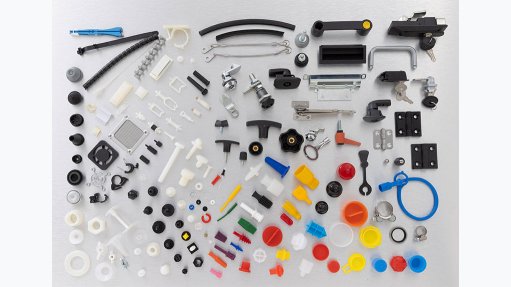
We are responsible manufacturers of essential components. Manufacturing 80 million parts a week, we have over 1 billion parts in stock.
VISIT SHOWROOM
Virtual Gas Network supplies compressed natural gas via a virtual gas distribution network.
VISIT SHOWROOM


Announcements
What's On
Subscribe to improve your user experience...
Option 1 (equivalent of R125 a month):
Receive a weekly copy of Creamer Media's Engineering News & Mining Weekly magazine
(print copy for those in South Africa and e-magazine for those outside of South Africa)
Receive daily email newsletters
Access to full search results
Access archive of magazine back copies
Access to Projects in Progress
Access to ONE Research Report of your choice in PDF format
Option 2 (equivalent of R375 a month):
All benefits from Option 1
PLUS
Access to Creamer Media's Research Channel Africa for ALL Research Reports, in PDF format, on various industrial and mining sectors
including Electricity; Water; Energy Transition; Hydrogen; Roads, Rail and Ports; Coal; Gold; Platinum; Battery Metals; etc.
Already a subscriber?
Forgotten your password?
Receive weekly copy of Creamer Media's Engineering News & Mining Weekly magazine (print copy for those in South Africa and e-magazine for those outside of South Africa)
➕
Recieve daily email newsletters
➕
Access to full search results
➕
Access archive of magazine back copies
➕
Access to Projects in Progress
➕
Access to ONE Research Report of your choice in PDF format
RESEARCH CHANNEL AFRICA
R4500 (equivalent of R375 a month)
SUBSCRIBEAll benefits from Option 1
➕
Access to Creamer Media's Research Channel Africa for ALL Research Reports on various industrial and mining sectors, in PDF format, including on:
Electricity
➕
Water
➕
Energy Transition
➕
Hydrogen
➕
Roads, Rail and Ports
➕
Coal
➕
Gold
➕
Platinum
➕
Battery Metals
➕
etc.
Receive all benefits from Option 1 or Option 2 delivered to numerous people at your company
➕
Multiple User names and Passwords for simultaneous log-ins
➕
Intranet integration access to all in your organisation