Building Better Together


This article has been supplied and will be available for a limited time only on this website.
Public procurement accounts for an estimated 12% of South Africa's GDP (National Research Foundation), highlighting its influence on economic growth, employment and industry standards. With the Department of Public Works and Infrastructure allocated R7.8 billion in 2026/27 and R24.6 billion over the medium term (SA Government News), it will continue to play a major role in shaping infrastructure delivery, skills development and competitiveness in the building industry.
However, beyond delivering infrastructure, public procurement drives economic growth, supports jobs and strengthens industries. For the Building Industry Bargaining Council (BIBC), it is a key lever for building a sustainable and competitive construction sector.
"Public procurement is more than a purchasing process," says Danie Hattingh, spokesperson for business at the BIBC. "When structured effectively, it supports quality infrastructure, fair competition, decent work and sustainable industry growth."
According to the BIBC, procurement frameworks deliver the greatest value when they balance cost, quality and compliance. While affordability remains important, an overemphasis on the lowest bid can compromise workmanship, delay projects and increase long-term costs. Hattingh says greater emphasis should be placed on performance, compliance and accountability.
"Responsible contractors that invest in their workforce, comply with labour laws and consistently deliver quality projects should be rewarded," he says. "Competition should be based on quality, skills and compliance, not cutting costs at the expense of industry standards."
The BIBC believes procurement frameworks should promote quality, compliance and long-term value through recognised safety and construction standards. It also stresses the importance of prompt payment and greater use of local suppliers, subcontractors and materials to support jobs and economic growth.
The discussion is particularly relevant to initiatives such as the Expanded Public Works Programme (EPWP). While it plays an important role in the creation of job opportunities and service delivery, the BIBC also believes these programmes offer valuable lessons for future procurement frameworks, with opportunities to strengthen alignment with industry standards, skills development and fair competition.
"Government infrastructure goals and negotiated industry agreements are not competing priorities," says Hattingh. "When aligned, they support both infrastructure delivery and decent work."
According to Hattingh, one of the key lessons has been the importance of collaboration across all spheres of government.
"The best outcomes are achieved when government, industry and labour work together," says Hattingh. "Their roles are complementary and contribute to better outcomes for workers, employers and communities."
He adds that continued collaboration and knowledge-sharing across government and industry are essential to achieving consistent outcomes. There is also an opportunity to strengthen awareness of the role bargaining councils play in promoting labour stability, compliance and fair competition, particularly within procurement and policy implementation processes.
Public procurement should support negotiated wages, employee benefits and industry standards that promote decent work and fair competition.
"Negotiated agreements protect both workers and responsible employers," says Hattingh. "They create a level playing field where businesses compete on quality, service and efficiency, not labour exploitation."
Consistent standards also encourage investment in skills, safety and workforce stability, strengthening productivity and project delivery.
The benefits extend far beyond individual construction sites.
Fair wages and negotiated benefits improve workers' financial security and economic participation, while formal employment supports tax compliance and broader economic stability.
For employers, consistent standards promote fair competition and reward innovation, performance and quality. For government and society, well-managed procurement delivers better infrastructure, stronger economic participation and greater value from public investment.
Looking ahead, the BIBC believes procurement frameworks can be strengthened through closer public-private collaboration and by requiring contractors to demonstrate compliance with key legal, labour, safety and industry requirements when tendering for work.
The Council has already seen encouraging progress through its engagement with government and industry. The City of Cape Town, for example, now requires a BIBC Compliance Certificate or Tender Certificate for construction tenders, helping to promote compliance and fair competition.
The BIBC also continues to work with government, the CIDB, the Department of Employment and Labour and other industry stakeholders to strengthen compliance, procurement and industry sustainability. It also participates in initiatives such as the High Impact Inspection Forum and Business Against Crime, while regularly engaging employers and subcontractors to promote compliance and industry best practice.
"Our goal is to help build an industry where quality infrastructure, fair competition, decent work and sustainable growth go hand in hand," Hattingh concludes. "When procurement frameworks support those outcomes, everyone benefits from government and contractors through to workers and communities."
Article Enquiry
Email Article
Save Article
Feedback
To advertise email advertising@creamermedia.co.za or click here

Projects


Latest Multimedia


Latest News


Showroom
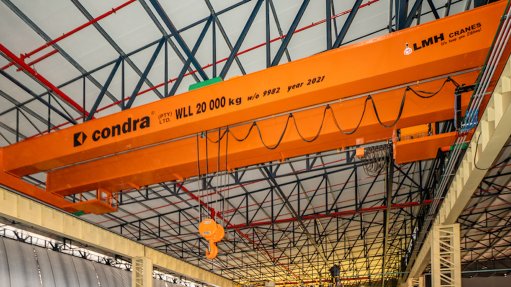
ISO-certified Condra manufactures overhead cranes, portal cranes, cantilever cranes and crane components: hoists, drives, end-carriages, brakes and...
VISIT SHOWROOM
Mitsubishi Chemical Advanced Materials South Africa (Pty) Ltd is a leading manufacturer of high-performance engineering plastics for the mining...
VISIT SHOWROOM



Announcements
What's On
Subscribe to improve your user experience...
Option 1 (equivalent of R125 a month):
Receive a weekly copy of Creamer Media's Engineering News & Mining Weekly magazine
(print copy for those in South Africa and e-magazine for those outside of South Africa)
Receive daily email newsletters
Access to full search results
Access archive of magazine back copies
Access to Projects in Progress
Access to ONE Research Report of your choice in PDF format
Option 2 (equivalent of R375 a month):
All benefits from Option 1
PLUS
Access to Creamer Media's Research Channel Africa for ALL Research Reports, in PDF format, on various industrial and mining sectors
including Electricity; Water; Energy Transition; Hydrogen; Roads, Rail and Ports; Coal; Gold; Platinum; Battery Metals; etc.
Already a subscriber?
Forgotten your password?
Receive weekly copy of Creamer Media's Engineering News & Mining Weekly magazine (print copy for those in South Africa and e-magazine for those outside of South Africa)
➕
Recieve daily email newsletters
➕
Access to full search results
➕
Access archive of magazine back copies
➕
Access to Projects in Progress
➕
Access to ONE Research Report of your choice in PDF format
RESEARCH CHANNEL AFRICA
R4500 (equivalent of R375 a month)
SUBSCRIBEAll benefits from Option 1
➕
Access to Creamer Media's Research Channel Africa for ALL Research Reports on various industrial and mining sectors, in PDF format, including on:
Electricity
➕
Water
➕
Energy Transition
➕
Hydrogen
➕
Roads, Rail and Ports
➕
Coal
➕
Gold
➕
Platinum
➕
Battery Metals
➕
etc.
Receive all benefits from Option 1 or Option 2 delivered to numerous people at your company
➕
Multiple User names and Passwords for simultaneous log-ins
➕
Intranet integration access to all in your organisation