Transmission reform critical to energy development


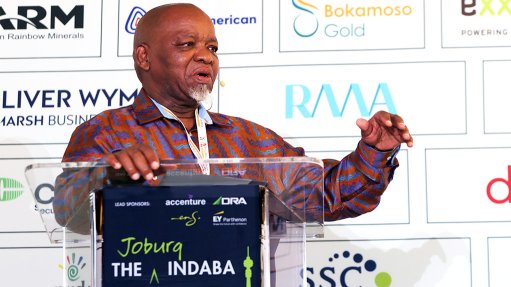
ROELOF VAN HUYSSTEEN What the market needs is execution and a visible pipeline of subsequent phases, so that local firms can build the capability to compete in later rounds



South Africa’s electricity transmission network was never intended to transmit power from the Cape provinces.
This is a key concern, as those provinces are where the vast majority of wind and solar energy projects are located, owing to the region’s high solar irradiance and strong winds. It is also where the Integrated Resource Plan anticipates more renewables-based generation capacity to be built, says green energy supplier Energy Exchange of Southern Africa (EXSA).
“[State-owned power utility] Eskom’s Generation Connection Capacity Assessment confirms that capacity in the Northern, Western, and Eastern Cape provinces, as well as the Hydra Central cluster, in the middle of the Cape provinces, is depleted,” EXSA regulatory head Dr Roelof van Huyssteen states.
To address this mismatch, critical policy changes regarding sequencing and institutional certainty are required.
In terms of sequencing, he adds that South African developers must secure land, receive environmental authorisation and establish special purpose vehicles before requesting a grid connection.
Meanwhile, in countries, such as Brazil and Chile, as well as parts of the US, permitting runs in parallel with the connection process.
“Our requirements are meant to screen out speculative applications, but the way they are stacked adds years to the project timeline,” Van Huyssteen explains.
Further, the rules governing access were gazetted only in December, as regulatory authority the National Energy Regulator of South Africa adopted the Grid Capacity Allocation Rules in late 2025.
“While this is a genuine step forward . . . codifying rules and administering them in a coherent and fair manner are different things.”
He adds that the allocation rules are still administered by a unit inside Eskom, and that grid access is now contested enough to reach the courts. In one recent wayleave case, the High Court set aside an Eskom refusal, finding it had acted to protect its own revenue.
To that end, general uncertainty around Eskom’s restructuring and the Transmission System Operator have made it materially more difficult for lenders to price grid risk.
He notes that, where generation capacity was the primary driver for previous energy crises, the binding constraint currently constitutes grid capacity, and particularly the transmission network.
“Roughly 1 932 MW of privately financed projects reached financial close in the opening months of this year . . . and the pipeline suggests substantially more could be financed before year-end. There is no shortage of appetite, technology or bankable developers. [However,] there is a shortage of transmission lines.”
He reiterates the issue of timing, noting that, aside from delays caused by bureaucratic processes and policy uncertainty weighing on delivery timelines, a utility-scale solar plant can be built in 18 to 24 months, but a major transmission corridor takes “the better part of a decade”.
“We are running roughly six years behind where the network needed to be.”
Moreover, the delayed, but inevitable shift to the South African Wholesale Energy Market, only highlights the stark reality about the country’s underdeveloped transmission network.
“Every reform we are pursuing – wheeling, trading, competitive procurement – assumes a network with enough capacity for participants to actually transact. A liberalised market on a saturated grid is a market in name only. Transmission is not a subsidiary issue to the energy transition. It is the transition's physical precondition.”
Grid Access
While Eskom remains indispensable to the national electricity sector, and deserves credit for its improved operational performance and the reforms it has driven – such as the Transmission Development Plan, the curtailment framework and virtual wheeling – it must improve in terms of grid access, including the speed, transparency and credibility of published capacity figures, says Van Huyssteen.
He cites developers’ reporting that Eskom’s available-capacity estimates are unreliable, and that its connection processes remain slow and opaque relative to those established by international peers.
“The deeper issue is structural and has become sharper in the recent months.”
He points to the launch of Eskom Green, which targets 6 GW by 2030 and up to 32 GW by 2040, selling directly to industrial customers. Eskom, therefore, intends to be an active competitor for commercial and industrial offtakers that independent producers and traders serve.
However, Eskom entities will, at least in the short term, remain responsible for controlling access to the grid.
Van Huyssteen is not accusing Eskom or its subsidiaries of acting in bad faith, he is rather making an observation about incentives: “No organisation should be asked to adjudicate access for its own competitors.”
Therefore, a neutral network operator that does not have a stake in which entities “generate electrons” is required.
However, he adds that independence is only an enabler for progress, not its substitute: “Restructuring an organogram does not string a single kilometre of line: it must be matched with capital and delivery, which is where the independent transmission projects come in.”
“What the market now needs is execution and a visible pipeline of subsequent phases, so that local firms can build the capability to compete in later rounds,” he concludes.
Article Enquiry
Email Article
Save Article
Feedback
To advertise email advertising@creamermedia.co.za or click here
Research Reports


Latest Multimedia
Latest News

Showroom
ECG provides specialised electrical engineering services to the Mining, Utilities, Materials Handling and Industrial industries, with extensive and...
VISIT SHOWROOM
Mitsubishi Chemical Advanced Materials South Africa (Pty) Ltd is a leading manufacturer of high-performance engineering plastics for the mining...
VISIT SHOWROOM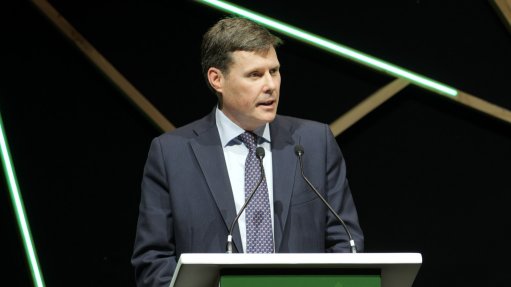
Press Office
Announcements
What's On
Subscribe to improve your user experience...
Option 1 (equivalent of R125 a month):
Receive a weekly copy of Creamer Media's Engineering News & Mining Weekly magazine
(print copy for those in South Africa and e-magazine for those outside of South Africa)
Receive daily email newsletters
Access to full search results
Access archive of magazine back copies
Access to Projects in Progress
Access to ONE Research Report of your choice in PDF format
Option 2 (equivalent of R375 a month):
All benefits from Option 1
PLUS
Access to Creamer Media's Research Channel Africa for ALL Research Reports, in PDF format, on various industrial and mining sectors
including Electricity; Water; Energy Transition; Hydrogen; Roads, Rail and Ports; Coal; Gold; Platinum; Battery Metals; etc.
Already a subscriber?
Forgotten your password?
Receive weekly copy of Creamer Media's Engineering News & Mining Weekly magazine (print copy for those in South Africa and e-magazine for those outside of South Africa)
➕
Recieve daily email newsletters
➕
Access to full search results
➕
Access archive of magazine back copies
➕
Access to Projects in Progress
➕
Access to ONE Research Report of your choice in PDF format
RESEARCH CHANNEL AFRICA
R4500 (equivalent of R375 a month)
SUBSCRIBEAll benefits from Option 1
➕
Access to Creamer Media's Research Channel Africa for ALL Research Reports on various industrial and mining sectors, in PDF format, including on:
Electricity
➕
Water
➕
Energy Transition
➕
Hydrogen
➕
Roads, Rail and Ports
➕
Coal
➕
Gold
➕
Platinum
➕
Battery Metals
➕
etc.
Receive all benefits from Option 1 or Option 2 delivered to numerous people at your company
➕
Multiple User names and Passwords for simultaneous log-ins
➕
Intranet integration access to all in your organisation