The Rise Of Robots In Warehouses





This article has been supplied.
The results of this shift could include vast economic growth, inflation dropping to 0% or better, a complete change in healthcare and abundance for all, according to ARK. Or it could be the stuff of nightmares. A recent report by financial services firm Morgan Stanley predicts that 13 million human robots will be among us by 2035, rising to 1 billion by 2050. Elon Musk predicts that humanoid robots could eventually number in the tens of billions. Amazon Robotics reports that since the business was founded in 2012, it has developed, produced and deployed more than 750 000 robots.
The rise of robots in warehouses was examined in a thought-provoking presentation by logistics specialist Martin Bailey at the 2026 SAPICS Conference in Cape Town. This annual event, which is now in its 49th year, is Africa’s premier learning, knowledge sharing and networking gathering for the supply chain profession.
Exploring the history of automation in warehouses, Bailey told the 600 SAPICS Conference attendees that it started as far back as the 1960s. The benefit was that the facilities could be smaller and they could operate 24/7 with fewer workers. In the 1970s, pallet AGVs (automated guided vehicles) were introduced to replace forklift trucks, but these had minimal success in South Africa.
Looking ahead, Bailey said that the rise of robots in warehouses will be faster than anyone expects because the benefits are huge. “If a human worker wants to learn how to master a complex logistics sorting task, it takes weeks of training. If you have a one million humanoid robots, only one robot needs to figure out the task perfectly once. Within a millisecond, the remaining 999 999 robots instantly possess that exact same master-level skill.”
Advanced humanoid robots like Tesla’s Optimus 3 can already perform general purpose tasks with advanced AI and superior dexterity, especially in the hands. Tesla has confirmed that the upgrade, Optimus Gen 4, will be built in higher numbers, starting later this year.
What about South African warehouses? Bailey says that some local facilities already use traditional technology like autonomous mobile robots (AMRs) and robot arms, as well as sorting, storage, picking, packing, driving and palletising robots. But in South Africa, robots are not getting cheaper. And the biggest issue locally is that robots create unemployment, he said.
Unpacking the number of installed industrial robots per 10 000 employees in other countries, he noted that the region’s unemployment rates are part of the equation. In Korea and Singapore, there are around 700 robots per 10 000 employees. Korea has less than 4% unemployment and Singapore less than 2%. South Africa has an unemployment rate of almost 34% - one of the highest in the world.
But the swift payback for an investment in a humanoid robot could still start to look tempting for South African warehouse operators. Bailey explained that the payback is just one year. This is based on the key assumptions that the robot costs USD20 000 (about R340 000) and that it works two shifts, thereby replacing two workers who each cost R15 000 a month.
“These are interesting times. Robots are undoubtedly our future, but we cannot say when and to what extent, especially in South Africa,” he concluded.
Article Enquiry
Email Article
Save Article
Feedback
To advertise email advertising@creamermedia.co.za or click here
Research Reports


Projects

Latest Multimedia

Latest News

Showroom

TEBA is a trusted workforce solutions partner to the mining and industrial sectors, providing end-to-end SLP compliant recruitment, candidate...
VISIT SHOWROOM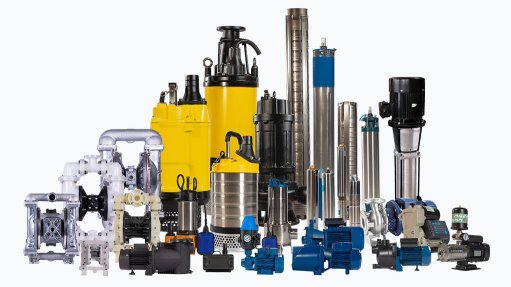
AxFlow AQS Liquid Transfer (Pty) Ltd is an Importer and Distributor of Pumps in Southern Africa
VISIT SHOWROOM


Announcements
What's On
Subscribe to improve your user experience...
Option 1 (equivalent of R125 a month):
Receive a weekly copy of Creamer Media's Engineering News & Mining Weekly magazine
(print copy for those in South Africa and e-magazine for those outside of South Africa)
Receive daily email newsletters
Access to full search results
Access archive of magazine back copies
Access to Projects in Progress
Access to ONE Research Report of your choice in PDF format
Option 2 (equivalent of R375 a month):
All benefits from Option 1
PLUS
Access to Creamer Media's Research Channel Africa for ALL Research Reports, in PDF format, on various industrial and mining sectors
including Electricity; Water; Energy Transition; Hydrogen; Roads, Rail and Ports; Coal; Gold; Platinum; Battery Metals; etc.
Already a subscriber?
Forgotten your password?
Receive weekly copy of Creamer Media's Engineering News & Mining Weekly magazine (print copy for those in South Africa and e-magazine for those outside of South Africa)
➕
Recieve daily email newsletters
➕
Access to full search results
➕
Access archive of magazine back copies
➕
Access to Projects in Progress
➕
Access to ONE Research Report of your choice in PDF format
RESEARCH CHANNEL AFRICA
R4500 (equivalent of R375 a month)
SUBSCRIBEAll benefits from Option 1
➕
Access to Creamer Media's Research Channel Africa for ALL Research Reports on various industrial and mining sectors, in PDF format, including on:
Electricity
➕
Water
➕
Energy Transition
➕
Hydrogen
➕
Roads, Rail and Ports
➕
Coal
➕
Gold
➕
Platinum
➕
Battery Metals
➕
etc.
Receive all benefits from Option 1 or Option 2 delivered to numerous people at your company
➕
Multiple User names and Passwords for simultaneous log-ins
➕
Intranet integration access to all in your organisation