Structural constraints leave OEMs’ supply chain exposed

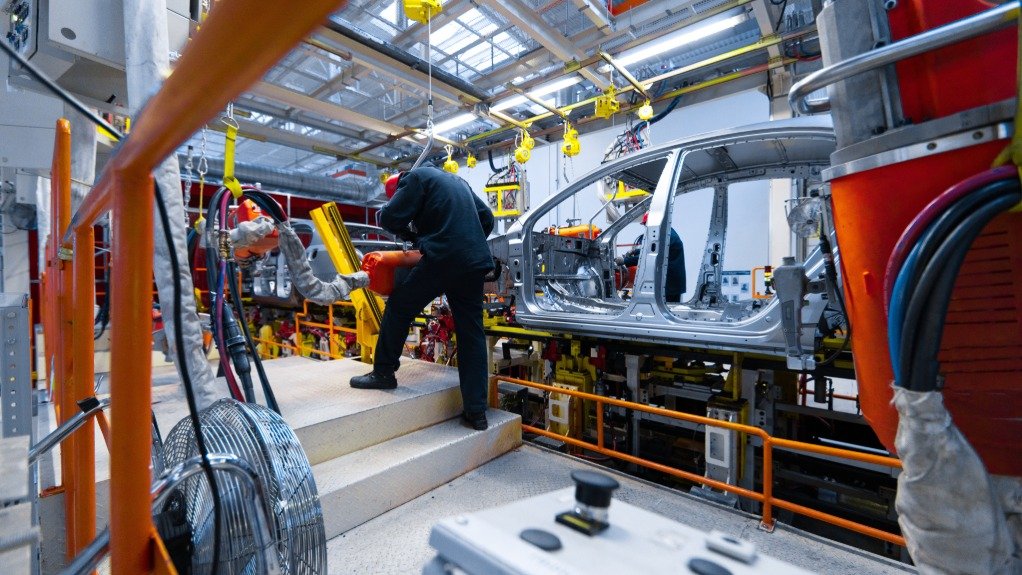
NAVIGATING DISRUPTIONS Manufacturers have heavily relied on globalised, low-cost sourcing and just-in-time inventory, often resulting in more constrained supplier networks



Despite experiencing frequent supply chain disruptions over the last six years, suppliers remain reactive rather than proactive, owing to structural constraints within the value chain, leaving original-equipment manufacturers (OEMs) exposed, says management consulting firm Arthur D. Little partner Frank McCleary.
A history of optimising for cost and efficiency rather than resilience has resulted in global supply chain fragility, exacerbated by large-scale disruptions.
McCleary explains that manufacturers have heavily relied on globalised, low-cost sourcing and just-in-time inventory, often resulting in more constrained supplier networks, which, in turn, has reduced buffers and operational flexibility.
Concurrently, many countries’ domestic industrial depth weakened or became uneven in key areas. In the US, for example, these areas include traditional metal fabrication, as well as gaps in parts of the semiconductor manufacturing ecosystem and other critical inputs.
The lack of industrial depth has limited industries’ ability to respond quickly to disruptions.
“A highly efficient but tightly coupled global system, combined with reduced domestic capacity and limited redundancy, left supply chains vulnerable to cascading disruptions when shocks occurred,” McCleary says.
Since 2020, structural weaknesses were exposed by a series of shocks, including Covid-19 shutdowns, semiconductor shortages, US-China trade tensions and tariffs and, more recently, the US-Iran conflict, among others.
“The industry has effectively normalised disruption. Frequent shocks have led firms to focus on short-term firefighting instead of building structural resilience,” McCleary states.
According to the ‘Turbocharging U.S. Automotive Manufacturing Competitiveness’ report, published by Arthur D. Little last year, most suppliers assess risk on an as-needed basis, indicating that responses remain tactical rather than systemic.
This reactive approach has resulted in economic activity becoming more volatile and less efficient.
At the firm level, small disruptions can halt production, while at a broader level, resources are repeatedly diverted toward crisis management rather than productivity-enhancing investments, such as automation, workforce development or capacity expansion.
While OEMs are pushing for dual sourcing and greater resilience, many supply chains remain effectively constrained owing to the limited number of qualified suppliers and high switching costs.
Meanwhile, suppliers, particularly components and raw materials suppliers, operate on thin margins with limited pricing power and capital access, hindering their ability to invest in resilience measures such as redundancy or inventory buffers.
Demand uncertainty and noncommittal OEM volumes further reduce incentives for long-term investment, while policy volatility reinforces a “wait-and-see” approach, McCleary explains.
These constraints reinforce disruption-driven economic activity, with firms continuing to operate defensively instead of building long-term competitiveness, ultimately suppressing productivity growth, increasing costs and weakening supply reliability.
This results in a less stable industrial base, greater exposure to future shocks and slower progress toward reshoring or strengthening domestic manufacturing capabilities.
African Recommendations
While supply chain disruptions have global implications, the impacts of these disruptions are often more severe in African economies, owing to lower industrialisation and higher import dependence.
“Many countries rely on imported fuel, food and intermediate goods, so global shocks quickly translate into higher costs, inflation and production constraints. Limited fiscal capacity and weaker infrastructure further reduce the ability to absorb shocks or rapidly adapt supply chains, amplifying the economic impact,” McCleary says.
However, while African economies are vulnerable to global shocks, these countries can also benefit from supply chain diversification, where they offer cost, location or trade advantages.
McCleary points out that the Russia-Ukraine war, which started in 2022, disrupted Ukraine’s role as a key supplier of automotive wiring harnesses to Europe. Following this, OEMs and suppliers shifted production to North African countries such as Morocco, leveraging geographic proximity and cost advantages while creating jobs.
However, to ensure supply chain resilience and leverage such opportunities at scale, McCleary recommends building foundational capabilities, such as vocational training, supplier development and structured resilience practices.
He notes that these efforts are most effective when applied at a regional level as well as leveraging mechanisms, such as the African Continental Free Trade Area agreement, to build scale and supplier ecosystems.
He cautions that capital-intensive measures such as large subsidies or full supply chain build-out are impractical, owing to the countries’ fiscal and market limitations.
Rather than full supply chain replication, McCleary recommends targeted localisation in specific value chain segments where countries have cost, resource or geographic advantages, supported by strong public-private coordination and improvements in infrastructure.
“There is also an opportunity to leapfrog by adopting digital tools, modern supply chain practices and automation-lite solutions without the burden of legacy systems,” McCleary adds.
However, countries should adopt a phased “crawl-walk-run” approach to automation, allowing for gradual productivity gains without large upfront investment.
He adds that labour is the key constraint, as without a stronger pipeline of skilled workers, many of the proposed solutions will be difficult to scale.
Further, he stresses that there is no single solution to supply chain vulnerability, as competitiveness is built through a combination of resilience, capability and strategic focus.
“Not every component should be localised, and not every disruption can be avoided. The priority is to identify areas that are strategically important and economically viable and align policy, OEM behavior and supplier investment around those areas,” he concludes.
Article Enquiry
Email Article
Save Article
Feedback
To advertise email advertising@creamermedia.co.za or click here
Research Reports

Projects

Latest Multimedia


Latest News

Showroom

Established in 1983, the ASTPM is an industry association and representative body of the welded carbon steel tube and pipe manufacturers of South...
VISIT SHOWROOM
We at Hawk High Pressure Pumps specialise in industrial pumps and pumping systems. Our high pressure washing equipment is locally manufactured and...
VISIT SHOWROOM


Announcements
What's On
Subscribe to improve your user experience...
Option 1 (equivalent of R125 a month):
Receive a weekly copy of Creamer Media's Engineering News & Mining Weekly magazine
(print copy for those in South Africa and e-magazine for those outside of South Africa)
Receive daily email newsletters
Access to full search results
Access archive of magazine back copies
Access to Projects in Progress
Access to ONE Research Report of your choice in PDF format
Option 2 (equivalent of R375 a month):
All benefits from Option 1
PLUS
Access to Creamer Media's Research Channel Africa for ALL Research Reports, in PDF format, on various industrial and mining sectors
including Electricity; Water; Energy Transition; Hydrogen; Roads, Rail and Ports; Coal; Gold; Platinum; Battery Metals; etc.
Already a subscriber?
Forgotten your password?
Receive weekly copy of Creamer Media's Engineering News & Mining Weekly magazine (print copy for those in South Africa and e-magazine for those outside of South Africa)
➕
Recieve daily email newsletters
➕
Access to full search results
➕
Access archive of magazine back copies
➕
Access to Projects in Progress
➕
Access to ONE Research Report of your choice in PDF format
RESEARCH CHANNEL AFRICA
R4500 (equivalent of R375 a month)
SUBSCRIBEAll benefits from Option 1
➕
Access to Creamer Media's Research Channel Africa for ALL Research Reports on various industrial and mining sectors, in PDF format, including on:
Electricity
➕
Water
➕
Energy Transition
➕
Hydrogen
➕
Roads, Rail and Ports
➕
Coal
➕
Gold
➕
Platinum
➕
Battery Metals
➕
etc.
Receive all benefits from Option 1 or Option 2 delivered to numerous people at your company
➕
Multiple User names and Passwords for simultaneous log-ins
➕
Intranet integration access to all in your organisation