Startups are extracting more copper using microbes



The world has a copper problem. The average ore quality is plummeting, more resources are being plowed into obtaining the same amount of metal and new mines take years to open because of the cost and regulatory hurdles. Yet companies need more of the commodity to power the accelerating electrical revolution.
“It is essentially the metal that is underpinning this transition,” said Kwasi Ampofo, head of metals and mining research at BloombergNEF.
Electric vehicles, for example, require three to four times more copper to build than their internal-combustion counterparts. Without a steady supply, Ampofo warned that the world will either slow its push to electrify transportation or pay a steep premium to achieve it.
By 2040, the world could face a copper shortfall of 10-million metric tons, according to a report published in January by research firm S&P Global. That represents a 25% gap between the projected supply and demand, the report said.
The bottleneck is yielding innovative solutions. To extend the lifespan of one mine past its prime, Arizona’s Carlota mine, its owner, KGHM Polska Miedz, has recently recruited a group of unconventional miners. They arrived by the millions, transported in barrel-sized containers from a laboratory in Colorado.
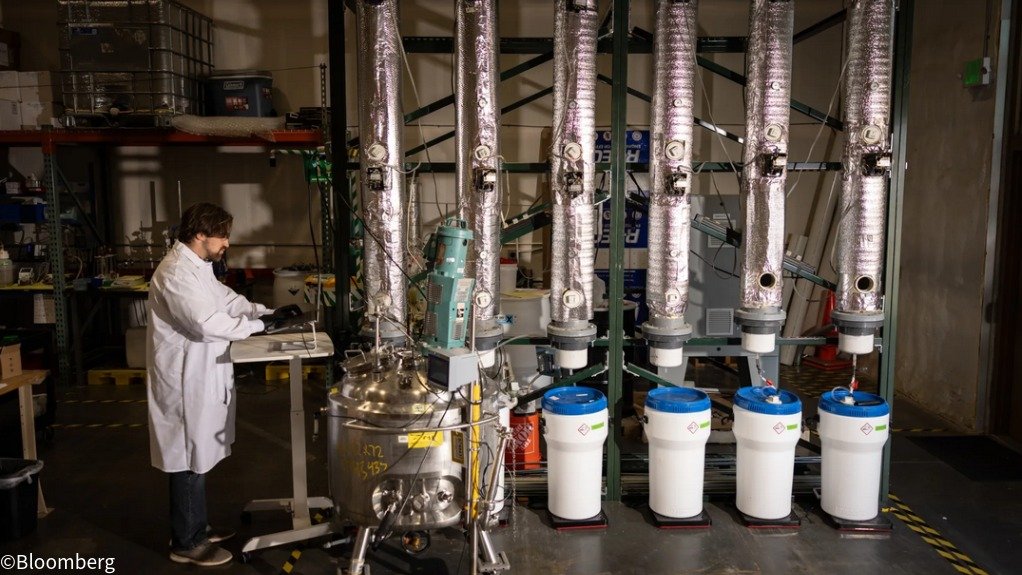
These miners are specialized microbes, acid-loving microorganisms that liberate copper from ore by digesting surrounding iron and sulfur compounds. Endolith, a Denver-based startup that supplies the microbes to KGHM, will continue to grow them in bioreactors onsite.
From there, the microbes are channeled into a sprinkler system to mix with sulfuric acid. That liquid then drips into vast heaps of crushed rocks — some as large as 10 sports stadiums — setting off a series of biochemical reactions in a process known as bioleaching to release copper.
If all goes as planned, Endolith’s microbial miners will help squeeze more copper out of the heaps and reduce the use of sulfuric acid at a time when the war in Iran has sent the feedstock’s price sky-high.
Endolith is tight-lipped about its estimated additional copper output, saying that the experiment is still in its early days. But Brock Johnston, who manages Carlota mine for KGHM, is already excited about the prospect of producing more with fewer chemicals.
“Any kind of improvement is beneficial,” said Johnston. After years of continuous digging, Carlota now produces roughly a third of its peak volume. Unless something is done, the mining complex — which cost hundreds of millions of dollars to build — is set to shut down by the end of the decade.
In a world where copper is critical for everything ranging from EVs to power grids and renewable energy equipment to artificial intelligence data centers, Johnston worries about the scheduled mine closure. “I’m concerned about how that is going to play out over time if we can’t keep up.”
Companies big and small are scrambling for ways to extract more copper. Jetti Resources, another Colorado-based startup, develops proprietary chemical catalysts to help break down stubborn sulfide ore. In Missouri, Emerson Electric upgrades conventional heap leaching systems with smart sensors and automation.
Meanwhile, Nuton, a subsidiary of the British-Australian mining titan Rio Tinto Group, is creating its own microbial solution. Earlier this year, Rio Tinto struck a deal to supply Amazon.com with copper produced this way.
“There is so much more that could possibly be done,” said Buz Barstow, an associate professor at the department of biological and environmental engineering at Cornell University. Next-generation bioleaching, according to him, has a long way to go.
Early forms of the technology were documented in China roughly 2 500 years ago, even though ancient scholars lacked the understanding of the underlying science. In the 1940s, American scientists identified specific rock-eating bacteria, laying the foundation for modern industrial bioleaching, which now accounts for an estimated 20% of the world’s mined copper. But despite decades of incremental progress, legacy methods haven’t fully unlocked the potential of microbes, leaving space for innovation.
At Endolith’s laboratory in Denver, scientists expose microbes to high temperatures, heavy acids and even toxic conditions, forcing these tiny creatures to adapt to the harsh environments similar to mining sites.
“We take microbes and we run them through a training camp,” said Liz Dennett, the founder and CEO of Endolith who likens the approach to preparing athletes ahead of the Olympics. By doing so, she said her team is able to get microbes “in tip-top shape” and enlist the “right offensive line to go in.”
Unlike traditional bioleaching methods that rely on a single bacterial strain, Endolith also cultivates diverse microbial communities, combining several or even dozens of distinct strains to ensure survival rates and better performance once deployed in the field.
When a mining partner provides ore samples, scientists select several optimized microbial communities from Endolith’s reserve, inoculate them into glass tubes packed with the ground ore, and run tests that replicate the conditions of the client’s leaching heaps. Over the next few months, the microbial groups compete to determine which yields the most copper. In addition to measuring dissolved minerals, scientists there also slice open the tubes like hotdogs to assess what remains inside.
Founded in 2023, Endolith has raised about $23-million in venture investment from backers including Squadra Ventures, Draper Associates and Collaborative Fund. It has also partnered with industry heavyweights such as BHP Group and Rio Tinto to evaluate its technology. Without giving estimates for specific projects, the company said its general goal is to extract at least an additional 10% of copper from low-grade ore.
The startup also aims to change how microbes are deployed in the field. Historically, mining operators have treated bioleaching as a static process, simply sprinkling bacteria over heaps and stepping back. But as temperatures and acidity levels inside a heap shift constantly, Endolith plans to monitor the activity and adjust its microbial cocktails to optimize extraction.
That ambition, however, has raised a few eyebrows.
A commercial leaching heap is an “active system with its own rules,” said Jaeheon Lee, an associate professor specializing in bioleaching at the Colorado School of Mines.
“Controlling a heap is almost impossible,” he added.
But scientists behind the latest bioleaching push argue that recent technological breakthroughs set this era apart from past failed attempts.
Christine Green, Endolith’s vice president of technology and operations, experienced the limitations of legacy methods firsthand, as she conducted bioleaching experiments for US mining firm Freeport-McMoRan in the 2000s.
Back then, Green tried but failed even to examine how microbes interacted with minerals deep within the heaps, let alone improve the process, she recalled. Today, advances in DNA sequencing and cloud computing have given her renewed hope of conquering the challenge.
Where lab analyses once took months to complete, Green said the latest tools yield results within 24 hours. Moreover, AI allows scientists to process and analyze huge amounts of data more efficiently and faster. The resulting trove of new information is “going to move the needle,” she said.
It remains to be seen whether Endolith can deliver on that promise. Like many others on the quest to revolutionize bioleaching, the startup is just starting to scale its technology from the lab to the industrial level. The true test will begin in the next few months as Endolith launches its first field demonstration at a commercial-scale heap at the Carlota Mine.
“Proving this works in the field is the inflection point,” Dennett said. Unlike lab settings where everything is under control, open-air heap leaching exposes optimized microbes to the elements and operational surprises.
Even if the Carlota pilot succeeds, industry watchers say that Endolith still has other hurdles to overcome before it can achieve wider adoption. As mineralogy, ore chemistry and environmental microbiology vary from mountain to mountain, the startup must tailor its solution for each customer.
“Finding that magic bioleaching process that is scalable from one mine to another is the gap that the industry is looking to fill,” said Ampofo of BNEF.
Endolith charges mining operators a fee for its microbial solution and onsite monitoring service. While Dennett estimates that the startup’s business model offers a financial payback period of less than a year, its economics remain unproven at scale. There is also a question of its environmental cost. Industry experts say that growing microbes in bioreactors to pull metal out of existing mines has a smaller carbon and ecological footprint than excavating new mines, but more studies are still needed to fully understand the impact.
Back in Arizona, Johnston is eager to see if the microscopic workforce is able to give his field a new lease on life. If the pilot proves its value, he said KGHM will consider deploying the technology at more mines.
Once defined by risk aversion, the global mining industry is being forced to adapt.
“Something needs to change because we need these improvements,” Johnston said, adding that technology can play a “pretty substantial” role in the future of copper mining. After all, “they really want to maximize what they can get,” he said.
Article Enquiry
Email Article
Save Article
Feedback
To advertise email advertising@creamermedia.co.za or click here
Research Reports
Projects
Latest Multimedia
Latest News
Showroom
Complete range of security sealing solutions including security seals bags and labels.
VISIT SHOWROOM
For over 60 years, VEGA has provided industry-leading products for the measurement of level, density, weight and pressure. As the inventor of the...
VISIT SHOWROOM
Announcements
What's On
Subscribe to improve your user experience...
Option 1 (equivalent of R125 a month):
Receive a weekly copy of Creamer Media's Engineering News & Mining Weekly magazine
(print copy for those in South Africa and e-magazine for those outside of South Africa)
Receive daily email newsletters
Access to full search results
Access archive of magazine back copies
Access to Projects in Progress
Access to ONE Research Report of your choice in PDF format
Option 2 (equivalent of R375 a month):
All benefits from Option 1
PLUS
Access to Creamer Media's Research Channel Africa for ALL Research Reports, in PDF format, on various industrial and mining sectors
including Electricity; Water; Energy Transition; Hydrogen; Roads, Rail and Ports; Coal; Gold; Platinum; Battery Metals; etc.
Already a subscriber?
Forgotten your password?
Receive weekly copy of Creamer Media's Engineering News & Mining Weekly magazine (print copy for those in South Africa and e-magazine for those outside of South Africa)
➕
Recieve daily email newsletters
➕
Access to full search results
➕
Access archive of magazine back copies
➕
Access to Projects in Progress
➕
Access to ONE Research Report of your choice in PDF format
RESEARCH CHANNEL AFRICA
R4500 (equivalent of R375 a month)
SUBSCRIBEAll benefits from Option 1
➕
Access to Creamer Media's Research Channel Africa for ALL Research Reports on various industrial and mining sectors, in PDF format, including on:
Electricity
➕
Water
➕
Energy Transition
➕
Hydrogen
➕
Roads, Rail and Ports
➕
Coal
➕
Gold
➕
Platinum
➕
Battery Metals
➕
etc.
Receive all benefits from Option 1 or Option 2 delivered to numerous people at your company
➕
Multiple User names and Passwords for simultaneous log-ins
➕
Intranet integration access to all in your organisation