South Africa's mining safety journey must continue: Drawing lessons from Canada and Australia


This article has been supplied.
By Junior Mining Council President Fred Arendse
The recent emergency safety briefing at Impala Platinum's Rustenburg operations should remind us that South Africa's journey towards zero harm in mining is far from complete.
This week, the Department of Mineral and Petroleum Resources (DMPR) reported that the country has recorded 33 mine fatalities in 2026 so far, with the Rustenburg region accounting for 12 of those deaths. More than a third of these fatalities occurred at Impala Platinum's Rustenburg operations.
The Department, together with Impala Platinum management and the Association of Mineworkers and Construction Union (AMCU), was seen addressing thousands of mineworkers during an emergency safety briefing. The company also suspended operations at its Rustenburg complex for five days to conduct a comprehensive safety reset.
This is in line with the Junior Mining Council’s (JMC) long-standing call that health and safety must remain the non-negotiable foundation of our sector.
Regardless of the differing views over the number of fatalities recorded at the mine, as AMCU has questioned the official statistics, there is one point on which everyone agrees: one life lost is one too many.
The urgency of improving mine safety is further highlighted by the commencement of the inquest into the tragic incident at the Ekapa Minerals Joint Shaft Mine in Kimberley, where five mineworkers lost their lives. The inquest coincides with the 10th anniversary of the Lily Mine disaster, one of South Africa's most painful mining tragedies, where three mineworkers remain trapped underground following the collapse of the container in which they were working. Years later, their families are still waiting for closure. These tragedies have left a lasting mark on mining communities and strengthened the call for safer working conditions.
These incidents remind us that mine safety can never become routine. Every tragedy presents an opportunity for the mining industry to reflect, learn and strengthen its safety culture.
South Africa's mining industry has made significant progress over the past three decades.
The South African mining industry recorded forty-two (42) fatalities in 2024. This represents a 24% improvement, year-on-year, compared to 2023 when we had fifty-five (55) fatalities. While 2025 South Africa recorded forty-one (41). Both years marked successive historical lows for the country's mining sector.
This demonstrates what can be achieved when government, organised labour and the mining industry work together. However, recent incidents remind us that progress should never lead to complacency.
Every fatality represents more than a statistic. It is a family that loses a loved one, a community that loses a breadwinner and an industry that falls short of its commitment to protect its people.
South Africa should continue learning from some of the world's safest mining jurisdictions, particularly Canada and Australia.
These countries consistently record lower mining fatality rates, not because mining is without risk, but because they have invested heavily in technology, leadership, training and strong safety cultures. Automation, remote-controlled equipment, digital monitoring systems and predictive maintenance have helped remove workers from dangerous environments and identify risks before they become disasters.
South Africa has started embracing many of these technologies, particularly among larger mining companies. However, many junior and emerging miners still face financial barriers to investing in advanced safety systems. This should not discourage progress. Government, financial institutions and industry partners should work together to improve access to modern safety technologies for junior miners.
At the same time, South Africa's mining conditions differ significantly from those in Canada and Australia. Much of our gold and platinum mining takes place deep underground, exposing workers to rock bursts, seismic events and fall-of-ground incidents that are less common in countries dominated by open-pit mining. While direct comparisons should acknowledge these geological differences, there is still much we can learn from international best practice.
Technology alone will not eliminate fatalities.
Safety begins with leadership and with every person on the mine understanding that production must never come before human life. It requires competent leadership, skilled mineworkers, regular training, effective emergency preparedness and a workplace culture where every employee feels empowered to stop unsafe work without fear.
Safety should not be viewed as a box-ticking exercise or merely a legal requirement. It should be a core value that guides every decision, from exploration and mine planning to production and mine closure.
Safety must also form part of the broader modernisation of South Africa's mining industry.
The challenge now is to build on that progress by accelerating the adoption of new technologies, strengthening safety leadership and ensuring that junior miners have the support they need to operate safely and responsibly.
The true measure of a successful mining industry is not only the minerals it produces or the revenue it generates. It is the value it places on protecting the lives and dignity of the people who make that production possible.
The lessons from Rustenburg, Ekapa and Lily Mine should strengthen our collective resolve to build a mining industry where every worker returns home safely at the end of every shift. That is the future the JMC has set its sights on, and one that we call on the entire mining industry and South Africa to commit to achieving.
Article Enquiry
Email Article
Save Article
Feedback
To advertise email advertising@creamermedia.co.za or click here
Research Reports

Latest Multimedia
Latest News
Showroom
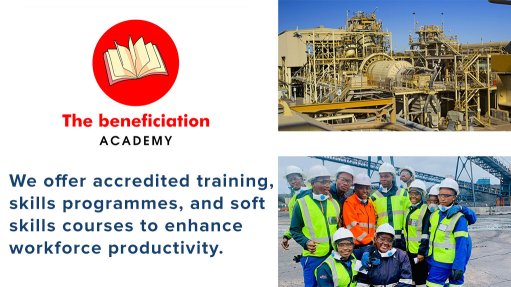
The Beneficiation Academy is a certified training institution that follows all compliance legislation and is accredited with various Sector...
VISIT SHOWROOM
Goodwin Submersible Pumps Africa is sole distributors for Goodwin electrically driven, submersible, abrasion resistance slurry pumps.
VISIT SHOWROOM
Announcements
What's On
Subscribe to improve your user experience...
Option 1 (equivalent of R125 a month):
Receive a weekly copy of Creamer Media's Engineering News & Mining Weekly magazine
(print copy for those in South Africa and e-magazine for those outside of South Africa)
Receive daily email newsletters
Access to full search results
Access archive of magazine back copies
Access to Projects in Progress
Access to ONE Research Report of your choice in PDF format
Option 2 (equivalent of R375 a month):
All benefits from Option 1
PLUS
Access to Creamer Media's Research Channel Africa for ALL Research Reports, in PDF format, on various industrial and mining sectors
including Electricity; Water; Energy Transition; Hydrogen; Roads, Rail and Ports; Coal; Gold; Platinum; Battery Metals; etc.
Already a subscriber?
Forgotten your password?
Receive weekly copy of Creamer Media's Engineering News & Mining Weekly magazine (print copy for those in South Africa and e-magazine for those outside of South Africa)
➕
Recieve daily email newsletters
➕
Access to full search results
➕
Access archive of magazine back copies
➕
Access to Projects in Progress
➕
Access to ONE Research Report of your choice in PDF format
RESEARCH CHANNEL AFRICA
R4500 (equivalent of R375 a month)
SUBSCRIBEAll benefits from Option 1
➕
Access to Creamer Media's Research Channel Africa for ALL Research Reports on various industrial and mining sectors, in PDF format, including on:
Electricity
➕
Water
➕
Energy Transition
➕
Hydrogen
➕
Roads, Rail and Ports
➕
Coal
➕
Gold
➕
Platinum
➕
Battery Metals
➕
etc.
Receive all benefits from Option 1 or Option 2 delivered to numerous people at your company
➕
Multiple User names and Passwords for simultaneous log-ins
➕
Intranet integration access to all in your organisation