SAIMM president proffers solutions to industry capability challenge beyond more graduates

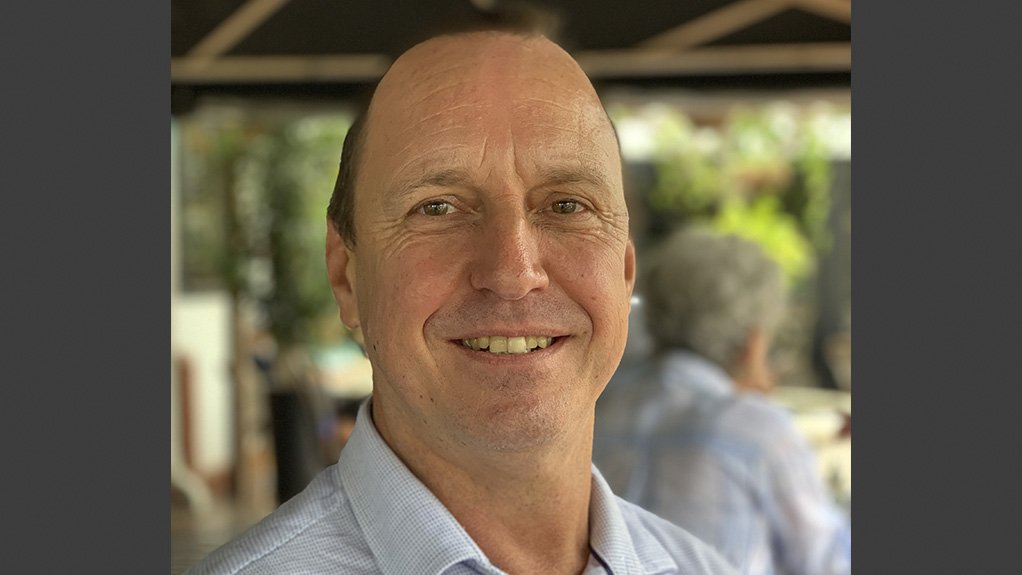



What is commonly described as a skills shortage in the country’s mining industry has become a much broader capability challenge and this will accelerate over the next decade as an experienced and capable cohort retires.
This is according to industry organisation Southern African Institute of Mining and Metallurgy (SAIMM) president Gary Lane, citing his experiences in the role over the past year as evidence of this assertion.
In an open letter to CEOs, board members and leaders across industry, academia and government who are stakeholders in the future of the country’s minerals industry, Lane points out that the Mining Qualifications Authority (MQA) Strategic Plan, tabled in March, recorded 113 hard-to-fill mine manager vacancies and 107 mining engineer vacancies, with insufficient structured experience identified as the principal reason for the latter.
He warns that producing more graduates is insufficient to solve this problem.
“What matters is turning talented people into capable practitioners who can make ethical and sound decisions, carry responsibility and apply their knowledge in demanding operating environments. Right now, our biggest challenge is conversion. Soon it will be replenishment,” Lane stresses.
He points out that other mining jurisdictions have already recognised workforce capability as a strategic constraint on future growth and have implemented interventions to address this.
Lane calls for South Africa to focus with a similar level of intensity through the country’s critical mineral’s strategy, supported by commitment, broad collaboration and collective leadership to drive capability delivery and impact.
He also notes that the country’s engineering pool is smaller than many realise and stresses the need to strengthen the entire workforce pipeline, from the shop floor to specialist and leadership roles.
There is also the issue of mining-engineering students being unable to graduate if they do not secure the vacation work or workplace exposure required by their curriculum.
While the Association of Mine Managers of South Africa has stepped forward to coordinate placements, Lane laments that this should not be dependent on yearly intervention, and should instead become part of a permanent industry operating model.
Moreover, the statutory-certification pipeline presents an equally serious concern, he emphasises.
“Industry feedback suggests that rock engineering may be constrained in the future, as our highly skilled individuals are being poached internationally and the mine-ventilation talent pipeline is lean,” Lane avers.
He also mentions that the Health and Safety Act certification pathways do not align neatly with Engineering Council of South Africa registration requirements of the country’s mining industry roles and levels of work.
Lane, therefore, advocates for greater alignment between industry, regulators and professional bodies to expand supervised development opportunities and strengthen these pathways.
He highlights that the SAIMM is working to connect and strengthen several existing initiatives in the industry, and working with a number of stakeholders to build an industry-approved graduate capability-development programme.
“The objective is straightforward: create a structured pathway that helps graduates develop workplace competence, achieve professional registration and, where relevant, obtain statutory certification, while continuing to grow throughout their careers through professional development.”
ADVICE
Lane’s suggestion is for CEOs and industry leaders to make capability development a strategic priority and an operating responsibility; invest in the full, integrated capability pipeline from education through work-integrated learning; appoint an accountable executive to join Mining Engineering Education South Africa (MEESA); establish yearly targets for workplace placements and mentoring; share workforce data; support multi-year funding commitments; and align workplace skills plans and relevant social and labour plan commitments with the long-term capability pipeline.
He advocates for boards to place capability on the strategic risk register and require yearly reporting on pipeline conversion, specialist depth, professional registration, statutory certification and succession, and not only on training expenditure.
Lane further calls on government leaders to recognise mining as a pillar of economic growth and critical minerals as an opportunity of national significance and to urgently create an enabling environment through aligned policy and incentives; strengthen mathematics and science teaching; and improve alignment between education, workplace learning, professional registration, statutory certification and workforce planning.
To the MQA, he suggests it continue aligning the sector skills plan and Skills Development Levy-funded grants with a demand-led capability pipeline; and prioritise workplace learning, technical and operator development, graduate programmes, and statutory competency pathways; while measuring placements, completions, certification outcomes and employment.
Lane says universities and technical and vocational education and training colleges should align curricula with current and future industry needs; identify workplace-learning requirements early; share pipeline and outcome data; and continue working with MEESA, employers and professional bodies.
He highlights that the SAIMM is changing its operating model and will invest in addressing these industry challenges.
“We will continue bringing stakeholders together, helping to coordinate effort and track progress, developing the capability ecosystem and reporting openly on both successes and gaps.
“Expect us to engage directly and to ask for measurable commitments around placements, mentoring, data sharing and sustained support,” Lane assures stakeholders, while also highlighting the need for an innovative funding model and collective leadership from the industry.
Article Enquiry
Email Article
Save Article
Feedback
To advertise email advertising@creamermedia.co.za or click here
Projects

Latest Multimedia
Latest News


Showroom
SafeQuip is a leading distributor and manufacturer of fire safety solutions, offering a comprehensive range of products designed to meet all...
VISIT SHOWROOM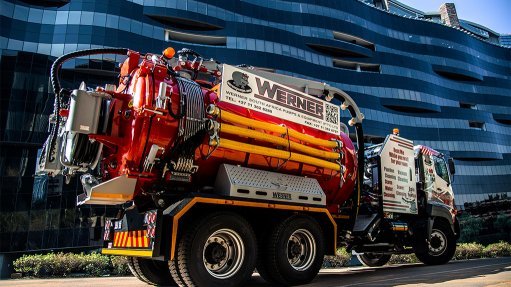
For over 30 years, Werner South Africa Pumps & Equipment (PTY) LTD has been designing, manufacturing, supplying and maintaining specialist...
VISIT SHOWROOM
Announcements
What's On
Subscribe to improve your user experience...
Option 1 (equivalent of R125 a month):
Receive a weekly copy of Creamer Media's Engineering News & Mining Weekly magazine
(print copy for those in South Africa and e-magazine for those outside of South Africa)
Receive daily email newsletters
Access to full search results
Access archive of magazine back copies
Access to Projects in Progress
Access to ONE Research Report of your choice in PDF format
Option 2 (equivalent of R375 a month):
All benefits from Option 1
PLUS
Access to Creamer Media's Research Channel Africa for ALL Research Reports, in PDF format, on various industrial and mining sectors
including Electricity; Water; Energy Transition; Hydrogen; Roads, Rail and Ports; Coal; Gold; Platinum; Battery Metals; etc.
Already a subscriber?
Forgotten your password?
Receive weekly copy of Creamer Media's Engineering News & Mining Weekly magazine (print copy for those in South Africa and e-magazine for those outside of South Africa)
➕
Recieve daily email newsletters
➕
Access to full search results
➕
Access archive of magazine back copies
➕
Access to Projects in Progress
➕
Access to ONE Research Report of your choice in PDF format
RESEARCH CHANNEL AFRICA
R4500 (equivalent of R375 a month)
SUBSCRIBEAll benefits from Option 1
➕
Access to Creamer Media's Research Channel Africa for ALL Research Reports on various industrial and mining sectors, in PDF format, including on:
Electricity
➕
Water
➕
Energy Transition
➕
Hydrogen
➕
Roads, Rail and Ports
➕
Coal
➕
Gold
➕
Platinum
➕
Battery Metals
➕
etc.
Receive all benefits from Option 1 or Option 2 delivered to numerous people at your company
➕
Multiple User names and Passwords for simultaneous log-ins
➕
Intranet integration access to all in your organisation