Powering Africa’s Next Phase of Growth - Continent’s power systems must be built for industry, not only for access

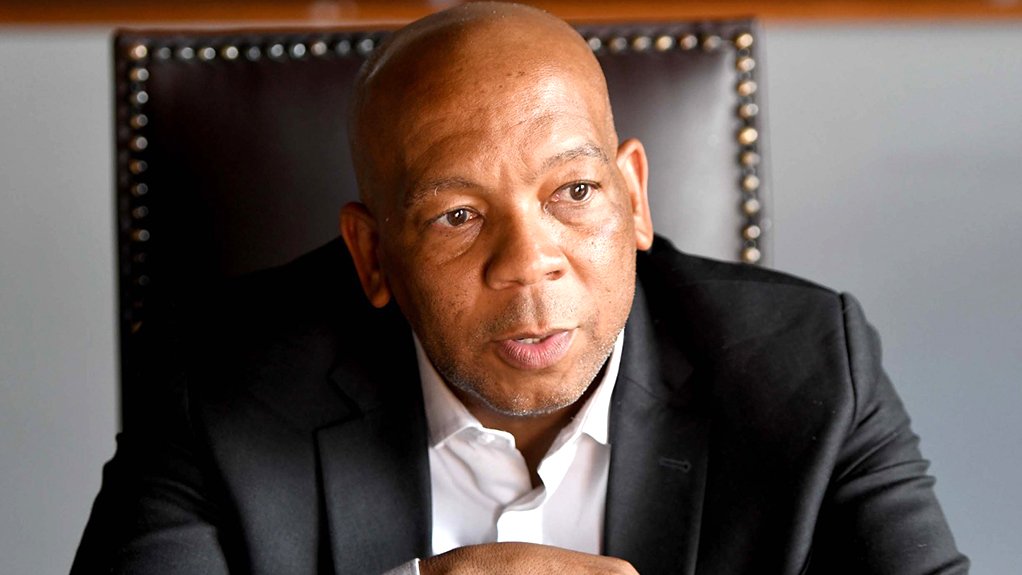
KGOSIENTSHO RAMOKGOPA Africa is not asking the world to finance dependency
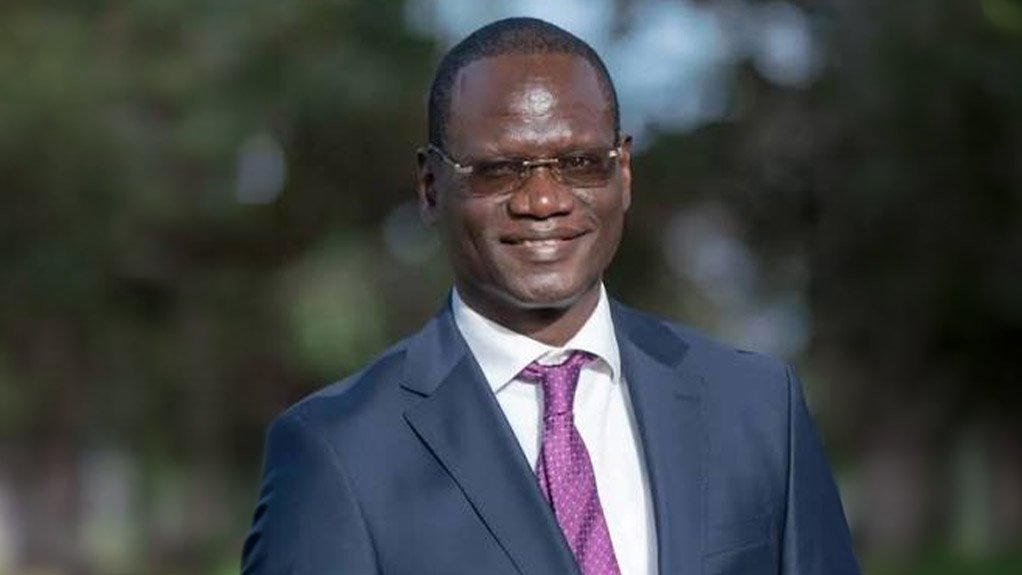
EL HADJI ABDOURAHMANE DIOUF Africa must become a continent of delivery

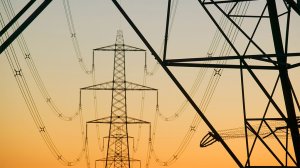


Africa’s electricity systems must be planned around industrialisation, and not only household access, if the continent is to turn its mineral wealth, renewable energy potential and young population into jobs and value-added exports, the Energy Ministers of South Africa and Senegal have said.
South African Electricity and Energy Minister Dr Kgosientsho Ramokgopa warned that the global energy transition had become “an industrial race”, with countries competing for manufacturing capacity, mineral processing, technology leadership, investment and market share.
Unless Africa used the transition to build industrial capability of its own it risked remaining a supplier of raw materials and a consumer of imported technologies, he said.
Senegal Energy and Petroleum Minister Dr El Hadji Abdourahmane Diouf made a similar case, arguing that the continent had been described as a place of potential for too long. “Today we must become a continent of delivery, a continent that transforms its resources into prosperity, a continent that converts energy into jobs,” he said.
Both Ministers were speaking at the Africa Energy Forum 2026, held in Cape Town in June under the theme ‘Building Africa’s Industrialised Future’.
Their remarks point to a shift in how African policymakers frame the power sector. Rather than treating electricity as a utility service to be expanded, both positioned it as the foundation of an industrial strategy spanning minerals beneficiation, manufacturing, data infrastructure and regional trade.
That strategy must accommodate a continent with very different starting points. Some countries are reforming large, centralised grids under financial and operational strain, while others are building their first gas-to-power value chains. Many still have most of their rural populations off-grid, and hydropower-rich nations need interconnectors to turn surplus generation into regional revenue.
Changing Demand
Ramokgopa said electricity demand was rising structurally worldwide, and was no longer driven mainly by households and conventional industry.
New sources of demand included digitalisation, artificial intelligence, data centres, cooling, electric mobility, industrial decarbonisation and the reconfiguration of global supply chains. He cited projections showing global power generation increasing by more than 7-million gigawatt hours this decade, with a similar increase expected in the next.
“This is not marginal change. It is a reordering of the global economy around electricity,” he said.
For Africa, the implication was that energy policy could no longer be separated from industrial, trade, infrastructure, skills and investment policy. Ramokgopa said these needed to be aligned so that the continent’s resource advantage was converted into industrial capability, African value chains, African jobs and African ownership.
Diouf said Africa did not lack the assets to compete, pointing to the continent’s solar and hydropower potential, natural gas reserves, critical minerals and the world’s youngest population.
“The question is no longer whether Africa has resources. The question is whether we can transform those resources into industrial capacity, whether we can move from exporting raw materials to exporting value-added products,” he said.
Access and Industry
Both Ministers rejected the notion that universal electricity access and industrial-scale power supply were competing priorities for scarce capital.
About 600-million Africans still lack access to electricity and close to one-billion lack access to clean cooking, according to figures cited by Ramokgopa. “These numbers are not only energy statistics, they are development statistics,” he said.
Diouf argued that no country had industrialised without affordable, reliable and sustainable energy, and that no continent could prosper while millions of its citizens remained without electricity and clean cooking. Accelerating access while building a power system capable of supporting industry was “not a contradiction”, he said. “It is the same mission, the mission of development.”
Ramokgopa said access needed to be understood as more than a household connection. Mission 300, the initiative to connect 300-million Africans to electricity by 2030, was among the most important development programmes on the continent, but connections had to power schools, clinics, irrigation, cold chains, agroprocessing, small businesses, digital services and local industry.
He said clean cooking should receive the same attention, describing reliance on polluting fuels as a health crisis, a gender crisis, an environmental challenge and an economic burden. He called for the Group of 20 (G20) clean cooking infrastructure investment action plan and the African Clean Cooking Programme to move from commitment to implementation.
“Universal access creates social inclusion. Industrial energy creates jobs and productivity. The two must reinforce each other,” he said.
Transmission Constraint
Ramokgopa identified transmission and cross-border interconnection as among the continent’s most binding constraints.
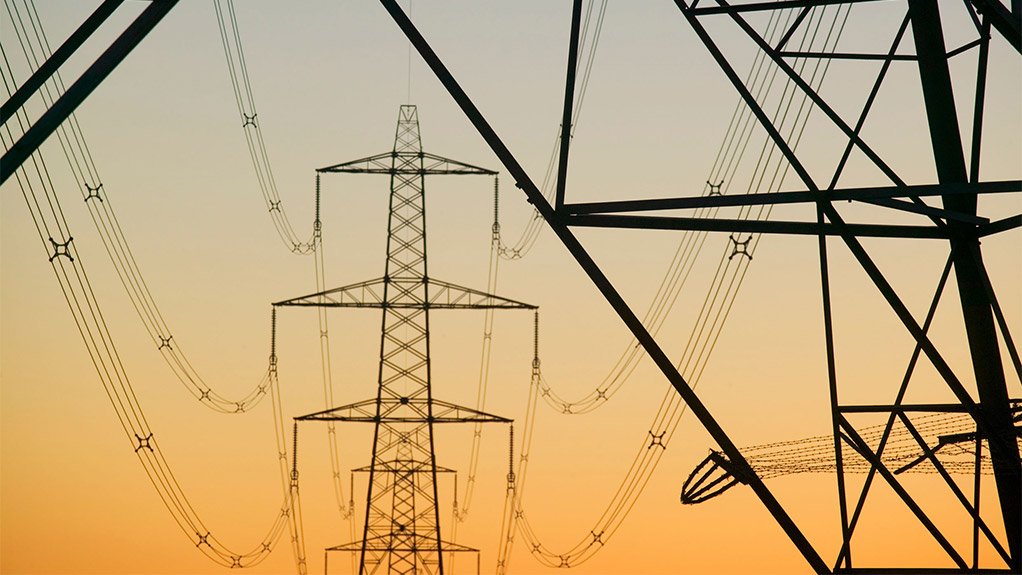
“Africa’s energy challenge is not only a generation challenge. It is also a transmission challenge, an interconnection challenge, a project preparation challenge and a financing challenge,” he said.
Without interconnectors, power pools could not trade at scale, and without strong power pools, the African Single Electricity Market (AfSEM) could not reach its potential. Without bankable regional projects, capital would remain “available in theory, but absent in practice”, Ramakgopa added.
A more integrated system would allow countries to move electricity across borders, improve reliability, reduce costs, balance variable renewable energy output and unlock regional generation and transmission investment.
He noted that the African Union’s Specialised Technical Committee on Transport and Energy, which met in Johannesburg, South Africa, earlier this year, had reaffirmed the centrality of AfSEM and the Continental Power System Master Plan. The committee had also called for both to be aligned, along with a ten-year infrastructure investment plan for cross-border interconnection developed under South Africa’s G20 presidency, with the Programme for Infrastructure Development in Africa.
The immediate task, Ramakgopa said, was to turn the investment plan into a credible pipeline of bankable projects, supported by stronger institutions and financing instruments that reduced risk and unlocked capital at scale.
Diouf pointed to West Africa as evidence that regional cooperation could work in practice. The Senegal River Basin Development Organisation had demonstrated how countries could jointly manage shared energy and water resources, while the Gambia River Basin Development Organisation had strengthened regional interconnection.
The West African Power Pool, meanwhile, was progressively building a regional electricity market aimed at improving reliability and lowering costs.
“This proves that regional cooperation is not an aspiration. It is already a reality,” he said.
Regional Production Hubs
Diouf said the next step was to connect energy integration with industrial integration by creating regional production hubs that process African resources on the continent.
He cited the Greater Tortue Ahmeyim liquefied natural gas project, developed jointly by Senegal and Mauritania across their maritime border, as a model for how shared resources could create shared opportunities.
He suggested that similar partnerships could emerge elsewhere, such as linking the Simandou iron-ore deposits in Guinea to competitively priced power supplied through regional infrastructure. “Imagine building an African steel industry powered by African energy and African resources,” he said.
Diouf extended the idea to fertiliser plants supplied with African gas, battery manufacturing based on African critical minerals and data centres running on African electricity.
Ramokgopa made a similar argument for Southern Africa, which holds a significant share of the critical minerals needed for battery value chains, grid technologies and electric mobility. He said minerals such as manganese and platinum group metals should anchor value chains that remained on the continent, alongside green steel, green hydrogen, battery manufacturing and the decarbonisation of energy-intensive industries.
He called for regional production hubs to be developed around Africa’s minerals, renewable energy potential, industrial capabilities and the African Continental Free Trade Area (AfCFTA), so that the continent captured a larger share of the value created by the global energy transition.
Data centres illustrated both the opportunity and the risk, Ramokgopa said. Africa was starting to attract cloud services and data infrastructure investment, but these required reliable, competitive and increasingly clean electricity.
“If we get the energy system right, digital infrastructure and minerals beneficiation can become sources of investment, skills, industrial growth and new demand. If we get it wrong, these opportunities will move elsewhere,” he said.
Bankable Projects
Ramokgopa referred to the work of the Africa Expert Panel, chaired by former South African Finance Minister Trevor Manuel, which concluded that Africa needed to shift from dependence to investment-driven growth anchored in African agency and global partnership.
“Africa is not asking the world to finance dependency. Africa is inviting the world to invest in the greatest growth opportunity of the 21st century,” he said.
However, investors would not commit capital at scale where projects were poorly prepared, offtakers were weak, regulation was uncertain, procurement was delayed, transmission access was constrained or policy signals were inconsistent.
“The responsibility for improving the investment environment rests with us as African governments and institutions,” he said.
This made State capability decisive, Ramokgopa added, since energy systems were not transformed by capital alone. Governments needed to plan with discipline, coordinate across institutions, regulate with certainty, prepare projects properly and protect the public interest.
While markets could mobilise investment, a capable State had to set direction and ensure that energy investment served development.
He said the cost of capital for African energy infrastructure had to come down through better risk sharing, stronger project preparation, blended finance where appropriate and local-currency instruments. Project lists also had to be converted into prepared pipelines backed by credible offtakers, stronger utilities and clearer regulatory frameworks.
Diouf called for stronger partnerships between governments, investors, development finance institutions and the private sector, as well as more capital, greater technology transfer and higher levels of local content.
Africa also needed to restore confidence in its own capacity to deliver, he said.
Energy Security
Ramokgopa said recent disruptions to global energy corridors had underlined Africa’s exposure to price shocks and supply interruptions.
He cited the Strait of Hormuz, through which much of global oil flows passed, noting that disruptions in such corridors quickly affected fuel prices, shipping costs, fertilisers, petrochemicals, metals, food systems and inflation.
“For African economies, the lesson is clear. Energy security cannot be outsourced. Supply chain resilience cannot be assumed,” he said.
Ramakgopa stressed that this did not mean isolation, since Africa needed capital, technology and partners. However, partnerships had to be structured around African development priorities, helping the continent move from extraction to beneficiation, from import dependence to manufacturing, from fragmented markets to regional value chains and from project announcements to bankable delivery.
A Generational Task
Ramokgopa said the task facing young Africans was to confront energy poverty, unemployment, climate vulnerability, digital exclusion and the continued export of unprocessed resources, describing it as “the gene-rational task of our time”.
He referred to the African Union’s Agenda 2063, which envisions a prosperous, integrated and industrialised continent driven by its citizens, particularly women and young people. That vision could not be achieved while millions of young Africans studied without reliable electricity, small businesses could not expand and minerals left the continent unprocessed.
Ramokgopa said Africa did not lack vision. “The challenge is converting vision into execution, converting execution into industrial capability, and converting industrial capability into investment, jobs and inclusive growth.”
Diouf echoed the call for implementation, urging the continent to move “from potential to performance” and “from ambition to action”.
“The story of Africa’s future will not be written by what lies beneath our soil,” he said. “It will be written by what we choose to build above it.”
Article Enquiry
Email Article
Save Article
Feedback
To advertise email advertising@creamermedia.co.za or click here
Research Reports
Projects



Latest News

Showroom


Astore Keymak is one of South Africa’s leading suppliers of high-quality Thermoplastic Pipeline Systems, with branches in the major provinces.
VISIT SHOWROOM

Press Office
Announcements
What's On
Subscribe to improve your user experience...
Option 1 (equivalent of R125 a month):
Receive a weekly copy of Creamer Media's Engineering News & Mining Weekly magazine
(print copy for those in South Africa and e-magazine for those outside of South Africa)
Receive daily email newsletters
Access to full search results
Access archive of magazine back copies
Access to Projects in Progress
Access to ONE Research Report of your choice in PDF format
Option 2 (equivalent of R375 a month):
All benefits from Option 1
PLUS
Access to Creamer Media's Research Channel Africa for ALL Research Reports, in PDF format, on various industrial and mining sectors
including Electricity; Water; Energy Transition; Hydrogen; Roads, Rail and Ports; Coal; Gold; Platinum; Battery Metals; etc.
Already a subscriber?
Forgotten your password?
Receive weekly copy of Creamer Media's Engineering News & Mining Weekly magazine (print copy for those in South Africa and e-magazine for those outside of South Africa)
➕
Recieve daily email newsletters
➕
Access to full search results
➕
Access archive of magazine back copies
➕
Access to Projects in Progress
➕
Access to ONE Research Report of your choice in PDF format
RESEARCH CHANNEL AFRICA
R4500 (equivalent of R375 a month)
SUBSCRIBEAll benefits from Option 1
➕
Access to Creamer Media's Research Channel Africa for ALL Research Reports on various industrial and mining sectors, in PDF format, including on:
Electricity
➕
Water
➕
Energy Transition
➕
Hydrogen
➕
Roads, Rail and Ports
➕
Coal
➕
Gold
➕
Platinum
➕
Battery Metals
➕
etc.
Receive all benefits from Option 1 or Option 2 delivered to numerous people at your company
➕
Multiple User names and Passwords for simultaneous log-ins
➕
Intranet integration access to all in your organisation