Platinum-catalysed hydrogen mobility receiving strong backing, says WPIC

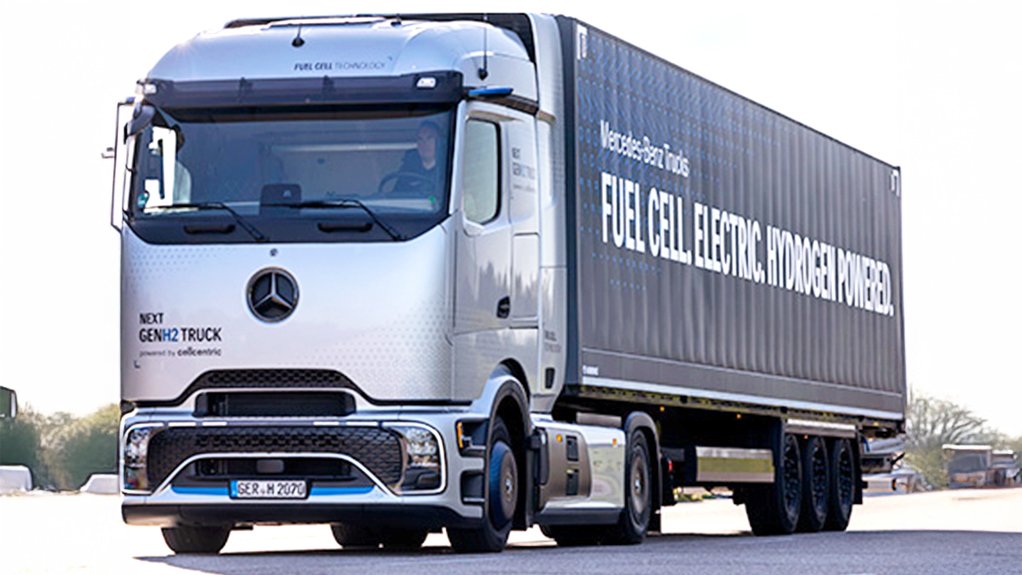
Platinum-catalysed hydrogen fuel cell heavy-duty mobility.
Photo by Daimler Truck AG/World Platinum Investment Council


JOHANNESBURG (miningweekly.com) – Industry leaders have combined forces to assert their commitment to hydrogen mobility solutions for heavy-duty transport in Europe, the World Platinum Investment Council (WPIC) reports.
This outcome points to shared conviction that hydrogen is an important complement to battery electric vehicles in achieving the EU’s decarbonisation targets.
Key among them are automakers and original-equipment manufacturers (OEMs) Volvo Group, Daimler Truck, and Toyota Motor Corporation, while the energy and refuelling infrastructure part of the value chain is represented by TotalEnergies, Bosch, Air Liquide, Teal Mobility, and MB Energy.
These businesses, WPIC states in its 60 Seconds in Platinum release to Mining Weekly, are advocating supportive policy frameworks, a strong OEM offering, and an integrated hydrogen supply chain.
The purpose of this is to accelerate the deployment of hydrogen-powered trucks in freight and logistics operations.
Platinum is used in the two vehicle powertrains that enable hydrogen mobility – hydrogen fuel cells and hydrogen combustion engines.
“Extreme climate events, geopolitical tensions and the continued volatility of fossil fuel prices have reminded us in recent months why Europe’s energy transition needs to accelerate: not only to decarbonise our economies, but also to strengthen the competitiveness of our industries and our energy sovereignty,” Lhyfe CEO Matthieu Guesné states in the company’s half-year results presentation.
“One reality now needs to be widely understood, beyond the industrial community itself: direct electrification should be prioritised wherever possible, but decarbonising industry and transportation also requires green hydrogen, both to convert electricity into a storable and flexible form and to decarbonise uses that cannot be directly electrified or that require a molecule.
“Industrial players have understood this and are ready to invest. Unlocking those investments now depends on the effective implementation of the necessary regulations. On our side, we are ready to meet demand that is already materialising and that will accelerate as these frameworks are put in place,” Guesné adds.
Hydrogen fuel cells use proton exchange membrane technology where platinum’s catalytic and conductive properties turn hydrogen and oxygen from the air into electricity, with water and heat as the only by-products. In hydrogen combustion engines, platinum catalysts support the reduction of harmful nitrogen oxide emissions that are produced during the high-temperature combustion process.
This comes against the background of Volvo and Daimler this year reaffirming their commitment to hydrogen powertrains. Volvo has begun road trials for its hydrogen combustion trucks and Daimler has launched its next generation hydrogen fuel cell electric vehicle (FCEV) truck.
Interestingly, Toyota has joined Volvo and Daimler in the Cellcentric hydrogen fuel cell venture, a collaborative advance aimed at combining Daimler and Volvo's commercial vehicle expertise with Toyota's experience in fuel cells.
Envisaged is the collective development, production, and commercialisation of fuel cell systems for heavy-duty on-road and off-road transport.
The partnership also aims to support the development of hydrogen supply and infrastructure.
Toyota’s third-generation fuel cell system, launched last year, has been developed for the specific demands of commercial applications.
Compared with the previous generation, it delivers twice the output, twice the durability, 20% better fuel efficiency, and lower cost, bringing fuel cell trucks closer to the performance of diesel fleets but with zero emission.
Elsewhere, Toyota’s latest fuel cell system is being used for 40 heavy-duty vehicles in Scania’s pilot partner programme, a collaborative innovation platform where Scania, as part of the Volkswagen Group, works with selected logistics and transport customers to test and evaluate new, sustainable transport technologies under real-world operating conditions.
Earlier this month, Scottish transport and logistics company John G Russell became the first operator to put FCEVs into its daily operations on UK roads, deploying three vehicles developed by Scania’s pilot partner division.
The trial will provide insight into how hydrogen fuel cell technology performs in real-world logistics operations alongside battery electric vehicles in the transition to net zero freight.
The initiative forms part of the UK government-backed ZENFreight programme funded by the Department for Transport and delivered in partnership with Innovate UK.
Toyota has also announced a partnership with Iveco through Empower, the EU-funded project for zero-emission heavy-duty transport. Toyota will provide the fuel cell system for Iveco’s new-generation FCEVs, while Iveco leads vehicle development, integration and validation.
Hydrogen fuel cell technology is reshaping the automotive industry amid investments in hydrogen ecosystems and supportive government initiatives unlocking market opportunities.
The global hydrogen fuel cell vehicle market size, which was valued at $0.2-billion in 2024, is expected to reach $2.1-billion by 2030.
Market trends include:
- increasing adoption of hydrogen-powered commercial fleets;
- expansion of hydrogen fuelling networks;
- improved fuel cell durability and efficiency;
- growth in green hydrogen production projects;
- artificial intelligence-enabled energy management systems;
- strategic OEM partnerships for hydrogen mobility; and
- rising investment in autonomous hydrogen vehicles.
Article Enquiry
Email Article
Save Article
Feedback
To advertise email advertising@creamermedia.co.za or click here
Research Reports

Projects


Latest Multimedia


Latest News


Showroom
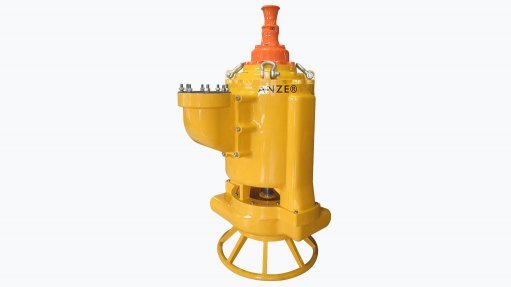
Goodwin Submersible Pumps Africa is sole distributors for Goodwin electrically driven, submersible, abrasion resistance slurry pumps.
VISIT SHOWROOM



Announcements
What's On
Subscribe to improve your user experience...
Option 1 (equivalent of R125 a month):
Receive a weekly copy of Creamer Media's Engineering News & Mining Weekly magazine
(print copy for those in South Africa and e-magazine for those outside of South Africa)
Receive daily email newsletters
Access to full search results
Access archive of magazine back copies
Access to Projects in Progress
Access to ONE Research Report of your choice in PDF format
Option 2 (equivalent of R375 a month):
All benefits from Option 1
PLUS
Access to Creamer Media's Research Channel Africa for ALL Research Reports, in PDF format, on various industrial and mining sectors
including Electricity; Water; Energy Transition; Hydrogen; Roads, Rail and Ports; Coal; Gold; Platinum; Battery Metals; etc.
Already a subscriber?
Forgotten your password?
Receive weekly copy of Creamer Media's Engineering News & Mining Weekly magazine (print copy for those in South Africa and e-magazine for those outside of South Africa)
➕
Recieve daily email newsletters
➕
Access to full search results
➕
Access archive of magazine back copies
➕
Access to Projects in Progress
➕
Access to ONE Research Report of your choice in PDF format
RESEARCH CHANNEL AFRICA
R4500 (equivalent of R375 a month)
SUBSCRIBEAll benefits from Option 1
➕
Access to Creamer Media's Research Channel Africa for ALL Research Reports on various industrial and mining sectors, in PDF format, including on:
Electricity
➕
Water
➕
Energy Transition
➕
Hydrogen
➕
Roads, Rail and Ports
➕
Coal
➕
Gold
➕
Platinum
➕
Battery Metals
➕
etc.
Receive all benefits from Option 1 or Option 2 delivered to numerous people at your company
➕
Multiple User names and Passwords for simultaneous log-ins
➕
Intranet integration access to all in your organisation