Outlook for platinum buoyed by new industrial applications as investment demand weakens

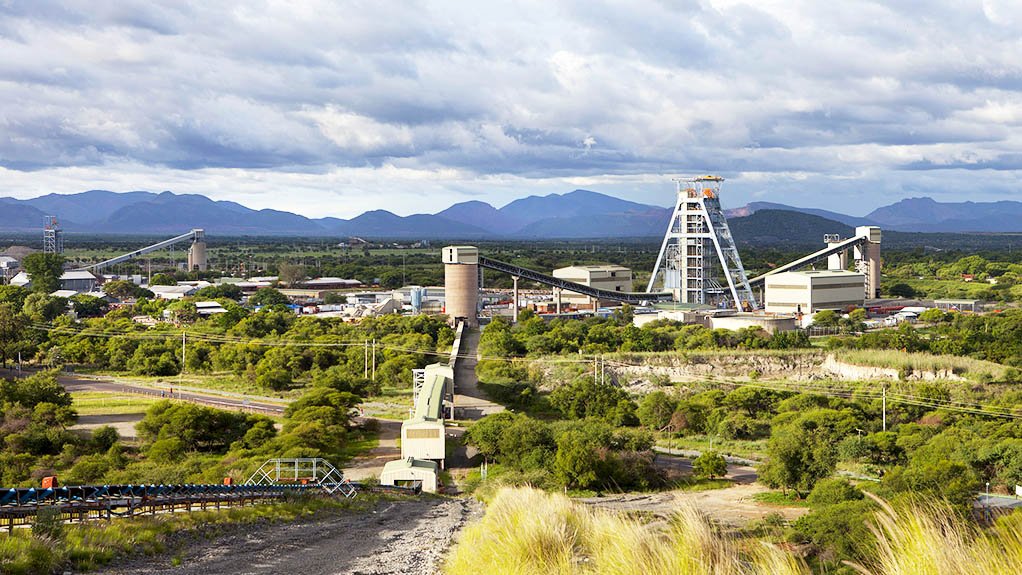

LOCAL SUPPLY OPPORTUNITY From a global perspective, South Africa remains the key supplier of PGMs to the world
WPIC RESEARCH DIRECTOR EDWARD STERCK The myriad use of platinum in AI is potentially quite a tailwind for the metal over the next few years





While total demand for platinum is forecast to decrease this year, there are industries that stakeholders can leverage and strengthen, while market fundamentals still support the metal as a compelling investment.
Industry organisation the World Platinum Investment Council's (WPIC's) ‘Platinum Quarterly’ report for the second quarter of the year, released earlier this month, shows that total demand is expected to fall by 18%, to 7.09-million ounces, with investment accounting for the largest change by quite some margin, as considerable exchange- traded funds (ETF) and exchange-stock accumulation in 2025 reversed to net disinvestment in the first half of 2026.
Industrial demand is forecast to rise by 5%, to about 2.39-million ounces, led by glass, and electrical and chemical applications.
Conversely, jewellery fabrication is forecast to decline by 15%, to about 1.88-million ounces, and automotive demand by 4%, to 2.90-million ounces, as declining pure- internal combustion engine vehicle production outweighs growth in hybrids.
Commenting on the report, WPIC CEO Trevor Raymond says many areas of platinum demand continue to “demonstrate resilience”, as “automotive demand remains comparatively robust and industrial demand has strengthened further, with global developments in AI highlighting platinum’s increasingly important role”.
China has earmarked nearly $300-billion for AI infrastructure development until 2030, while the privately funded buildout of AI technology, in the US – currently estimated at around $500-billion per annum – is creating new demand for platinum- group metals (PGMs) across a range of applications.
“This is an exciting time for the sector that we will be watching closely,” he adds.
Speaking to Engineering News & Mining Weekly in an exclusive interview following the release of the report, WPIC research director Edward Sterck highlights “major opportunities” for platinum demand in industrial uses and in investment: “Industrial demand is looking pretty strong”.
He emphasises that for the former, stakeholders investing in the development of new end-markets could present “quite a good opportunity”.
Further, the report outlines that the forecast for industrial demand growth has been upgraded on AI-related glass and electrical applications. For the full year, a 5% year-on-year increase in industrial demand, to 2.39-million ounces, is forecast – an increase of 7% from the WPIC’s previous forecast as AI applications boost glass and electrical demand.
Year-on-year growth in glass demand (23% or 98 000 oz), chemical demand (9% or 50 000 oz), medical demand (4% or 11 000 oz), electrical demand (19% or 19 000 oz) and hydrogen demand (8% or 6 000 oz) are expected to more than offset lower petroleum demand (–28% or –50 000 oz). Petroleum demand is being negatively affected by the ongoing disruptions to shipping in the Strait of Hormuz, as well as Russia’s refining sector being under pressure, owing to drone attacks by Ukraine.
AI Industrial Demand
The report highlights that AI is emerging as an incremental demand driver for platinum and the wider PGMs suite.
In terms of Chinese intent and expected US demand, Sterck is bullish about a broader worldwide opportunity, as AI growth is a global phenomenon.
“What is really interesting is the emergent end uses in AI. This is something that only really kind of came out towards the end of the second quarter, and we’re still exploring.”
While platinum has been used in hard disk drives for some time, more end-use cases in electrical applications are emerging, and, therefore, the WPIC’s demand numbers may have slightly underestimated the reality, he acknowledges.
The myriad uses – including in advanced semiconductors, as a critical material in new technology for data storage centres, and indirectly in the production of the low dielectric woven glass used for printed circuit boards and in the production of the crystals used for optical interconnects – “is potentially quite a tailwind for the metal over the next few years,” Sterck claims.
The report also indicates PGMs’ role as an enabler of the AI infrastructure rollout and defence applications and reinforces a key investment theme that has developed from 2025 in shifting from a globalised to a multi-polar landscape.
Hydrogen Demand
Sterck stresses that “getting the hydrogen story going” is important, as this has been overlooked over the past few years, although there have been some positive developments of late.
In the period, platinum demand from hydrogen stationary and other applications increased by 72% year-on-year to 19 000 oz, although it eased by 5% quarter-on-quarter.
“One of the opportunities that hydrogen provides is improved energy security at the regional level. One thing that this conflict in the Middle East has shown us is the dependence of different parts of the world on oil and gas supplies from that region. I think there is a possibility that this could be a sort of 1970s oil crisis moment – in the same way that the crisis catalysed oil and gas production from the North Sea, in Europe, this current crisis could catalyse increased government efforts to generate green hydrogen to improve energy security, worldwide,” he hypothesised.
Meanwhile, Sterck says while the opportunity for hydrogen fuel cell vehicles at the passenger-vehicle level “seems to have slipped by”, there are increasing efforts to start the hydrogen heavy-duty long distance transportation industry.
To achieve success in this regard, the key is to get the cost down to as low as possible to be competitive with diesel: “The way you do that is with scale. It’s about having the subsidies in place . . . to scale up production, and then that makes the economic rationale logical for the end-users.”
Sterck cites several positive signs in the industry, with some successful hydrogen auctions in Europe, and China’s pursuit of an independent agenda. He expects the Middle East to also play a role in furthering the industry to some extent.
By contrast, North America is not expected to play a pivotal role presently, as “the US has a government that is quite hostile to such ideas,” he postulates.
Investment
Sterck says investment “could be grown fastest at present”, in terms of getting more investors engaged in this sphere.
He refers to the WPIC’s forecast of persistent deficits for the foreseeable future, with the surplus outlined in the report being “backward-looking”.
Platinum markets recorded a 244 000 oz surplus in the second quarter, which confirms a first half surplus of 548 000 oz and a forecast deficit in the second half of 283 000 oz.
“In the second half of the year, we have deficit market conditions. If you consider things like lease rates, which are an indication of market tightness, the significant investment outflows that we had in the first half of the year were only sufficient to bring lease rates back to being close to normal, and they’re not quite normalised.”
This suggests that any additional demand in the form of investment inflows in the second half of the year, or higher bar and coin demand, would add more tension back to the markets, which is “compelling”, Sterck adds.
The second quarter witnessed a collapse in bar and coin investment, as net purchases fell by 71% year-on-year to only 37 000 oz. (–91 000 oz). This was the largest absolute decline since a Covid-affected 2021 and was overwhelmingly because of a far weaker performance in China, while North American sales also fell steeply.
Sterck also mentions that the WPIC recently ran a platinum-gold correlation from 2010 to the end of 2024, and then from the start of 2025 to the present. The correlation between platinum and gold was very close to zero in the former but is close to 0.95 relative to gold since the beginning of last year.
“The market views this as part of the precious metals complex. Therefore, implicitly, it is being treated as a store of value in a monetary-type metal at the current time.”
Sterck cautions, however, that the supply- demand fundamentals cannot be totally ignored: “The market is still tight. On our numbers going forward beyond this year, we have the market returning to persistent deficits, and as a result, if you look at the beta, platinum’s beta is 1.3 x gold. That means it offers more torque, from an investment perspective, if you are looking to use hard assets and precious metals as a store of value and investment opportunity.”
Local Supply Opportunity
These demand drivers present considerable potential for South Africa, given its status as the world’s largest producer of platinum and PGMs, accounting for about 70% of global output and leveraging its world class Bushveld Complex endowment.
However, despite production increasing 4% year-on-year, to 1.08-million ounces in the quarter, the WPIC has forecast output in the second half of the year to be broadly flat, despite a relatively strong first half, leaving full-year production up a modest 1%.
“From a global perspective, South Africa remains the key supplier of PGMs to the world, and therefore, given that these are critical minerals for most regions around the world, I think the country remains quite key to the availability of those metals,” Sterck avers.
Article Enquiry
Email Article
Save Article
Feedback
To advertise email advertising@creamermedia.co.za or click here

Projects

Latest Multimedia

Latest News


Showroom

Virtual Gas Network supplies compressed natural gas via a virtual gas distribution network.
VISIT SHOWROOM
Energy and Densification Systems (EDS) has developed equipment for crushing, milling, blending and densifying products. Based on its globally...
VISIT SHOWROOM
Announcements
What's On
Subscribe to improve your user experience...
Option 1 (equivalent of R125 a month):
Receive a weekly copy of Creamer Media's Engineering News & Mining Weekly magazine
(print copy for those in South Africa and e-magazine for those outside of South Africa)
Receive daily email newsletters
Access to full search results
Access archive of magazine back copies
Access to Projects in Progress
Access to ONE Research Report of your choice in PDF format
Option 2 (equivalent of R375 a month):
All benefits from Option 1
PLUS
Access to Creamer Media's Research Channel Africa for ALL Research Reports, in PDF format, on various industrial and mining sectors
including Electricity; Water; Energy Transition; Hydrogen; Roads, Rail and Ports; Coal; Gold; Platinum; Battery Metals; etc.
Already a subscriber?
Forgotten your password?
Receive weekly copy of Creamer Media's Engineering News & Mining Weekly magazine (print copy for those in South Africa and e-magazine for those outside of South Africa)
➕
Recieve daily email newsletters
➕
Access to full search results
➕
Access archive of magazine back copies
➕
Access to Projects in Progress
➕
Access to ONE Research Report of your choice in PDF format
RESEARCH CHANNEL AFRICA
R4500 (equivalent of R375 a month)
SUBSCRIBEAll benefits from Option 1
➕
Access to Creamer Media's Research Channel Africa for ALL Research Reports on various industrial and mining sectors, in PDF format, including on:
Electricity
➕
Water
➕
Energy Transition
➕
Hydrogen
➕
Roads, Rail and Ports
➕
Coal
➕
Gold
➕
Platinum
➕
Battery Metals
➕
etc.
Receive all benefits from Option 1 or Option 2 delivered to numerous people at your company
➕
Multiple User names and Passwords for simultaneous log-ins
➕
Intranet integration access to all in your organisation