New technical report advocates a risk-based approach to fire safety in industrial and agricultural buildings panels


This article has been supplied.
A new technical report by fire engineering consultancy ASP Fire is challenging blanket assumptions around combustible-core sandwich panels, arguing instead for a rational, risk-based approach that balances fire safety requirements with commercial realities in sectors such as agriculture, manufacturing and industrial processing.
Authored by ASP Fire CEO Michael van Niekerk, the report assesses the relative risks associated with various combustible-core sandwich panels materials and outlines practical fire prevention and mitigation strategies for existing and new buildings.
“Combustible-core sandwich panels are not without risk, but careful selection and the implementation of sound fire protection strategies can reduce those risks to levels that are as low as reasonably practicable,” says van Niekerk.
The report notes that plastic-based construction materials, particularly insulated panel cores, have long presented challenges for fire engineers. However, van Niekerk argues that the focus should shift from simplistic material bans towards understanding ignition sources, fire propagation risks and practical engineering controls.
According to the report, the leading causes of industrial fires remain electrical failures and heat-source malfunction, rather than the combustible-core sandwich panels themselves. Citing NFPA research into industrial and manufacturing fires between 2017 and 2021, the report highlights electrical distribution equipment, lighting systems and power transfer infrastructure as major ignition contributors.
Understanding core material risk
The report evaluates the fire performance of several common combustible-core sandwich panel materials, including expanded polystyrene (EPS), polyurethane (PU), polyisocyanurate (PIR), phenolic foam, mineral wool and vacuum insulated panels.
A central focus is the Limiting Oxygen Index (LOI), which measures the minimum oxygen concentration required to sustain combustion. Materials with an LOI below 24% are considered capable of sustaining combustion in normal atmospheric conditions, while higher-LOI materials are less likely to propagate fire.
The report distinguishes between standard EPS cores and fire-retardant EPS products. While standard EPS can sustain combustion and contribute to fire spread, fire-retardant EPS with an LOI above 24% will generally self-extinguish once an ignition source is removed.
Van Niekerk notes that many misconceptions exist regarding combustible-core sandwich panel systems. “Most combustible sandwich insulation panels are not structurally integral to the building itself,” he explains. “In many cases they function as cladding or internal environmental enclosures. The actual structural integrity remains dependent on the steel, concrete or masonry framework.”
The report also stresses that combustible-core sandwich panels typically become significantly involved only after flashover conditions are reached within a building, generally at enclosure temperatures above 600°C, by which point the contents of the building are already contributing substantial heat release.
Practical mitigation strategies
Rather than advocating wholesale replacement of combustible-core sandwich panels , the report outlines layered fire prevention and suppression strategies that can substantially reduce ignition risk.
Recommended interventions include:
- Rigorous electrical inspection, monitoring and thermal scanning programmes
- Earth leakage, arc fault detection devices and overload protection systems
- Thermal CCTV monitoring linked to 24/7 response capability
- Early warning fire detection systems linked to 24/7 response capability
- Automatic gaseous suppression within electrical distribution boards
- Improved compartmentalisation
- Spark arresting and ember-trap systems for direct, solid-fuel heating applications
- Sprinkler protection where building size or storage height thresholds require it
The report argues that these measures can often provide more practical and cost-effective risk reduction than wholesale replacement of combustible-core sandwich panels, particularly in commercially marginal industries.
“Low-margin sectors such as poultry production simply cannot absorb the cost of replacing entire building envelopes with premium non-combustible systems,” says van Niekerk. “The engineering challenge is therefore to identify and manage the real ignition and propagation risks appropriately.”
Commercial realities remain critical
The report further highlights the cost differential between core materials. According to the assessment, polyurethane and PIR panels can cost up to nearly double the price of fire-retardant EPS systems, while mineral wool and vacuum insulated panels can be even more expensive.
At the same time, some non-combustible solutions may not be technically suitable in certain environments. Mineral wool and glass wool systems, for example, can be problematic in high-humidity or condensation-prone applications due to mould formation risks.
This reinforces the need for context-specific fire engineering solutions rather than one-size-fits-all prescriptions. “Fire safety must always remain the priority, but effective fire engineering requires a rational understanding of ignition sources, occupancy risks, building contents and operational realities,” highlights van Niekerk.
The report concludes that high LOI combustible-core sandwich panel can be safely incorporated into buildings where appropriate fire engineering controls, early detection systems, rapid fire response and operational safeguards are properly implemented and maintained.
Article Enquiry
Email Article
Save Article
Feedback
To advertise email advertising@creamermedia.co.za or click here
Research Reports

Projects


Latest Multimedia

Latest News

Showroom

Columbus Stainless, based in Middelburg, Mpumalanga, is Africa’s only producer of stainless steel flat products. In addition, Columbus is the only...
VISIT SHOWROOM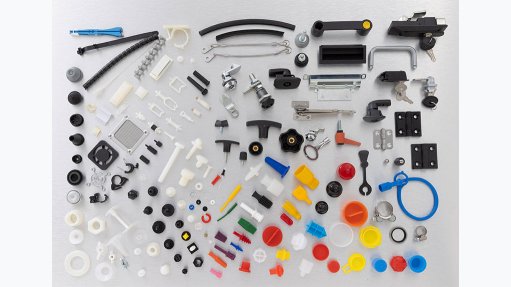
We are responsible manufacturers of essential components. Manufacturing 80 million parts a week, we have over 1 billion parts in stock.
VISIT SHOWROOM


Press Office
Announcements
What's On
Subscribe to improve your user experience...
Option 1 (equivalent of R125 a month):
Receive a weekly copy of Creamer Media's Engineering News & Mining Weekly magazine
(print copy for those in South Africa and e-magazine for those outside of South Africa)
Receive daily email newsletters
Access to full search results
Access archive of magazine back copies
Access to Projects in Progress
Access to ONE Research Report of your choice in PDF format
Option 2 (equivalent of R375 a month):
All benefits from Option 1
PLUS
Access to Creamer Media's Research Channel Africa for ALL Research Reports, in PDF format, on various industrial and mining sectors
including Electricity; Water; Energy Transition; Hydrogen; Roads, Rail and Ports; Coal; Gold; Platinum; Battery Metals; etc.
Already a subscriber?
Forgotten your password?
Receive weekly copy of Creamer Media's Engineering News & Mining Weekly magazine (print copy for those in South Africa and e-magazine for those outside of South Africa)
➕
Recieve daily email newsletters
➕
Access to full search results
➕
Access archive of magazine back copies
➕
Access to Projects in Progress
➕
Access to ONE Research Report of your choice in PDF format
RESEARCH CHANNEL AFRICA
R4500 (equivalent of R375 a month)
SUBSCRIBEAll benefits from Option 1
➕
Access to Creamer Media's Research Channel Africa for ALL Research Reports on various industrial and mining sectors, in PDF format, including on:
Electricity
➕
Water
➕
Energy Transition
➕
Hydrogen
➕
Roads, Rail and Ports
➕
Coal
➕
Gold
➕
Platinum
➕
Battery Metals
➕
etc.
Receive all benefits from Option 1 or Option 2 delivered to numerous people at your company
➕
Multiple User names and Passwords for simultaneous log-ins
➕
Intranet integration access to all in your organisation