Nedbank CIB helps structure Harmony's financing for international growth

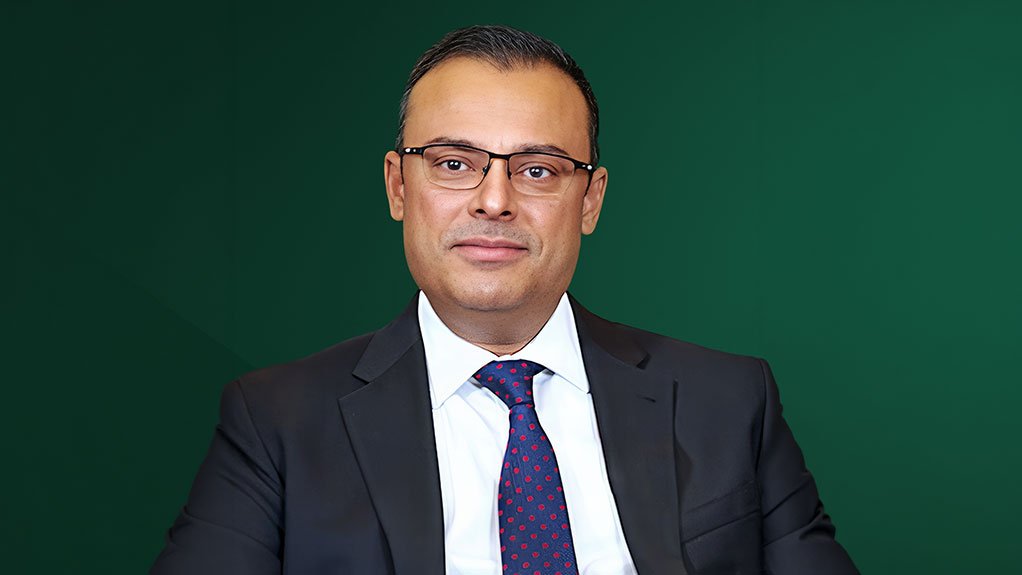
Nedbank Corporate and Investment Banking head of mining and critical minerals Nivaash Singh


As South African mining companies expand beyond traditional commodities and national borders, the financing required to support that growth is becoming more sophisticated. Gold miner Harmony's recently completed $1.25-billion multi-currency, sustainability-linked financing is a good illustration of what that shift now demands of a financing structure.
The facilities refinance the remaining bridge financing raised by Harmony for the acquisition of the CSA copper mine, finance continued investment there and at the Eva Copper project, and cover capital and renewable energy commitments for Harmony's South African operations and general corporate requirements. What matters more than any of those individual undertakings is what they collectively add up to. Harmony is no longer financed as a single-commodity, single-country gold producer. It has become a business that spans two commodities and two continents, and needs a financing structure that is capable of supporting its operations, investments and growth across different currencies and jurisdictions. Financing Harmony needs a structure that is designed around how the business operates, rather than a structure it would need to adapt to.
That shift says something broader about where a number of South Africa's larger mining companies appear to be heading. They are becoming multi-commodity businesses rather than specialists in a single metal, operate across more than one jurisdiction rather than a single one, carry more capital-intensive growth ambitions, and are increasingly judged by lenders on sustainability performance as much as on the commodity they produce. Harmony's facilities were structured with dual borrowing entities that support its South African and Australian operations and drawn in more than one currency so that acquisition refinancing, growth capital and operating funding could sit in one coordinated package rather than in several negotiated packages that are apart from each other. It is one answer to a question more South African mines are likely to face as they expand: how to finance a business that no longer fits the profile its financing was originally built around.
Several local and international banks from South Africa, Europe, North America, Asia and Australia participated in the syndicate, and the facilities were oversubscribed by more than three times the expected number, doubling the size of Harmony's previous financing package. That is worth pausing on. A South African mine assembling a lending group with that type of geographic spread exhibits something different from raising debt through familiar domestic relationships. It gives Harmony a funding base that reflects the increasingly global nature of its business. Nedbank financed a significant portion of the debt in the wider syndicate, drawing on its market intelligence and distribution capability to bring other lenders in. The response reflected confidence in Harmony's strategy and in the structure built to carry it.
Sustainability was built into the facilities from the outset, not added once they had already taken shape. This includes a dedicated green tranche for renewable energy projects in South Africa, with the wider package incorporating targets covering energy, water efficiency and community development spending around Harmony's mines, which makes it one of the largest sustainability-linked financings arranged on the continent to date. Lenders increasingly treat this kind of structuring as a measure of a company's long-term standing, not a reporting formality, which makes the sustainability framework an integral part of the transaction rather than a separate reporting exercise.
Coordinating a transaction like this is less about the number of lenders involved and more about keeping a fragmented set of interests moving in the same direction. That means aligning documents, currencies and timing across South African and Australian borrowing entities, and reconciling the expectations of lenders based across five regions into a single coordinated financing package. Nedbank acted alongside Citi as Joint Global Coordinator, Sustainability Coordinator and Initial Mandated Lead Arranger and also served as Global Facility Agent, Sustainability Agent, Authorised Dealer, Mandated Lead Arranger and Lender. An early term sheet shared with Harmony ahead of the formal process went on to form the basis of the transaction eventually agreed on.
This is the third mandate of this nature that Nedbank has secured from Harmony, and that longstanding relationship provided an important foundation for Nedbank's proactive approach. The relationship that has been built across many successive transactions and market cycles has provided Nedbank with a strong understanding of Harmony's strategy and the requirements that the facilities needed to address. It also means the mandate was won on more than just pricing. Harmony's brief called for solutions built around its own strategy rather than a standard facility adapted to fit. Winning these three mandates is evidence that the approach has worked. The result is the facilities are aligned to the business Harmony has become and the direction in which it is heading.
Harmony's financing reflects a broader shift already under way across the mining sector. As more South African producers expand into new commodities and jurisdictions, the financing built to support them will need to keep pace with the complexity that is structured across currencies and borders, and is increasingly judged on sustainability performance as well as price. For banks, meeting that need depends less on balance sheet size and more on an early understanding of how a client's business is changing.
Written by Nedbank Corporate and Investment Banking head of mining and critical minerals Nivaash Singh
Article Enquiry
Email Article
Save Article
Feedback
To advertise email advertising@creamermedia.co.za or click here
Projects
Latest Multimedia
Latest News

Showroom
Sweet-Orr, established in 1871, is a global leader in superior protective workwear, known for quality, innovation, and performance.
VISIT SHOWROOM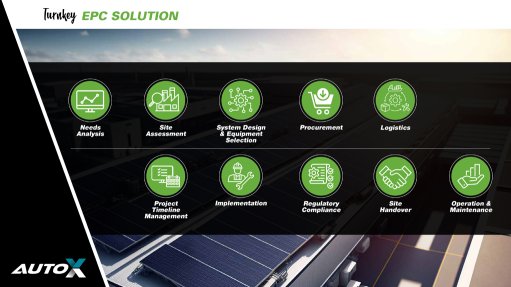
Rentech provides renewable energy products and services to the local and selected African markets. Supplying inverters, lithium and lead-acid...
VISIT SHOWROOM

Press Office
Announcements
What's On
Subscribe to improve your user experience...
Option 1 (equivalent of R125 a month):
Receive a weekly copy of Creamer Media's Engineering News & Mining Weekly magazine
(print copy for those in South Africa and e-magazine for those outside of South Africa)
Receive daily email newsletters
Access to full search results
Access archive of magazine back copies
Access to Projects in Progress
Access to ONE Research Report of your choice in PDF format
Option 2 (equivalent of R375 a month):
All benefits from Option 1
PLUS
Access to Creamer Media's Research Channel Africa for ALL Research Reports, in PDF format, on various industrial and mining sectors
including Electricity; Water; Energy Transition; Hydrogen; Roads, Rail and Ports; Coal; Gold; Platinum; Battery Metals; etc.
Already a subscriber?
Forgotten your password?
Receive weekly copy of Creamer Media's Engineering News & Mining Weekly magazine (print copy for those in South Africa and e-magazine for those outside of South Africa)
➕
Recieve daily email newsletters
➕
Access to full search results
➕
Access archive of magazine back copies
➕
Access to Projects in Progress
➕
Access to ONE Research Report of your choice in PDF format
RESEARCH CHANNEL AFRICA
R4500 (equivalent of R375 a month)
SUBSCRIBEAll benefits from Option 1
➕
Access to Creamer Media's Research Channel Africa for ALL Research Reports on various industrial and mining sectors, in PDF format, including on:
Electricity
➕
Water
➕
Energy Transition
➕
Hydrogen
➕
Roads, Rail and Ports
➕
Coal
➕
Gold
➕
Platinum
➕
Battery Metals
➕
etc.
Receive all benefits from Option 1 or Option 2 delivered to numerous people at your company
➕
Multiple User names and Passwords for simultaneous log-ins
➕
Intranet integration access to all in your organisation