Africa’s Energy Future Will Determine Africa’s Economic Future

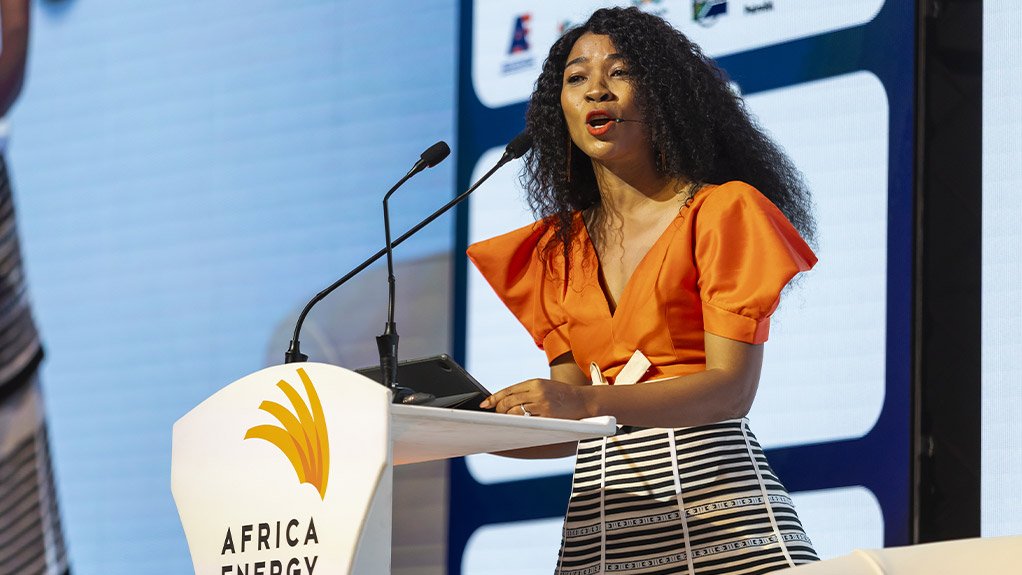



This article has been supplied.
Africa’s ambitions for industrialisation, manufacturing, minerals beneficiation, digital transformation, expanded trade and job creation all depend on one fundamental requirement: access to sufficient, reliable and affordable energy.
As Africa seeks to accelerate economic growth, the relationship between energy and economic development has never been more important. The African Development Bank projects the continent’s economy to grow by 4.2% in 2026, following estimated growth of 4.4% in 2025, with 22 African economies having recorded growth rates above 5% in 2025.
Yet Africa’s ability to sustain and accelerate this growth will depend heavily on its capacity to develop the energy infrastructure required to power expanding economies.
Africa’s energy future will determine Africa’s economic future.
Energy sits behind almost every major economic ambition for the continent from industrialisation, mining and minerals beneficiation to manufacturing, agriculture, digital infrastructure, artificial intelligence, transport, trade and employment. This makes energy investment not simply an infrastructure requirement, but one of Africa’s most important economic development imperatives.
The scale of the opportunity is significant. The International Energy Agency estimates that annual energy investment in Africa needs to rise to almost US$240 billion by 2030 if the continent is to achieve its energy-related development and climate objectives. Approximately half of that investment requirement is expected to be directed towards the electricity sector, where annual investment would need to increase to more than US$120 billion by 2030.
At the same time, the continent possesses extraordinary energy resources. Africa is home to approximately 60% of the world’s best solar resources, alongside significant wind, hydro, geothermal, natural gas and critical mineral resources.
Private capital will be fundamental to translating this potential into infrastructure. The IEA estimates that private-sector energy investment would need to increase from approximately US$75 billion to US$190 billion by 2030 under its Sustainable Africa Scenario. There are already encouraging signs. Private-sector clean energy investment in Africa has more than doubled in recent years, increasing from approximately US$17 billion in 2019 to almost US$40 billion in 2024.
Despite this progress, the scale of the challenge remains substantial. Approximately 600 million Africans still live without access to electricity, constraining economic participation, industrial development, education, healthcare and the creation of new businesses. Reliable electricity is equally critical to Africa’s employment challenge. Over the coming decade, an estimated 360 million young Africans are expected to enter the labour market, while current projections suggest only around 150 million employment opportunities will be created.
Creating the industries and enterprises capable of closing this employment gap will require considerably greater investment in electricity generation, transmission, distribution and supporting infrastructure.
Where Policy Meets Capital
Against this backdrop, Africa Energy Indaba is positioning itself at the intersection of the forces that will determine Africa’s economic future: policy, capital, infrastructure, technology and energy security.
The platform brings together policymakers responsible for creating enabling regulatory environments; investors and development finance institutions capable of mobilising capital; utilities and energy companies responsible for developing and operating infrastructure; major energy users driving demand; and technology providers delivering the solutions required to transform Africa’s energy systems.
The objective is to move the African energy conversation beyond identifying challenges towards mobilising investment, developing partnerships and accelerating implementation.
Africa requires generation capacity, but it also requires significantly greater investment in the infrastructure needed to move electricity to where it is required. Investment in African electricity grids alone needs to increase dramatically as countries expand generation, incorporate renewable energy and build increasingly interconnected regional electricity markets.
Energy must ultimately become an enabler of African industrialisation rather than a constraint upon it.
The opportunity extends far beyond providing electricity to households. Reliable and competitively priced energy can unlock new mining and beneficiation projects, support African manufacturing, enable data centres and AI infrastructure, improve agricultural productivity, stimulate intra-African trade and create entirely new industries.
From Energy Investment to Economic Growth
Africa Energy Indaba believes the next chapter of the continent’s energy story must therefore be measured not simply in megawatts installed, but in factories powered, mines developed, businesses created, communities connected, investment mobilised and jobs generated.
The continent has the resources. It has rapidly growing markets. It has a young population and enormous untapped economic potential. The challenge now is to create the policy environments, investment structures, partnerships and infrastructure capable of converting that potential into sustainable economic growth.
Africa Energy Indaba is where policy meets capital, technology meets opportunity, and conversation becomes action.
Because powering Africa is ultimately about much more than energy.
Article Enquiry
Email Article
Save Article
Feedback
To advertise email advertising@creamermedia.co.za or click here
Research Reports
Projects
Latest Multimedia
Latest News

Showroom

Occupational health services, mobile clinics, wellness campaigns, aviation.
VISIT SHOWROOM
Announcements
What's On
Subscribe to improve your user experience...
Option 1 (equivalent of R125 a month):
Receive a weekly copy of Creamer Media's Engineering News & Mining Weekly magazine
(print copy for those in South Africa and e-magazine for those outside of South Africa)
Receive daily email newsletters
Access to full search results
Access archive of magazine back copies
Access to Projects in Progress
Access to ONE Research Report of your choice in PDF format
Option 2 (equivalent of R375 a month):
All benefits from Option 1
PLUS
Access to Creamer Media's Research Channel Africa for ALL Research Reports, in PDF format, on various industrial and mining sectors
including Electricity; Water; Energy Transition; Hydrogen; Roads, Rail and Ports; Coal; Gold; Platinum; Battery Metals; etc.
Already a subscriber?
Forgotten your password?
Receive weekly copy of Creamer Media's Engineering News & Mining Weekly magazine (print copy for those in South Africa and e-magazine for those outside of South Africa)
➕
Recieve daily email newsletters
➕
Access to full search results
➕
Access archive of magazine back copies
➕
Access to Projects in Progress
➕
Access to ONE Research Report of your choice in PDF format
RESEARCH CHANNEL AFRICA
R4500 (equivalent of R375 a month)
SUBSCRIBEAll benefits from Option 1
➕
Access to Creamer Media's Research Channel Africa for ALL Research Reports on various industrial and mining sectors, in PDF format, including on:
Electricity
➕
Water
➕
Energy Transition
➕
Hydrogen
➕
Roads, Rail and Ports
➕
Coal
➕
Gold
➕
Platinum
➕
Battery Metals
➕
etc.
Receive all benefits from Option 1 or Option 2 delivered to numerous people at your company
➕
Multiple User names and Passwords for simultaneous log-ins
➕
Intranet integration access to all in your organisation