Metal packaging closes loop on circularity

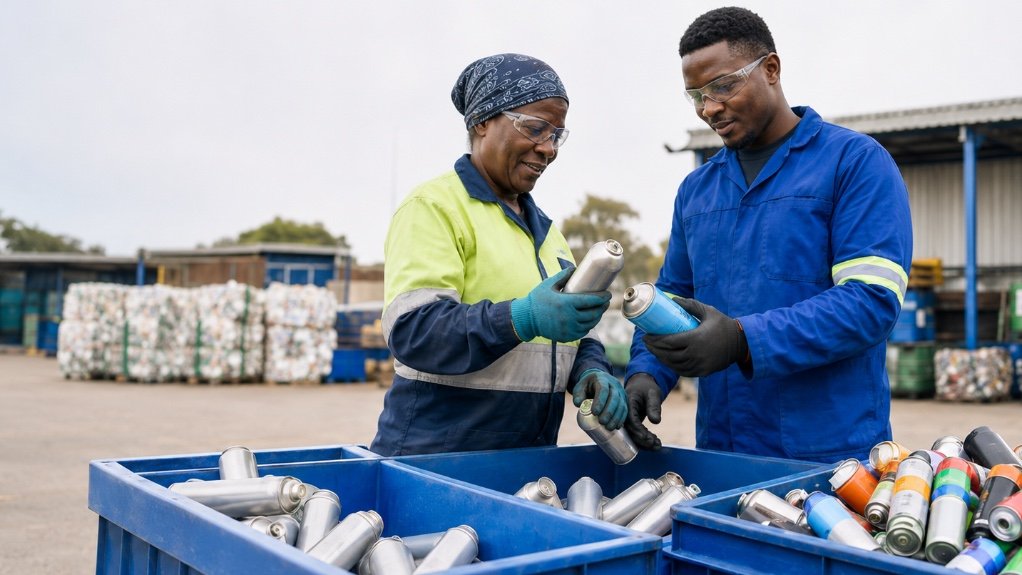

AEROSOL CAN RECYCLING Aerosol cans are an example of a type of metal packaging that can be repurposed or used as a feedstock for another manufacturing process instead of being discarded
DR KISHAN SINGH Singh says that metal packaging should be considered for reuse after its contents have been consumed



As packaging manufacturers, brand owners and retailers continue to focus on traceability, product identification and increasingly sophisticated barcoding technologies, the substrate on which this information appears remains equally important.
For metal packaging, its ability to protect products, withstand demanding supply chains and retain value after use makes it an important contributor to South Africa’s transition towards a more circular economy, metal packaging industry producer responsibility organisation MetPac-SA CEO Dr Kishan Singh says.
“Metal packaging has an important advantage in that the material itself retains significant economic and resource value [and] after use the package can become a valuable feedstock for another manufacturing process rather than being lost to landfill.”
Metal packaging is manufactured primarily from two material groups – aluminium and tinplate, or ferrous steel. Although both are highly recyclable, they enter different recycling and remelting streams and therefore need to be correctly separated during collection and sorting.
Aluminium
The aluminium packaging stream encompasses considerably more than beverage cans, notes Singh. “It includes used beverage cans, aerosols, foil packaging and trays, wine bottle caps and closures, pharmaceutical collapsible tubes and coffee pods.”
Once discarded, these materials enter the recycling chain through waste pickers, collection programmes, buy back centres and other recovery channels. They are aggregated and sorted, contaminants and non-metal components are removed, and the prepared aluminium scrap is supplied to specialised remelting facilities. There it is converted into aluminium ingots or slabs which can be used as secondary raw material for manufacturing.
Depending on the grade and processing requirements, this recycled aluminium can be rolled into sheet or used in the manufacture of a variety of other aluminium products.
Steel
The ferrous packaging stream, meanwhile, includes food cans, general-line cans, paint and polish cans, caps and closures. Because steel is a ferrous metal, it can be efficiently separated from other materials through magnetic sorting.
Recovered steel packaging is cleaned, sorted and prepared as scrap before being transported to steelmaking facilities, where it is typically combined with other ferrous scrap and remelted, Singh explains.
"The resulting recycled steel can be used in products such as reinforcing bar, structural steel and other applications.”
A Value Chain Responsibility
MetPac-SA emphasises that circularity cannot be achieved by recyclers alone. Consumers and waste pickers need to recover packaging; collectors and buy-back centres must aggregate it; recyclers must sort and process it; re-melters convert the scrap back into usable metal; and manufacturers create demand by using recovered material in new products.
For Singh, this makes collaboration across the packaging value chain increasingly important.
“The future of packaging will not only be about what we place on the shelf or what information we communicate through a label or barcode. We also have to consider what happens to that package once the consumer is finished with it. Effective packaging needs to perform throughout its entire life cycle,” he avers.
He concludes that recycling keeps valuable resources circulating in the economy, supports greater resource efficiency and diverts recyclable material from landfill; principles that are central to building a more circular economy.
Article Enquiry
Email Article
Save Article
Feedback
To advertise email advertising@creamermedia.co.za or click here
Research Reports

Projects

Latest Multimedia

Latest News


Showroom

TEBA is a trusted workforce solutions partner to the mining and industrial sectors, providing end-to-end SLP compliant recruitment, candidate...
VISIT SHOWROOM
The Aluminium Federation of South Africa (AFSA), is the voice of the South African aluminium industry.
VISIT SHOWROOM

Announcements
What's On
Subscribe to improve your user experience...
Option 1 (equivalent of R125 a month):
Receive a weekly copy of Creamer Media's Engineering News & Mining Weekly magazine
(print copy for those in South Africa and e-magazine for those outside of South Africa)
Receive daily email newsletters
Access to full search results
Access archive of magazine back copies
Access to Projects in Progress
Access to ONE Research Report of your choice in PDF format
Option 2 (equivalent of R375 a month):
All benefits from Option 1
PLUS
Access to Creamer Media's Research Channel Africa for ALL Research Reports, in PDF format, on various industrial and mining sectors
including Electricity; Water; Energy Transition; Hydrogen; Roads, Rail and Ports; Coal; Gold; Platinum; Battery Metals; etc.
Already a subscriber?
Forgotten your password?
Receive weekly copy of Creamer Media's Engineering News & Mining Weekly magazine (print copy for those in South Africa and e-magazine for those outside of South Africa)
➕
Recieve daily email newsletters
➕
Access to full search results
➕
Access archive of magazine back copies
➕
Access to Projects in Progress
➕
Access to ONE Research Report of your choice in PDF format
RESEARCH CHANNEL AFRICA
R4500 (equivalent of R375 a month)
SUBSCRIBEAll benefits from Option 1
➕
Access to Creamer Media's Research Channel Africa for ALL Research Reports on various industrial and mining sectors, in PDF format, including on:
Electricity
➕
Water
➕
Energy Transition
➕
Hydrogen
➕
Roads, Rail and Ports
➕
Coal
➕
Gold
➕
Platinum
➕
Battery Metals
➕
etc.
Receive all benefits from Option 1 or Option 2 delivered to numerous people at your company
➕
Multiple User names and Passwords for simultaneous log-ins
➕
Intranet integration access to all in your organisation