Iron-ore production set for further growth to 2030 – BMI

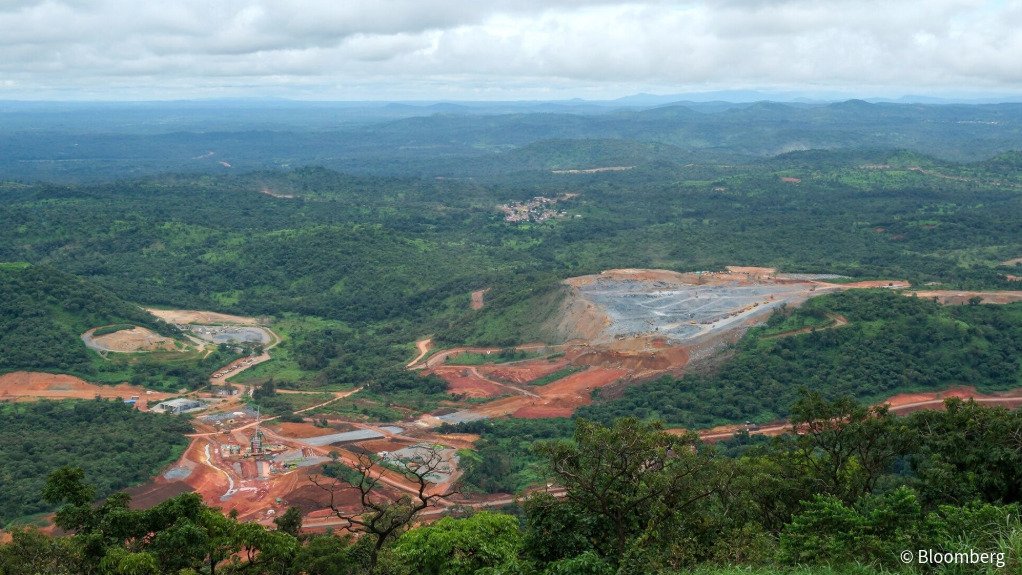


Global iron-ore production growth will accelerate over 2026 to 2030, averaging 2.2% growth over that period, compared with 1.2% over the previous five years, with production expected to reach 3.04-billion tonnes by 2030, BMI, a unit of Fitch Solutions, says in its latest outlook for iron-ore mining.
Iron-ore production growth in Guinea, once the Simandou project comes online, is expected to be a major driver of growth.
However, BMI does expect development delays, as political and social instability, as well as resource nationalism, impact on the sector.
Over the medium to long term, BMI expects lower prices to push iron-ore production into stagnation and subsequent decline in 2032 to 2034.
COUNTRY BREAKDOWN
BMI expects iron-ore production in Australia to grow this year, driven by expansions and the start of production at smaller projects, including the ramp-up of Mineral Resources’ Onslow Iron and Fortescue’s Iron Bridge projects.
The unit believes Australia’s placement at the lowest end of the global iron-ore cost curve will provide a healthy buffer against falling prices over its forecast period.
Major players are anticipated to continue decreasing costs and increasing production, as remaining cost competitive will be a focus for iron-ore miners in a long-term weak price environment, with top firms investing in technology to maintain an edge, BMI points out.
In the coming years, it expects Rio Tinto, BHP and Fortescue to drive Australian iron-ore production.
After 2028, BMI forecasts that lower iron-ore prices will lead to stagnation and a subsequent production decline.
Brazil’s iron-ore production growth it expected to rebound in the coming years following a contraction over 2019 to 2020.
BMI predicts domestic iron-ore production in Brazil to increase at a yearly average of 3.6% over 2026 to 2030, rising from 504.6-million tonnes to 576.2-million tonnes by 2029.
Vale, the market’s mining giant, remains at the forefront of this expansion.
Low operating costs, a solid project pipeline and Brazil’s high-quality iron-ore, increasingly favoured by Mainland China’s steel producers, are anticipated to contribute to higher output.
BMI holds a positive long-term growth outlook for Brazil, as a number of new projects, still in the planning stages, come online and boost production capacity.
The unit forecasts average yearly growth of 2% over 2031 to 2035, which would take yearly output to 636-million tonnes by 2035.
China’s iron-ore production is expected to increase by 1% year-on-year this year, as the country aims to accelerate the construction of iron-ore exploration projects and improve its capability to ensure iron-ore supplies.
China’s iron-ore sector is expected to become increasingly consolidated owing to the high costs associated with mining low-grade ore and stringent environmental regulations. These factors will lead to the gradual phasing out of iron-ore used in the production of steel, as electric arc furnaces and decarbonised steel take precedence, BMI points out.
Despite these challenges, the unit expects that the lower price environment will not immediately drive production down owing to political incentives to support the industry, achieve targets that increase domestic output and reduce import dependence.
India’s iron-ore production is forecast to reach 290-million tonnes this year, growing at a rate of 2% year-on-year.
Beyond this year, BMI expects a steady acceleration in growth, with iron-ore production increasing to 375-million tonnes by 2034.
The unit believes State-owned iron-ore miner National Mineral Development Corporation will drive production growth in the country.
BMI forecasts a 1.5% year-on-year increase in iron-ore production in Russia this year as companies pivot to better accommodate Asian consumers.
However, declining iron-ore prices are expected to put downward pressure on new project investment, thereby limiting production growth in the coming years.
Despite this, the unit anticipates an uptick in production owing to expansions in output capacity at Severstal’s Yakovlevksy mine, Evraz’s Sobstvenno-Kachkanarskoye mine and NLMK’s Stoilensky project.
Article Enquiry
Email Article
Save Article
Feedback
To advertise email advertising@creamermedia.co.za or click here
Research Reports
Latest Multimedia
Latest News
Showroom
For over 30 years, Werner South Africa Pumps & Equipment (PTY) LTD has been designing, manufacturing, supplying and maintaining specialist...
VISIT SHOWROOM
The Beneficiation Academy is a certified training institution that follows all compliance legislation and is accredited with various Sector...
VISIT SHOWROOM
Press Office
Announcements
What's On
Subscribe to improve your user experience...
Option 1 (equivalent of R125 a month):
Receive a weekly copy of Creamer Media's Engineering News & Mining Weekly magazine
(print copy for those in South Africa and e-magazine for those outside of South Africa)
Receive daily email newsletters
Access to full search results
Access archive of magazine back copies
Access to Projects in Progress
Access to ONE Research Report of your choice in PDF format
Option 2 (equivalent of R375 a month):
All benefits from Option 1
PLUS
Access to Creamer Media's Research Channel Africa for ALL Research Reports, in PDF format, on various industrial and mining sectors
including Electricity; Water; Energy Transition; Hydrogen; Roads, Rail and Ports; Coal; Gold; Platinum; Battery Metals; etc.
Already a subscriber?
Forgotten your password?
Receive weekly copy of Creamer Media's Engineering News & Mining Weekly magazine (print copy for those in South Africa and e-magazine for those outside of South Africa)
➕
Recieve daily email newsletters
➕
Access to full search results
➕
Access archive of magazine back copies
➕
Access to Projects in Progress
➕
Access to ONE Research Report of your choice in PDF format
RESEARCH CHANNEL AFRICA
R4500 (equivalent of R375 a month)
SUBSCRIBEAll benefits from Option 1
➕
Access to Creamer Media's Research Channel Africa for ALL Research Reports on various industrial and mining sectors, in PDF format, including on:
Electricity
➕
Water
➕
Energy Transition
➕
Hydrogen
➕
Roads, Rail and Ports
➕
Coal
➕
Gold
➕
Platinum
➕
Battery Metals
➕
etc.
Receive all benefits from Option 1 or Option 2 delivered to numerous people at your company
➕
Multiple User names and Passwords for simultaneous log-ins
➕
Intranet integration access to all in your organisation