Institution looks to waiver adjudications to address shortages

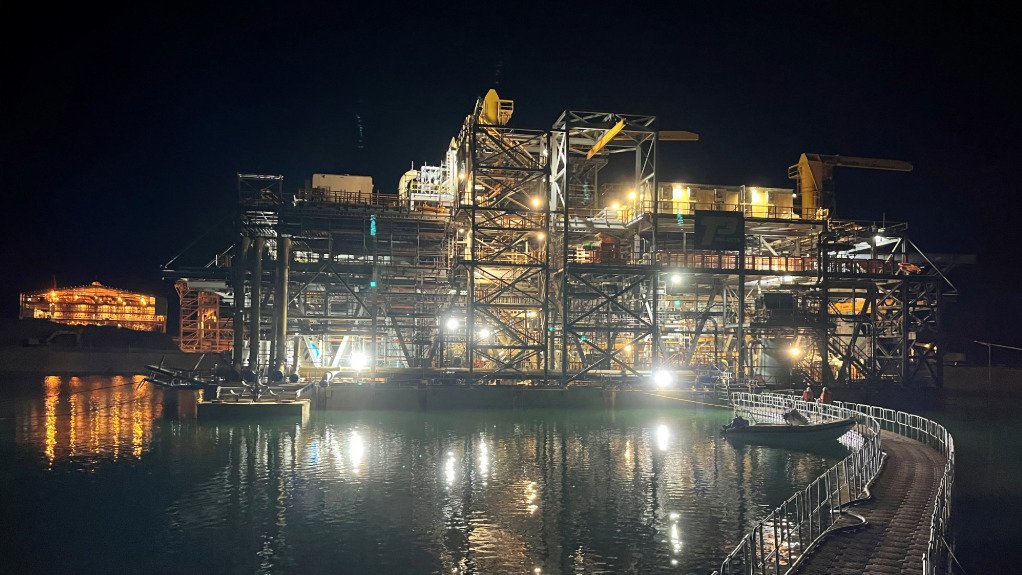
LIGHT IN THE DARK SAISC has sought to expedite waiver adjudications where structural steel sections are temporarily in short supply. It has mobilised all the major associations that represent the steel manufacturing industry to support its efforts


To help combat the current structural steel shortage in South Africa, industry body the Southern African Institute of Steel Construction (SAISC) CEO Amanuel Gebremeskel says the organisation is supporting industry applications for case-by-case import tariff waiver adjudications from the International Trade Administration Commission of South Africa.
Gebremeskel notes that a six-month tariff waiver was originally proposed, as a means of bridging the period until new mills are operational. However, it could not be implemented owing to the heavy domestic and international legislative and administrative burdens required to implement such a policy. As a result, SAISC pivoted to this new approach.
“Shortage of structural steel in South Africa has three dimensions. Firstly, there are profiles that are no longer rolled in South Africa. Secondly, there are profiles that are manufactured in South Africa but are not available in reasonable lead times. Finally, there are structural profiles that may be available locally but where compliance with the quality and traceability requirements recognised by SAISC needs to be demonstrated.”
SAISC, therefore, has sought to expedite waiver adjudications where structural steel sections are temporarily in short supply given these three criteria.
Gebremeskel says SAISC has mobilised all the major associations that represent the steel manufacturing industry to support its efforts. Consequently, affected companies have been approaching SAISC to evaluate the market and provide credible and independent summaries of materials that are in short supply.
“We hope this effort will yield a more practical approach to address the problem of structural steel shortages.”
Meanwhile, from a demand perspective, he notes, the sector is fortunate that structural steel is required “in almost every facet of infrastructure development”, adding that he expects high demand for light steel frames (LSF) as they can satisfy the need for quick construction and delivery of housing, school and healthcare facilities.
“SAISC’s LSF committee is developing courses to train engineers and contractors to satisfy this need. To add to this educational effort SAISC is rolling out the Material Quality Certification Programme (MQCP) to ensure that such market growth and innovation doesn’t come at the expense of quality in material supply. Another area where we expect to see growth is in structural steel framed bridges.”
SAISC also expects infrastructure activity to strengthen in 2027, supported by increasing pressure to improve municipal service delivery, growing private-sector interest in infrastructure investment, and the continued development of public-private partnership frameworks.
He also observes that 2027 is the year when many of the private-public partnership policies of the Government of National Unity become more prominent and established in parastatals.
More About the MQCP
Gebremeskel notes that part of SAISC’s rationale for launching the MQCP is owed to recent developments within the local steel production sector.
He comments that, while the structural steel market was previously dominated by one large mill which produced steel from iron-ore, South Africa now has several steel mills that recycle scrap metal to make structural steel.
Further, many steel members are now importing from all over the world owing to the closure of ArcelorMittal’s Newcastle facilities.
“This fundamental diversification of steel supply reinforces the need for an independent industry body such as SAISC to establish clear quality criteria and support consistent verification across the structural steel supply chain.”
To that end, audits of supplier firms will help to ensure they meet the quality and traceability requirements of the MQCP and participating suppliers will be subject to regular MQCP audits in accordance with the programme’s requirements.
“Ultimately the programme is meant to give confidence to engineers and investors that South Africa continues to provide high- quality steel even while undergoing such a thorough industry transformation,” Gebremeskel concludes.
Article Enquiry
Email Article
Save Article
Feedback
To advertise email advertising@creamermedia.co.za or click here

Projects
Latest Multimedia

Latest News
Showroom
Supplier & Distributor of the Widest Range of Accurate & Easy-to-Use Alcohol Breathalysers
VISIT SHOWROOM
CMTS is a leading, well-established EC&I contractor with 37+ years of mining and industrial experience. We execute full-scope EC&I projects with...
VISIT SHOWROOM


Announcements
What's On
Subscribe to improve your user experience...
Option 1 (equivalent of R125 a month):
Receive a weekly copy of Creamer Media's Engineering News & Mining Weekly magazine
(print copy for those in South Africa and e-magazine for those outside of South Africa)
Receive daily email newsletters
Access to full search results
Access archive of magazine back copies
Access to Projects in Progress
Access to ONE Research Report of your choice in PDF format
Option 2 (equivalent of R375 a month):
All benefits from Option 1
PLUS
Access to Creamer Media's Research Channel Africa for ALL Research Reports, in PDF format, on various industrial and mining sectors
including Electricity; Water; Energy Transition; Hydrogen; Roads, Rail and Ports; Coal; Gold; Platinum; Battery Metals; etc.
Already a subscriber?
Forgotten your password?
Receive weekly copy of Creamer Media's Engineering News & Mining Weekly magazine (print copy for those in South Africa and e-magazine for those outside of South Africa)
➕
Recieve daily email newsletters
➕
Access to full search results
➕
Access archive of magazine back copies
➕
Access to Projects in Progress
➕
Access to ONE Research Report of your choice in PDF format
RESEARCH CHANNEL AFRICA
R4500 (equivalent of R375 a month)
SUBSCRIBEAll benefits from Option 1
➕
Access to Creamer Media's Research Channel Africa for ALL Research Reports on various industrial and mining sectors, in PDF format, including on:
Electricity
➕
Water
➕
Energy Transition
➕
Hydrogen
➕
Roads, Rail and Ports
➕
Coal
➕
Gold
➕
Platinum
➕
Battery Metals
➕
etc.
Receive all benefits from Option 1 or Option 2 delivered to numerous people at your company
➕
Multiple User names and Passwords for simultaneous log-ins
➕
Intranet integration access to all in your organisation