Indaba 2026 targets access, value and innovation

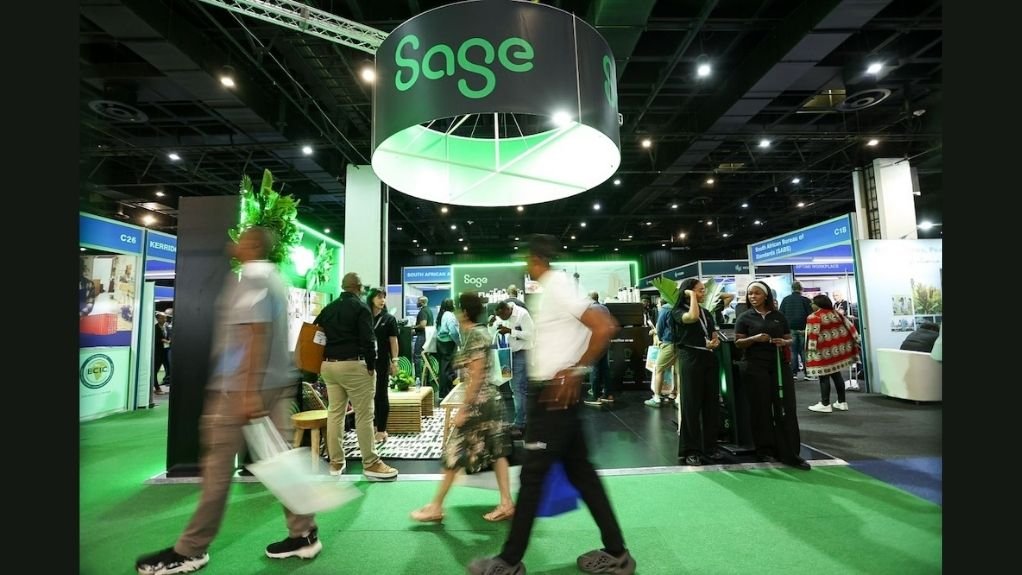
GROWING LOCAL VALUE Manufacturing Indaba 2026 is structured to help manufacturers capture more value locally, access new markets, and adopt the technologies that define global competitiveness.



For South African manufacturers, 2026 offers pressure and possibility, says specialists in technical, logistics and administrative solutions for events Siyenza MD Liz Hart.
Energy insecurity and logistics bottlenecks still dictate daily production schedules, while freight costs and port inefficiencies are negatively affecting export competitiveness. Further, the factory floor is changing, as robotics, AI and data analytics are no longer pilot projects, but rather baseline requirements for global tenders, she notes.
Manufacturing Indaba 2026 is structured to help manufacturers capture more value locally, access new markets, and adopt the technologies that define global competitiveness.
The 2026 programme centres on five pillars that define manufacturing promotion, of which the first is investment attraction and industrial expansion, which connects manufacturers with multiple stakeholders from financial institutions and the State.
The second pillar constitutes market access and trade facilitation, focused on helping firms reach local, regional and international buyers, while the third pillar comprises technology and innovation adoption, promoting digital transformation, automation and Industry 4.0.
Skills development and industrial capability building to address workforce readiness forms the fourth pillar, while the fifth is policy engagement and collaboration to strengthen dialogue between industry and the State.
“Together, these pillars support the growth, competitiveness and sustainability of African manufacturing,” says Hart.
The Indaba positions itself as a “strong point of impact” through several indicators, including the number of business-to-business meetings facilitated during the event, investment commitments, and partnership agreements initiated through the platform, as well as exhibitor and delegate surveys that track business leads, procurement opportunities and expansion plans.
Hart adds that job creation and industrial expansion outcomes reported by companies that have participated in previous editions form part of the assessment, as follow-up engagements with participating companies and development agencies continue after the event.
“While investment and job creation often materialise over months or years, feedback consistently shows that the Indaba serves as a catalyst for business growth, partnerships and market opportunities.”
Hart says some of the most cited challenges include energy reliability and escalating costs, and while electricity supply reliability has improved, manufacturers remain concerned about energy security and the need for alternative power solutions.
Meanwhile, logistics and infrastructure-related challenges, particularly port inefficiencies, freight delays and transport costs, continue to erode the competitiveness of local manufacturers domestically and in global markets.
The third major constraint is skills and productivity, while other recurring concerns include access to finance, regulatory complexity and the need to expand market access domestically and across Africa, she notes.
Growth Momentum
Hart notes that four subsectors are attracting strong interest from Indaba participants.
Agro-processing remains one of the country’s most resilient manufacturing sectors, accounting for more than 22% of total manufacturing. Growth is being driven by demand for value-added products, food security priorities and export opportunities.
She adds that green manufacturing and renewable-energy technologies are emerging as major growth areas, as countries accelerate energy transition strategies. Moreover, advanced manufacturing and industrial technologies are gaining momentum in automation, robotics, additive manufacturing, AI and smart factory solutions.
Mineral beneficiation, particularly battery value chains, also present a significant opportunity, with growing focus on processing Africa’s critical minerals locally for electric vehicles and energy storage.
“Collectively, these sectors reflect the direction in which manufacturing is evolving – greater value addition, technological advancement, sustainability and regional trade integration.”
The African Continental Free Trade Area (AfCFTA), therefore, serves as a cornerstone of the Indaba’s 2026 agenda. A focused panel will unpack cross-border trade, regional integration and practical implementation. Hart says the Indaba supports manufacturers by hosting discussions on regulatory requirements and export readiness, and by bringing together buyers, distributors, investors and policymakers from across the continent.
“We are seeing increasing interest from delegates representing East, West and Central Africa, particularly in sectors such as manufacturing technology, infrastructure, agro-processing, energy solutions and industrial development.”
Other Indaba Benefits
The programme will feature sessions, case studies and technology showcases on smart manufacturing, automation and robotics, AI and data analytics, the Industrial Internet of Things, digital supply chain management and cybersecurity for connected environments. Exhibitors and technology providers will demonstrate solutions directly to delegates.
“These sessions are designed to help manufacturers understand not only the potential of emerging technologies but also the practical steps required to adopt them, improve efficiency and remain globally competitive,” notes Hart.
Further, addressing the manufacturing skills gap is built into the programme, with the Indaba creating opportunities for engagement among industry and technical and vocational education and training colleges, sector education and training authorities, universities, research institutions and private training providers.
Discussions will further focus on aligning training programmes with industry requirements and strengthening pathways into manufacturing careers. On industrial policy, the event serves as a neutral platform for direct engagement with the Department of Trade, Industry and Competition, provincial investment agencies and industrial development institutions.
“This direct engagement helps [to] ensure that policy discussions remain connected to the realities faced by manufacturers,” Hart concludes.
Article Enquiry
Email Article
Save Article
Feedback
To advertise email advertising@creamermedia.co.za or click here
Research Reports
Projects

Latest Multimedia
Latest News
Showroom
Roytec Global is an international company specializing in liquid / solid and mineral separation technologies for the Mining and Industrial sectors.
VISIT SHOWROOM
Rittal is a world leading provider of top-quality integrated systems for enclosures, power distribution, climate control, IT infrastructure and...
VISIT SHOWROOM


Announcements
What's On
Subscribe to improve your user experience...
Option 1 (equivalent of R125 a month):
Receive a weekly copy of Creamer Media's Engineering News & Mining Weekly magazine
(print copy for those in South Africa and e-magazine for those outside of South Africa)
Receive daily email newsletters
Access to full search results
Access archive of magazine back copies
Access to Projects in Progress
Access to ONE Research Report of your choice in PDF format
Option 2 (equivalent of R375 a month):
All benefits from Option 1
PLUS
Access to Creamer Media's Research Channel Africa for ALL Research Reports, in PDF format, on various industrial and mining sectors
including Electricity; Water; Energy Transition; Hydrogen; Roads, Rail and Ports; Coal; Gold; Platinum; Battery Metals; etc.
Already a subscriber?
Forgotten your password?
Receive weekly copy of Creamer Media's Engineering News & Mining Weekly magazine (print copy for those in South Africa and e-magazine for those outside of South Africa)
➕
Recieve daily email newsletters
➕
Access to full search results
➕
Access archive of magazine back copies
➕
Access to Projects in Progress
➕
Access to ONE Research Report of your choice in PDF format
RESEARCH CHANNEL AFRICA
R4500 (equivalent of R375 a month)
SUBSCRIBEAll benefits from Option 1
➕
Access to Creamer Media's Research Channel Africa for ALL Research Reports on various industrial and mining sectors, in PDF format, including on:
Electricity
➕
Water
➕
Energy Transition
➕
Hydrogen
➕
Roads, Rail and Ports
➕
Coal
➕
Gold
➕
Platinum
➕
Battery Metals
➕
etc.
Receive all benefits from Option 1 or Option 2 delivered to numerous people at your company
➕
Multiple User names and Passwords for simultaneous log-ins
➕
Intranet integration access to all in your organisation