HPHT Oil & Gas Sealing: How Parker S-Seals Improve Reliability in High-Pressure, High-Temperature Applications


This article has been supplied.
By-line Author: Grant Fallows, Engineering & Market Unit Manager Oil & Gas
As oil and gas exploration pushes further into high-pressure/high-temperature (HPHT) operating conditions, sealing systems are being asked to do more than ever before. In surface, subsea, and downhole equipment, rising pressures can expose the limits of conventional O-ring designs, increasing the risk of extrusion, assembly complexity, and installation-related failures. For engineers tasked with improving reliability while reducing system complexity, seal design has become a critical consideration. Parker S-Seals address these challenges with a one-piece construction that combines an elastomer sealing body with internal overmolded springs, delivering integrated extrusion resistance, bi-directional sealing capability, and performance for demanding static and low-movement dynamic HPHT applications up to 20,000 psi / 1,400 bar, depending on configuration.
HPHT service requires a different approach because pressure and temperature extremes can quickly expose the limitations of conventional sealing designs. While traditional O-rings remain a practical choice for moderate-pressure oil and gas applications, pressures above approximately 1,500 psi / 100 bar can increase the risk of elastomer extrusion into hardware gaps. Engineers often address this by adding back-up rings or specifying T-seals, but these multi-component solutions can introduce added assembly time, orientation requirements, potential misalignment, installation damage, and greater sensitivity to hardware tolerances. In applications where reliability, repeatability, and ease of installation are critical, an integrated seal design such as a Parker S-Seal can provide a more robust path forward.
Parker S-Seals are engineered to bring HPHT sealing performance into a simpler, one-piece solution. Each seal combines an elastomer sealing element with internal springs that are overmolded into the body, creating an integrated component with built-in extrusion resistance. Unlike multi-piece arrangements that rely on separate O-rings and back-up rings, the S-Seal installs as a single part, supporting easier handling, more consistent assembly, and improved insertion into the sealing gland. With pressure capability up to 20,000 psi / 1,400 bar, bi-directional sealing performance, tolerance of large extrusion gaps, and compatibility with many existing groove formats, Parker S-Seals are well suited for static and low-movement dynamic HPHT applications where reliability and assembly efficiency are essential.
S-Seals are commonly used across HPHT oil and gas equipment where pressure, temperature, extrusion gaps, and installation conditions demand more than a standard O-ring solution. Typical applications include surface and subsea equipment, downhole tools, valves, connectors, wellhead equipment, oil and gas production systems, and many static or low-movement dynamic sealing locations. Because Parker S-Seals can be engineered for demanding static and low-motion service, they are well suited for areas where conventional seals may otherwise require additional anti-extrusion components, more complex gland designs, or more time-consuming installation procedures.
A key feature of the Parker S-Seal design is its integrated internal spring system, which provides built-in extrusion resistance and helps the seal perform reliably under high pressures and demanding HPHT service conditions.
The elastomer body of a Parker S-Seal can be specified from a range of material families to align with the temperature, media, and chemical demands of the application. Common options for oil and gas service include NBR, HNBR, FKM, and FFKM, each offering distinct performance characteristics for different operating environments. For extremely high-temperature applications, Parker’s FFKM FF582-90 material can support service temperatures up to 275°C / 525°F, depending on the application environment and operating conditions. To optimize performance, material selection and seal geometry should account for operating temperature range, pressure profile, fluid and gas exposure, sour gas conditions, decompression rate, static or dynamic movement, hardware surface finish, and extrusion gap.
Parker S-Seals can often be evaluated for retrofit into existing ISO 3601- and AS568-style groove designs, offering a potential path to improved HPHT sealing performance without requiring a full hardware redesign. Retrofit feasibility depends on several factors, including groove series, gland length, seal cross-section, extrusion gap, hardware geometry, and assembly method. Small inside-diameter designs may also require special installation considerations to avoid overstressing the seal during assembly. Because HPHT sealing performance is highly dependent on the combined effects of pressure, temperature, media exposure, gap size, and groove configuration, an engineering review is recommended before specifying an S-Seal as a drop-in replacement. Parker sealing experts can assess the complete operating conditions and recommend the appropriate S-Seal configuration for the application.
HPHT applications often require seal designs tailored to a specific groove, pressure class, and equipment configuration. Parker S-Seals can be engineered for a wide range of operating pressures and hardware constraints.
As HPHT oil and gas systems continue to push pressure and temperature limits, sealing solutions must deliver dependable performance without adding unnecessary assembly complexity. Parker S-Seals meet this need through a one-piece design that combines elastomeric sealing performance with spring-based extrusion protection, helping engineers address demanding pressure, temperature, media, and hardware conditions. For surface, subsea, downhole, valve, connector, and wellhead applications, S-Seals provide a practical option for many static and low-movement dynamic HPHT environments, with pressure capability up to 20,000 psi / 1,400 bar depending on configuration.
Article Enquiry
Email Article
Save Article
Feedback
To advertise email advertising@creamermedia.co.za or click here
Research Reports

Projects
Latest Multimedia

Latest News
Showroom
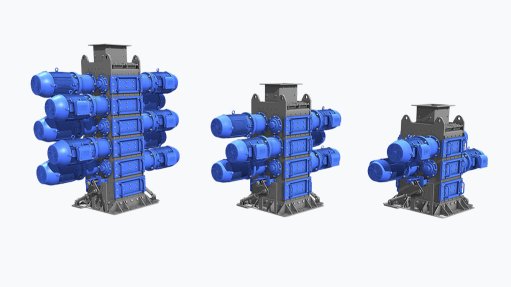
Energy and Densification Systems (EDS) has developed equipment for crushing, milling, blending and densifying products. Based on its globally...
VISIT SHOWROOM
Willard Batteries is one of the leading brands in automotive battery power products. With a rich history spanning over 70 years, Willard batteries...
VISIT SHOWROOM


Announcements
What's On
Subscribe to improve your user experience...
Option 1 (equivalent of R125 a month):
Receive a weekly copy of Creamer Media's Engineering News & Mining Weekly magazine
(print copy for those in South Africa and e-magazine for those outside of South Africa)
Receive daily email newsletters
Access to full search results
Access archive of magazine back copies
Access to Projects in Progress
Access to ONE Research Report of your choice in PDF format
Option 2 (equivalent of R375 a month):
All benefits from Option 1
PLUS
Access to Creamer Media's Research Channel Africa for ALL Research Reports, in PDF format, on various industrial and mining sectors
including Electricity; Water; Energy Transition; Hydrogen; Roads, Rail and Ports; Coal; Gold; Platinum; Battery Metals; etc.
Already a subscriber?
Forgotten your password?
Receive weekly copy of Creamer Media's Engineering News & Mining Weekly magazine (print copy for those in South Africa and e-magazine for those outside of South Africa)
➕
Recieve daily email newsletters
➕
Access to full search results
➕
Access archive of magazine back copies
➕
Access to Projects in Progress
➕
Access to ONE Research Report of your choice in PDF format
RESEARCH CHANNEL AFRICA
R4500 (equivalent of R375 a month)
SUBSCRIBEAll benefits from Option 1
➕
Access to Creamer Media's Research Channel Africa for ALL Research Reports on various industrial and mining sectors, in PDF format, including on:
Electricity
➕
Water
➕
Energy Transition
➕
Hydrogen
➕
Roads, Rail and Ports
➕
Coal
➕
Gold
➕
Platinum
➕
Battery Metals
➕
etc.
Receive all benefits from Option 1 or Option 2 delivered to numerous people at your company
➕
Multiple User names and Passwords for simultaneous log-ins
➕
Intranet integration access to all in your organisation