How Middle East innovation is reshaping future infrastructure


This article has been supplied.
As climate change, urbanisation and geopolitical uncertainty reshape infrastructure priorities around the world, the Middle East is emerging as a global laboratory for resilient engineering. The region’s willingness to experiment, invest and innovate is generating lessons that could fundamentally change how infrastructure is planned and delivered across Africa, comments Denver Dreyer, Chief Executive Officer: Middle East and North Africa (MENA) at Zutari.
Following the growing alignment between African engineering expertise and Gulf investment capital, Dreyer believes the next opportunity lies in exporting knowledge, particularly around climate resilience, water security, project preparation and digital engineering.
A global testing ground for resilient infrastructure
The Middle East has spent decades designing infrastructure to withstand extreme temperatures, limited freshwater resources and harsh environmental conditions. Today, as Europe, North America and other regions experience increasingly frequent heatwaves, droughts and flooding, many of these engineering approaches are attracting global attention.
“The Middle East has adapted to living in one of the world’s most demanding environments,” comments Dreyer. “Buildings are designed to minimise heat gain, district cooling systems improve energy efficiency, and infrastructure planning increasingly considers resilience from the outset.”
Recent events have also demonstrated that resilience must extend beyond traditional climate considerations. Following severe flooding due to heavy rains in the UAE, infrastructure planners have had to rethink stormwater management in environments that were never designed for significant rainfall.
At the same time, geopolitical instability has broadened the definition of resilience to include redundancy, security and the protection of critical infrastructure, adds Dreyer. Hence, resilience has become a multidimensional engineering challenge rather than a single design objective.
Water security demands new thinking
Water remains one of the defining infrastructure challenges across both the Middle East and Africa. While desalination continues to play an important role in supplying water to Gulf countries, Dreyer says increasing attention is being paid to strategic groundwater resources.
“We are seeing growing interest in understanding and protecting aquifer systems, how they can be sustainably managed and how treated water can be reintroduced to maintain long-term pressure and storage capacity,” says Dreyer. These projects require highly specialised engineering expertise, an area where South African professionals have built an international reputation.
“South Africa has world-class capability in hydrogeology and groundwater engineering. That expertise is increasingly being applied across the Middle East, creating opportunities for knowledge sharing in both directions,” highlights Dreyer.
Moving beyond iconic projects
Dreyer believes one of the most significant shifts taking place in the Gulf is the move away from infrastructure, designed primarily as a symbol of ambition and status, towards infrastructure that delivers measurable economic and sustainable value. “There has been a clear transition from asking what the biggest or tallest project is to asking what creates sustainable economic growth,” he notes.
That change is influencing investment decisions across sectors, including logistics, ports, digital infrastructure, agriculture and energy. “Clients increasingly expect robust commercial analysis alongside engineering excellence. Attractive visual concepts are no longer enough. Projects must demonstrate long-term viability and measurable returns,” says Dreyer.
The Kingdom of Saudi Arabia and the UAE exemplify this shift perhaps more dramatically than any other country in the region. Through its visionary programmes, the Kingdom and the UAE have committed to diversifying their economy away from oil dependency, anchoring that transformation in large-scale infrastructure delivery that demands both engineering excellence and rigorous commercial justification.
He believes this evolution offers an important lesson for Africa. “The success of any infrastructure programme begins with selecting the right projects. Strong feasibility studies, comprehensive planning and clear business cases create confidence for investors and significantly improve delivery outcomes.”
Building investable infrastructure
As sovereign wealth funds continue expanding their investments across Africa, Dreyer says competition for capital is increasing. “Investors are looking for projects that combine technical excellence with commercial certainty. They want confidence that projects can be delivered efficiently, operated sustainably and supported by stable regulatory environments.”
Dreyer argues that African countries can strengthen their attractiveness by improving project preparation, procurement transparency and long-term infrastructure planning. “Capital naturally follows quality. High-quality studies, credible project preparation and consistent execution provide investors with confidence that infrastructure programmes will deliver lasting value.”
Engineering throughout the infrastructure lifecycle
Rather than viewing engineering as ending once construction is complete, Dreyer believes future success depends on managing the entire infrastructure lifecycle. “Engineering begins long before construction starts and continues long after an asset has been commissioned.”
Dreyer adds: “The greatest value comes from understanding planning, design, construction, operations and long-term maintenance as one continuous process.” This lifecycle perspective is becoming increasingly important.
Governments are seeking infrastructure that delivers value over decades rather than simply meeting initial capital budgets. “Choosing the lowest upfront cost often creates significantly higher operating costs over the life of the asset. The conversation has shifted towards total lifecycle value,” says Dreyer.
AI enhances engineering judgement
Artificial intelligence (AI) is also transforming how engineers evaluate complex infrastructure projects. Rather than replacing professional expertise, Dreyer believes AI is enabling engineers to make better-informed decisions by analysing larger volumes of data, testing multiple design scenarios and identifying potential risks earlier.
“Engineering judgement remains essential. AI helps us evaluate alternatives more quickly, optimise designs and improve project delivery, but the technical expertise and professional accountability still rest with the engineer,” says Dreyer. Digital modelling and digital twins are already allowing infrastructure to be tested virtually before construction begins, improving project certainty while reducing risk.
At the same time, Dreyer notes that digital infrastructure creates new responsibilities around cybersecurity. “As critical infrastructure becomes increasingly connected, protecting operational systems becomes just as important as protecting data.”
African engineering on the global stage
Perhaps the greatest opportunity, according to Dreyer, lies in ensuring that African engineering expertise becomes a central part of international infrastructure delivery rather than simply supplying technical resources.
“We have exceptional engineering capability across Africa. The objective should be to participate across the full project lifecycle, from advisory services and master planning through to design, construction support and long-term operations,” he says.
Zutari’s position across both Africa and the Middle East enables valuable knowledge transfer between the regions. “Engineers gain experience on some of the world’s most ambitious infrastructure programmes before bringing those lessons back to African markets. That exchange strengthens local capability while ensuring global best practice becomes increasingly accessible.”
Engineering impact through collaboration
Looking ahead, Dreyer believes infrastructure challenges will become more complex, but also more collaborative. Future engineers will need to balance technical performance with commercial viability, environmental resilience, social outcomes and digital integration, while working across disciplines and international partnerships.
“The future of engineering is not about solving isolated technical problems. It is about creating infrastructure that improves lives, strengthens economies and remains resilient for generations,” says Dreyer.
For Zutari, that philosophy reinforces its growing role as a trusted partner connecting African expertise with global opportunities, helping clients deliver infrastructure that is technically robust, commercially sustainable and designed for a rapidly changing world.
Article Enquiry
Email Article
Save Article
Feedback
To advertise email advertising@creamermedia.co.za or click here
Research Reports
Projects
Latest Multimedia


Latest News

Showroom
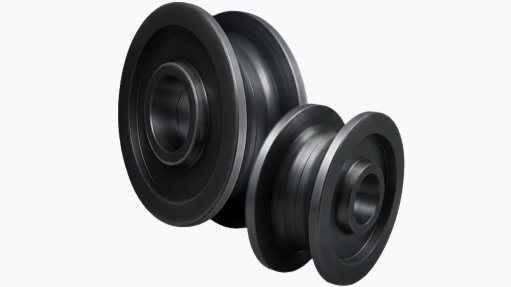
Mitsubishi Chemical Advanced Materials South Africa (Pty) Ltd is a leading manufacturer of high-performance engineering plastics for the mining...
VISIT SHOWROOM
The Steel Tube Export Association of South Africa was established to develop sustainable, internationally competitive carbon steel tube and pipe...
VISIT SHOWROOM

Press Office
Announcements
What's On
Subscribe to improve your user experience...
Option 1 (equivalent of R125 a month):
Receive a weekly copy of Creamer Media's Engineering News & Mining Weekly magazine
(print copy for those in South Africa and e-magazine for those outside of South Africa)
Receive daily email newsletters
Access to full search results
Access archive of magazine back copies
Access to Projects in Progress
Access to ONE Research Report of your choice in PDF format
Option 2 (equivalent of R375 a month):
All benefits from Option 1
PLUS
Access to Creamer Media's Research Channel Africa for ALL Research Reports, in PDF format, on various industrial and mining sectors
including Electricity; Water; Energy Transition; Hydrogen; Roads, Rail and Ports; Coal; Gold; Platinum; Battery Metals; etc.
Already a subscriber?
Forgotten your password?
Receive weekly copy of Creamer Media's Engineering News & Mining Weekly magazine (print copy for those in South Africa and e-magazine for those outside of South Africa)
➕
Recieve daily email newsletters
➕
Access to full search results
➕
Access archive of magazine back copies
➕
Access to Projects in Progress
➕
Access to ONE Research Report of your choice in PDF format
RESEARCH CHANNEL AFRICA
R4500 (equivalent of R375 a month)
SUBSCRIBEAll benefits from Option 1
➕
Access to Creamer Media's Research Channel Africa for ALL Research Reports on various industrial and mining sectors, in PDF format, including on:
Electricity
➕
Water
➕
Energy Transition
➕
Hydrogen
➕
Roads, Rail and Ports
➕
Coal
➕
Gold
➕
Platinum
➕
Battery Metals
➕
etc.
Receive all benefits from Option 1 or Option 2 delivered to numerous people at your company
➕
Multiple User names and Passwords for simultaneous log-ins
➕
Intranet integration access to all in your organisation