How Lithium-ion Power Is Driving Greater Productivity At Agricultural Operation

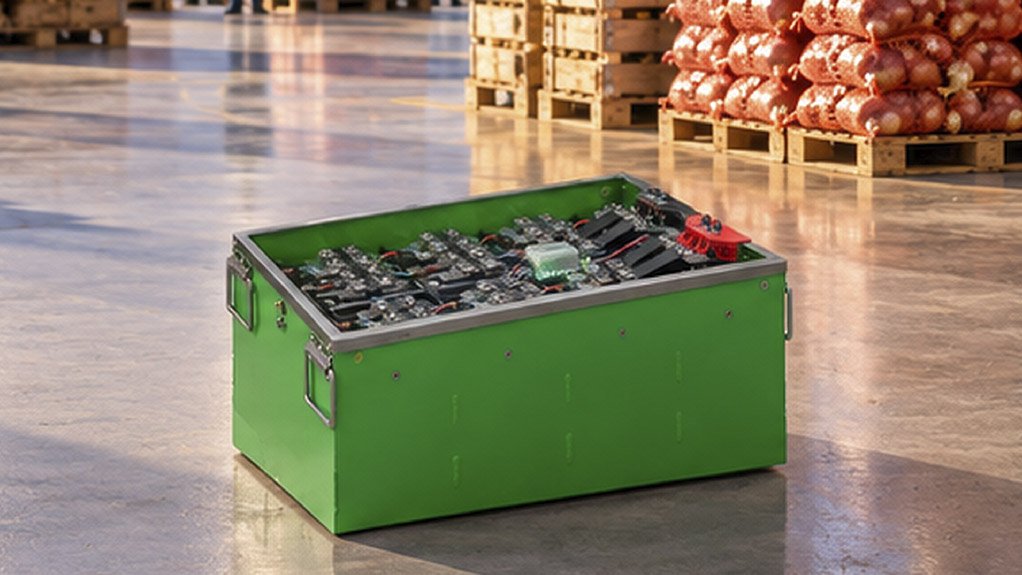


For agricultural operations, peak season leaves little room for downtime. When harvesting and fruit handling are running at full capacity, every hour counts. Reliable equipment can make the difference between keeping up with demand or falling behind.
Danie Loubser of Witzenberg Properties, says the harvesting season begins in early January with onions, followed by pears and then apples, continuing through to mid-May. “The busiest period falls in February and March, when red apple harvesting moves particularly quickly. During peak season, the operation can pick up to 1,000 crates a day.”
At the fruit store, harvested fruit arrives on bin trailers to be unloaded, sorted and then reloaded onto trucks. It is in this demanding environment that battery-powered equipment plays an important role.
The challenge with lead-acid
Before switching to lithium-ion, the operation relied on lead-acid batteries to power its equipment. This presented several challenges, particularly during the most intense harvesting periods.
“We had to have two batteries: one in operation and one on charge,” explains Loubser. “When the working battery ran flat, we had to stop everything and swap the batteries, which took time.”
The charging process itself was also lengthy, and the lead-acid batteries also required regular maintenance and monitoring of water levels. Ensuring a reliable supply of clean battery water even meant investing in a distillation machine.
With the existing lead-acid batteries reaching the end of their lifespan, the operation was faced with a replacement decision. Lithium-ion quickly emerged as an attractive alternative.
Choosing lithium-ion
The operation selected Industrial Power as its supplier, based on the combination of the proposed battery and charger solution, competitive pricing and the expectation of reliable after-sales support and warranty coverage.
The result has been a significant change in the way the equipment is managed during the working day.
Less maintenance, more flexibility
One of the greatest advantages of the lithium-ion solution is the ability to opportunity-charge the battery during natural breaks in the working day.
Instead of stopping operations to remove a discharged battery and replace it with a charged one, the battery can be given a quick top-up charge when required.
Loubser says the advantages of the lithium battery include low maintenance and the ability to give it a quick top-up charge for ten or twenty minutes without having to swap batteries. “This flexibility is particularly valuable during peak season, when the equipment is working hard from early morning through the afternoon.
“A typical peak-season day starts at 06:00, when truck loading begins. Harvesting trailers then arrive for offloading, with trucks being loaded periodically throughout the day. By the 12:30 lunch break, the battery typically has around 30% capacity remaining. An hour of charging brings it back to approximately 85%, allowing operations to continue through the afternoon.”
Long-term benefits and a reduced TCO
Under normal circumstances, the team gets the work done without having to swap batteries, and maintenance is very low. “While it’s too soon to tell, we expect the cost benefits of investing in the lithium-ion battery to be significant, especially if it lasts for 10 years.
“For now, the saving is in the shorter charging intervals, which lead to improved efficiencies and enhanced productivity. Additionally, time spent on maintaining the lead acid batteries is a thing of the past.”
Industrial Power’s General Manager, Jaco Weideman, says investing in the right technology, such as lithium-ion batteries may require a higher upfront investment but can deliver substantially lower operating costs over time.
“Where upfront capital is a constraint, financing options can make these high-value solutions more accessible while still delivering the long-term benefits of a lower TCO,” he concludes.
Article Enquiry
Email Article
Save Article
Feedback
To advertise email advertising@creamermedia.co.za or click here
Research Reports

Projects
Latest Multimedia

Latest News
Showroom
Design, Construction and Maintenance of Site Erected, Welded Bulk Storage Tanks for the Petrochemical, LNG, Ammonia and Sustainable fuel Sectors.
VISIT SHOWROOM
North Ridge Pumps is an independent manufacturer of pumps. We have a proven track record for product support and customer service throughout the...
VISIT SHOWROOM

Press Office
Announcements
What's On
Subscribe to improve your user experience...
Option 1 (equivalent of R125 a month):
Receive a weekly copy of Creamer Media's Engineering News & Mining Weekly magazine
(print copy for those in South Africa and e-magazine for those outside of South Africa)
Receive daily email newsletters
Access to full search results
Access archive of magazine back copies
Access to Projects in Progress
Access to ONE Research Report of your choice in PDF format
Option 2 (equivalent of R375 a month):
All benefits from Option 1
PLUS
Access to Creamer Media's Research Channel Africa for ALL Research Reports, in PDF format, on various industrial and mining sectors
including Electricity; Water; Energy Transition; Hydrogen; Roads, Rail and Ports; Coal; Gold; Platinum; Battery Metals; etc.
Already a subscriber?
Forgotten your password?
Receive weekly copy of Creamer Media's Engineering News & Mining Weekly magazine (print copy for those in South Africa and e-magazine for those outside of South Africa)
➕
Recieve daily email newsletters
➕
Access to full search results
➕
Access archive of magazine back copies
➕
Access to Projects in Progress
➕
Access to ONE Research Report of your choice in PDF format
RESEARCH CHANNEL AFRICA
R4500 (equivalent of R375 a month)
SUBSCRIBEAll benefits from Option 1
➕
Access to Creamer Media's Research Channel Africa for ALL Research Reports on various industrial and mining sectors, in PDF format, including on:
Electricity
➕
Water
➕
Energy Transition
➕
Hydrogen
➕
Roads, Rail and Ports
➕
Coal
➕
Gold
➕
Platinum
➕
Battery Metals
➕
etc.
Receive all benefits from Option 1 or Option 2 delivered to numerous people at your company
➕
Multiple User names and Passwords for simultaneous log-ins
➕
Intranet integration access to all in your organisation