How finishing and rework consume manufacturing capacity

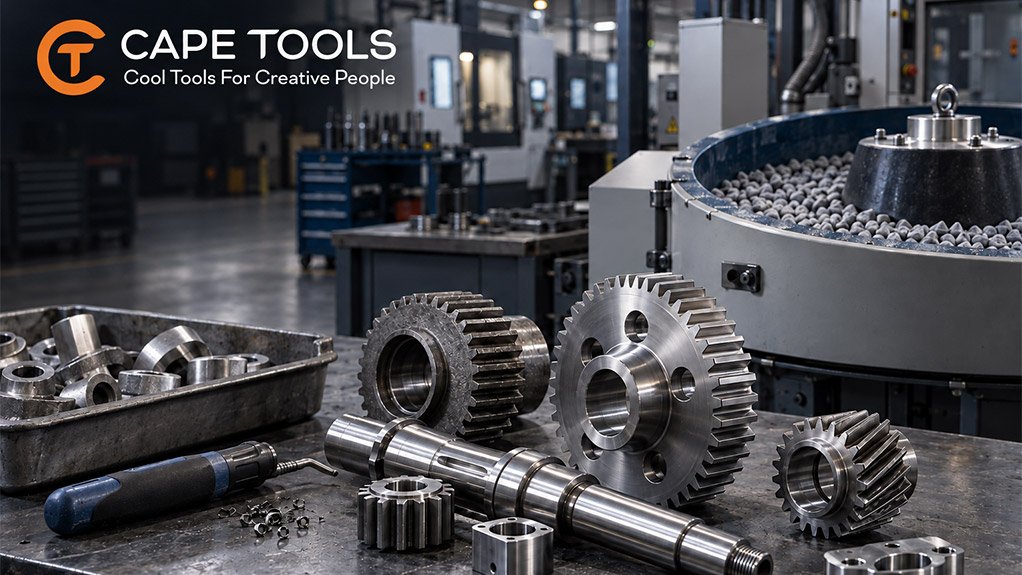


A precision component leaves the CNC machine on time. Its dimensions are correct, the machining programme has run successfully and the next batch is ready. Yet the part cannot be dispatched. It still needs deburring, edge preparation, polishing, cleaning and inspection. Somewhere between machining and delivery, the production schedule begins to slip.
This is the hidden factory: the work that happens after the main manufacturing operation, often at benches, in cleaning areas or through repeated handling. Individually, these tasks may appear minor. Together, they can absorb skilled labour, create queues and limit the output of an otherwise capable workshop.
For South African manufacturers seeking greater productivity, these operations deserve closer attention. Precision tools and equipment supplier Cape Tools supplies specialist equipment that addresses component finishing, precision repair and cleaning, helping engineering businesses examine the processes that stand between a manufactured part and a usable product.
When Efficiency Meets a Bottleneck
Investment in machining capacity can deliver faster cutting cycles and improved accuracy. However, the benefit is constrained if downstream operations cannot keep pace. Producing more unfinished components simply transfers the queue from the machine shop to the finishing bench.
Manual deburring and polishing remain valuable for many tasks, particularly varied work requiring operator judgement. Problems arise when repetitive production depends on individual technique, inconsistent processing times or repeated corrections. Two operators may achieve visibly similar results while producing different edge conditions or removing different amounts of material.
The commercial consequence extends beyond labour cost. Delayed finishing can postpone assembly, inspection and dispatch. Additional handling increases opportunities for damage, while rejected surfaces send components back through work already considered complete. Improving this stage can therefore influence the performance of the entire production route.
Surface Condition is an Engineering Requirement
A polished appearance alone does not establish whether a component is fit for purpose. Engineering applications may require a defined surface roughness, controlled edge radius or removal of burrs without compromising critical dimensions. Those requirements should guide the finishing process from the outset.
On cutting tools, edge preparation affects how the tool engages with the workpiece. On mating components, burrs can interfere with assembly. On moving parts, surface condition can influence contact behaviour and wear. For stainless steel equipment exposed to product residues, appropriate surface finishing can also support cleanability.
The question is therefore practical: what must the finishing operation achieve, and how will that result be measured? Establishing acceptance criteria gives manufacturers a basis for comparing methods and assessing consistency across production batches.
OTEC brings control to repetitive finishing
Through its OTEC offering, Cape Tools provides access to technologies for deburring, edge rounding, smoothing and polishing. OTEC's range includes centrifugal disc, drag and stream finishing, with different processing approaches suited to different workpieces and production requirements.
In centrifugal disc finishing, suitable components are processed with selected media and compounds. This approach can address batches of parts where bulk processing is appropriate. Where components must be separated to avoid contact damage, drag or stream finishing provides options involving individually held workpieces.
Selecting the process requires attention to geometry, material, component weight, sensitive features and the desired surface condition. Media selection matters equally: a process intended to remove machining marks may require a different combination from one intended to prepare an edge or produce a polished finish.
Automation creates an opportunity to establish repeatable processing conditions. It also allows skilled employees to focus on setup, inspection and more demanding work, while machinery undertakes suitable repetitive tasks. The value comes from a process matched to the component and verified against its requirements.
Measure the Work Between Operations
Before investing in equipment, manufacturers can begin with a simple production review. Follow one representative component from machining to dispatch and record every finishing step, waiting period, cleaning cycle and return for correction. This reveals where time is actually being consumed.
Useful measures include manual processing minutes per part, queue time, rejection rates, consumable usage and the proportion of components accepted first time. These figures provide a baseline for evaluating a proposed change and prevent purchasing decisions from depending solely on machine specifications.
Trials on representative parts can then test whether the proposed process delivers the required finish within an acceptable cycle. Inspection should cover critical features as well as appearance. The objective is a reliable production outcome, supported by evidence from the actual component.
Recover Tooling Before Replacement Becomes Necessary
The same attention to process efficiency applies when valuable tooling suffers localised damage. A worn edge or damaged feature can interrupt production even when most of the tool remains serviceable. Where repair is technically suitable, precision welding offers a route to recovering that investment.
Cape Tools' Orotig laser welding and Lampert micro TIG technologies provide different approaches to controlled joining and material addition. Equipment selection depends on the repair location, alloy, access and required result. Preparation, filler choice and subsequent finishing remain essential parts of the repair route.
Cleaning Completes the Production Sequence
Finishing and repair introduce another consideration: residues must be removed before subsequent operations. Oils, polishing compounds and particles can obscure inspection or interfere with joining, coating and assembly. Cleaning should therefore have its own defined process and acceptance requirements.
Elma ultrasonic equipment uses cavitation within a cleaning bath to help remove contamination from accessible component surfaces. Chemistry, temperature, loading and cycle duration influence performance. Appropriate cleaning supports the next manufacturing step and reduces the likelihood of carrying contamination through the production sequence.
Unlock Capacity
For engineering businesses, productivity improvement starts with understanding where usable output is being lost. Cape Tools connects finishing, repair and cleaning technologies with these practical production challenges.
Addressing the hidden factory can help workshops make better use of existing capacity, improve consistency and move components towards dispatch with fewer avoidable delays.
Manufacturers looking to review a finishing bottleneck, evaluate a tooling repair or improve component cleaning can contact Cape Tools to discuss their application, share sample parts and identify suitable equipment for their specific production needs and objectives.
Article Enquiry
Email Article
Save Article
Feedback
To advertise email advertising@creamermedia.co.za or click here
Research Reports


Projects
Latest Multimedia

Latest News

Showroom

As a reticulator, Egoli Gas provides natural gas to homes and businesses via underground pipes.
VISIT SHOWROOM
Virtual Gas Network supplies compressed natural gas via a virtual gas distribution network.
VISIT SHOWROOM



Announcements
What's On
Subscribe to improve your user experience...
Option 1 (equivalent of R125 a month):
Receive a weekly copy of Creamer Media's Engineering News & Mining Weekly magazine
(print copy for those in South Africa and e-magazine for those outside of South Africa)
Receive daily email newsletters
Access to full search results
Access archive of magazine back copies
Access to Projects in Progress
Access to ONE Research Report of your choice in PDF format
Option 2 (equivalent of R375 a month):
All benefits from Option 1
PLUS
Access to Creamer Media's Research Channel Africa for ALL Research Reports, in PDF format, on various industrial and mining sectors
including Electricity; Water; Energy Transition; Hydrogen; Roads, Rail and Ports; Coal; Gold; Platinum; Battery Metals; etc.
Already a subscriber?
Forgotten your password?
Receive weekly copy of Creamer Media's Engineering News & Mining Weekly magazine (print copy for those in South Africa and e-magazine for those outside of South Africa)
➕
Recieve daily email newsletters
➕
Access to full search results
➕
Access archive of magazine back copies
➕
Access to Projects in Progress
➕
Access to ONE Research Report of your choice in PDF format
RESEARCH CHANNEL AFRICA
R4500 (equivalent of R375 a month)
SUBSCRIBEAll benefits from Option 1
➕
Access to Creamer Media's Research Channel Africa for ALL Research Reports on various industrial and mining sectors, in PDF format, including on:
Electricity
➕
Water
➕
Energy Transition
➕
Hydrogen
➕
Roads, Rail and Ports
➕
Coal
➕
Gold
➕
Platinum
➕
Battery Metals
➕
etc.
Receive all benefits from Option 1 or Option 2 delivered to numerous people at your company
➕
Multiple User names and Passwords for simultaneous log-ins
➕
Intranet integration access to all in your organisation