Governance gaps undermine critical-path integration – consultancy

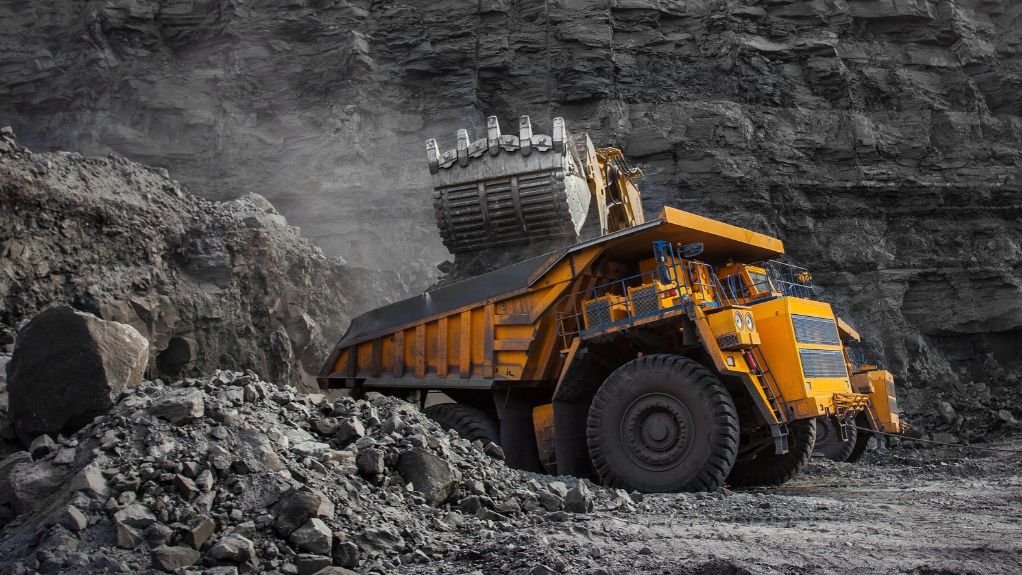
MINING IN AFRICA Mining projects in Africa require affiliated project managers to build a culture where site teams are comfortable with raising issues early



For complex mining projects in Africa, one of the primary delivery risks is not technical capability but leadership and governance, says consulting firm Project Managers Africa (PMA).
“Mining projects bring together engineering, procurement, construction, operations, contractors and external stakeholders. If nobody owns the dependencies between those groups, each workstream can appear healthy while the overall delivery plan becomes increasingly fragile,” says PMA consulting and advisory head Emmanuels Magaya.
The highest-ranking failures relating to leadership and governance are weak sponsorship, indecision by leaders, poor stakeholder management and either little governance or governance that is too rigid and focused on “ticking checkboxes”, he says.
In many cases, mining projects fail because of “box-checking governance”, a system Magaya says diligently records problems without ever forcing resolution. As a result, the system fails to track the age and impact of open decisions and rarely holds leaders accountable for the critical handoffs between engineering, procurement, construction and operations.
“A single delayed design approval quickly cascades into procurement backlogs, idle site crews and missed commissioning windows.”
This fragility is compounded by what Magaya calls “watermelon reporting”, where dashboards stay “green” on the outside while the reality on the inside is “deeply red” – meaning that project management teams feel pressured to keep status reports appearing positive, even when equipment testing is incomplete or operational readiness is falling behind.
“Boards frequently make critical capital decisions using financial models that ignore ground-level conditions,” adds Magaya, explaining that overlooking local logistics, regional labour dynamics and community relations leads to unrealistic baselines from the outset.
Project Management Remedies
Traditional project management assumes a deterministic path where a baseline is defined and variances are managed against a critical path and executed linearly, says Magaya.
He argues that this model consistently performs poorly in Africa because external complexity issues do not follow linear timelines.
Further, he explains that traditional frameworks view stakeholders as external parties to be managed and informed through communication plans.
Regulatory uncertainty creates a similar risk, compounded by continuously evolving environmental permitting standards and local-content mandates.
“Traditional baselines treat regulatory compliance as a gate approval exercise completed during front-end engineering design,” he says.
Furthermore, with traditional project management approaches, community expectations are often treated as a peripheral risk handled by public relations teams outside the primary schedule; however, Magaya says communities expect immediate economic participation, resulting in misaligned expectations.
“If local community engagement is not treated as a core critical-path dependency, it manifests on site as localised blockades, labour disruptions or operational delays. Physical completion means very little if an asset cannot operate safely owing to local friction,” he says.
Finally, operational readiness is treated as an afterthought in traditional project management methods.
More frequently, success is judged strictly by mechanical completion rather than the asset's ability to produce safely and sustainably. However, handing over a plant without trained operating teams or reliable spare parts supply chains leads to long, expensive ramp-up delays, he states.
To address systematic failures at mining projects, Magaya advises mining companies and affiliated project managers to strengthen the broader governance and delivery environment around the project manager, instead of assuming that replacing an individual will solve structural flaws.
That means tracking decision velocity alongside cost and schedule, enforcing evidence-based stage gates based on verified testing rather than self-reported percentages, and integrating regulatory approvals and community readiness into the critical path with the same rigour as shaft development, he states.
Most importantly, good leadership requires building a culture where site teams feel safe raising issues early, thereby enabling emerging risks to be resolved before they turn into major cost overruns, he concludes.
Article Enquiry
Email Article
Save Article
Feedback
To advertise email advertising@creamermedia.co.za or click here
Research Reports

Projects

Latest Multimedia

Latest News

Showroom

FLANDERS Southern Africa provides integrated solutions for mining and industrial operations, covering field services, automation, electrification,...
VISIT SHOWROOM
Your global lifecycle technology & service partner for materials & minerals processing equipment for coal, iron ore, copper, manganese & other...
VISIT SHOWROOM



Announcements
What's On
Subscribe to improve your user experience...
Option 1 (equivalent of R125 a month):
Receive a weekly copy of Creamer Media's Engineering News & Mining Weekly magazine
(print copy for those in South Africa and e-magazine for those outside of South Africa)
Receive daily email newsletters
Access to full search results
Access archive of magazine back copies
Access to Projects in Progress
Access to ONE Research Report of your choice in PDF format
Option 2 (equivalent of R375 a month):
All benefits from Option 1
PLUS
Access to Creamer Media's Research Channel Africa for ALL Research Reports, in PDF format, on various industrial and mining sectors
including Electricity; Water; Energy Transition; Hydrogen; Roads, Rail and Ports; Coal; Gold; Platinum; Battery Metals; etc.
Already a subscriber?
Forgotten your password?
Receive weekly copy of Creamer Media's Engineering News & Mining Weekly magazine (print copy for those in South Africa and e-magazine for those outside of South Africa)
➕
Recieve daily email newsletters
➕
Access to full search results
➕
Access archive of magazine back copies
➕
Access to Projects in Progress
➕
Access to ONE Research Report of your choice in PDF format
RESEARCH CHANNEL AFRICA
R4500 (equivalent of R375 a month)
SUBSCRIBEAll benefits from Option 1
➕
Access to Creamer Media's Research Channel Africa for ALL Research Reports on various industrial and mining sectors, in PDF format, including on:
Electricity
➕
Water
➕
Energy Transition
➕
Hydrogen
➕
Roads, Rail and Ports
➕
Coal
➕
Gold
➕
Platinum
➕
Battery Metals
➕
etc.
Receive all benefits from Option 1 or Option 2 delivered to numerous people at your company
➕
Multiple User names and Passwords for simultaneous log-ins
➕
Intranet integration access to all in your organisation