Frankly, the grid needs to become more intelligent





This article has been supplied.
By: Nishandra Bajinath - Digital Grid, Head of Sales in Sub-Saharan Africa at Schneider Electric
South Africa’s power grid is entering a new era, and it is remarkable. In just a few short years, the grid features distributed energy resources (DERs), renewable generation, battery storage, and with it, changing consumption patterns.
Rooftop solar alone has expanded from 1,000 MW in 2022 to 7,300 MW by late 2025 and growing says the report: An assessment of rooftop solar photovoltaic adoption in South Africa: A system dynamics analysis of drivers, constraints, and equity implications. Hybrid solar-plus-battery systems have also proven capable of covering up to 99% of curtailed load in optimised scenarios.
It is a promising outlook but with most things in life, also comes with a caveat. For decades, power networks were largely designed around a straightforward model: electricity was generated centrally and flowed in one direction through transmission and distribution networks to the end user.
Today, that model is, quite rightly, becoming more dynamic with generation increasingly happening closer to the point of consumption, while consumers themselves are becoming producers of electricity.
The result is a grid that can’t just deliver electricity but needs manage power flows in both directions, while maintaining the stability, quality and reliability that customers and communities depend on.
And this adds a new a new layer of complexity for network operators. Traditionally, system frequency and voltage have been managed predominantly at transmission level, where large generation assets can be dynamically controlled.
With DERs connecting increasingly at medium- and low-voltage levels, some of these considerations are moving deeper into the distribution network. A DER might connect at medium voltage level (6.6,11. 22 or 33 kV), or even at low-voltage levels (<1000V within commercial buildings and homes and these levels, network conditions can vary considerably.
Furthermore, industrial facilities, for example, can introduce power quality considerations through motor-driven equipment and other loads, while the addition of inverters, solar generation and batteries introduces further dynamic variables like harmonic distortions.
The challenge, therefore, is to understand how all these varied elements interact across the network. Quite frankly, the grid needs to become more intelligent.
Intelligence activated
Digitalisation adds much-needed layer of intelligence. It gives utilities greater visibility into what is happening across their networks and, importantly, the ability to respond dynamically like adding DERs capacity whist gaining real time insight into how assets are preforming.
Here, distributed energy resource management systems (DERMS) can be invaluable as it provides the intelligence required to monitor and manage growing volumes of distributed generation.
DERMS is a grid‑aware platform that provides operators with smarter dispatch, situational awareness, active network management, dynamic capacity conservation, look ahead flexibility management - all critical for an evolving and daresay more complex grid with rising prosumer participation.
By dynamically calculating DER operating envelopes, DERMS resolves the problem of limited capacity for connecting new DERs. This ensures that each DER’s behaviour does not create new violations or cause grid congestions.
Enter aggregation
However, the scale and diversity of DERs also require a new approach when managing these new layers of intelligence and implementing the resultant assets. For example, a traditional network is relatively straightforward including infrastructure such as substations, transformers and ring main units.
A modern distribution network, on the other hand, could include thousands of different combinations of solar panels, inverters and batteries, each with different capacities and operating characteristics.
This is where aggregation can play an important role by effectively bringing together multiple smaller distributed assets, presenting them to utilities as a coordinated resource.
Indeed, instead of managing hundreds or even thousands of individual systems independently, the utility can interact with an aggregated portfolio that can be monitored and managed more efficiently.
This is also how DERMS helps build toward Active Network Management through the adoption of aggregation to achieve economic optimisation.
In turn, it opens an interesting opportunity for businesses already operating in the distributed energy market; they could potentially evolve their role by aggregating the distributed systems they manage
Schneider Electric’s recently announced partnership with Kraken is a perfect example of aggregation in practice. The partnership aims to equip Distribution System Operators (DSOs) and utilities with advanced capabilities to monitor the grid, forecast congestion, and shift demand in real time which enable participation in energy markets.
This partnership, in essence, turns distributed assets into a virtual power plant at scale. For South Africa, where rooftop solar and batteries are proliferating, adopting similar aggregation frameworks will improve equity, and accelerate electrification without waiting for multi‑year grid reinforcement by combining DERs into a coordinated portfolio that behaves like a single large power plant responding to market signals and grid needs.
In the end, the grid as its stands needs to become more intelligent and adaptable to accelerate the energy transition, which can be achieved without replacing it but providing both utilities and consumers with the tools and insight to manage this increasingly dynamic system that enables a resilient and efficient digital grid.
Article Enquiry
Email Article
Save Article
Feedback
To advertise email advertising@creamermedia.co.za or click here
Research Reports

Projects

Latest News

Showroom
SafeQuip is a leading distributor and manufacturer of fire safety solutions, offering a comprehensive range of products designed to meet all...
VISIT SHOWROOM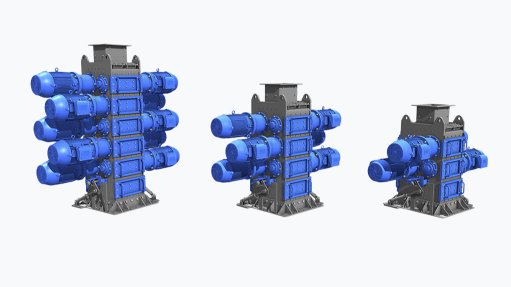
Energy and Densification Systems (EDS) has developed equipment for crushing, milling, blending and densifying products. Based on its globally...
VISIT SHOWROOM
Announcements
What's On
Subscribe to improve your user experience...
Option 1 (equivalent of R125 a month):
Receive a weekly copy of Creamer Media's Engineering News & Mining Weekly magazine
(print copy for those in South Africa and e-magazine for those outside of South Africa)
Receive daily email newsletters
Access to full search results
Access archive of magazine back copies
Access to Projects in Progress
Access to ONE Research Report of your choice in PDF format
Option 2 (equivalent of R375 a month):
All benefits from Option 1
PLUS
Access to Creamer Media's Research Channel Africa for ALL Research Reports, in PDF format, on various industrial and mining sectors
including Electricity; Water; Energy Transition; Hydrogen; Roads, Rail and Ports; Coal; Gold; Platinum; Battery Metals; etc.
Already a subscriber?
Forgotten your password?
Receive weekly copy of Creamer Media's Engineering News & Mining Weekly magazine (print copy for those in South Africa and e-magazine for those outside of South Africa)
➕
Recieve daily email newsletters
➕
Access to full search results
➕
Access archive of magazine back copies
➕
Access to Projects in Progress
➕
Access to ONE Research Report of your choice in PDF format
RESEARCH CHANNEL AFRICA
R4500 (equivalent of R375 a month)
SUBSCRIBEAll benefits from Option 1
➕
Access to Creamer Media's Research Channel Africa for ALL Research Reports on various industrial and mining sectors, in PDF format, including on:
Electricity
➕
Water
➕
Energy Transition
➕
Hydrogen
➕
Roads, Rail and Ports
➕
Coal
➕
Gold
➕
Platinum
➕
Battery Metals
➕
etc.
Receive all benefits from Option 1 or Option 2 delivered to numerous people at your company
➕
Multiple User names and Passwords for simultaneous log-ins
➕
Intranet integration access to all in your organisation