Fertiliser disruptions present food security risks


LIMITED OPTIONS Countries that have high fertiliser import dependence, combined with limited fiscal space and large rain-fed agricultural sectors, are most exposed to the long-term consequences of fertiliser supply disruptions



The ongoing US-Iran war, and resulting disruption of the Strait of Hormuz, continues to impact critical industries including fertiliser production, which could have implications for African food security, says independent research organisation Institute for Security Studies senior research consultant Dr Marvellous Ngundu.
About 50% of sulphur traded globally for phosphate fertiliser passes through the Strait of Hormuz, creating a critical bottleneck even for phosphate-rich nations, such as Morocco.
While Morocco holds one of the world’s largest phosphate reserves, the country depends on sulphur imports from Gulf producers to process phosphate rock into usable fertiliser through sulphuric acid.
“The vulnerability is not a shortage of phosphate, but a shortage of the chemical inputs needed to process it,” says Ngundu.
He explains that countries such as Ethiopia, Kenya, Zambia, the Democratic Republic of Congo, and several in West Africa, have high fertiliser import dependence combined with limited fiscal space and large rain-fed agricultural sectors, leaving them most exposed to the long-term consequences of fertiliser supply disruptions.
Consequently, a shipping disruption rapidly becomes a food-security crisis because higher fertiliser prices reduce application rates, resulting in lower crop yields and increasing food prices, he says.
Meanwhile, urea prices have surged from under $500/t to above $700/t since the conflict began, with South African grain farmers already facing input cost increases of up to 35% as a result.
Ngundu points out that the international price is only the starting point, explaining that by the time fertiliser reaches farmers, it has accumulated costs relating to freight, insurance, port charges, financing, currency depreciation, transport and distributor margins.
While these increases have industry-wide impacts, he notes that they affect smallholder farmers in remote areas significantly as they buy in smaller volumes and have access to fewer financing options, consequently paying the highest effective prices.
In the long term, Ngundu explains, the damage to a growing season becomes difficult to reverse. Once farmers decide to reduce application rates, plant smaller areas or switch to lower-yielding crops in response to fertiliser procurement challenges, later policy interventions cannot fully recover lost output.
“This is why timing matters. Governments are most effective when they act before planting through targeted credit guarantees, input vouchers, strategic fertiliser procurement and support for distribution networks,” he says.
Ngundu warns that government action is also critically needed to brace for the approaching El Niño event, which could trigger a drought and affect agricultural production.
“The question is no longer whether El Niño will affect African agriculture, the real question is whether African governments will act early enough to prevent a climate shock from becoming a food security crisis.”
He explains that the severity of the upcoming El Niño will depend equally on policy preparedness and rainfall, pointing out that climate shocks do not automatically become food crises.
Rather, food crises emerge when early warnings are not matched by early action.
Therefore, governments should proactively strengthen climate- smart agriculture, secure drought-tolerant seed and fertiliser supplies, protect livestock, expand irrigation where possible, build strategic grain reserves and scale up social protection for vulnerable households before food prices begin to spike.
Wider Industrial Exposure
The Hormuz disruption extends beyond agriculture. Polymers used in food packaging, construction and medical products, along with solvents and industrial chemicals essential for pharmaceuticals, mining, detergents and manufacturing are all affected, Ngundu explains.
When these supply chains are disrupted, African manufacturers face higher input prices, longer delivery times and greater financing costs.
Ngundu explains that these pressures initially show up in shrinking profit margins, delayed investment and longer supplier lead times before appearing in broader inflation and industrial production data.
Similarly, while a primary concern has been fuel price increases, he states that Africa’s exposure extends well beyond fuel prices, reflecting dependence on imported intermediate inputs.
In response, Ngundu positions building regional petrochemicals capacity as critical in strengthening manufacturing competitiveness while making African economies less vulnerable to external supply shocks.
Additionally, he points out that the continent’s dependence on international capital markets means that shifts in investor risk appetite in London or New York directly determine the scope and pace of infrastructure development in African cities.
Ngundu contends that Africa does not lack capital but instead lacks integrated capital markets. Pension funds, insurers and development finance institutions collectively manage significant assets, however, investment remains fragmented by regulation, currency risk and market structure.
To ensure greater integration, he stresses the importance of harmonised listing standards, linked securities exchanges, improved cross-border payment systems, common project-finance instruments and stronger investment guarantees.
Financing institutions such as Afreximbank, the African Development Bank, and Africa50, as well as the Pan-African Payment and Settlement System are already building parts of this architecture, he points out.
Aligned to the development of financial infrastructure, the overall objective should be to enable African savings to finance African industrialisation, which in turn would improve resilience during periods of global uncertainty while accelerating investment in strategic industries such as refining, fertilisers and petrochemicals.
This can also be driven through the African Continental Free Trade Area (AfCFTA) Agreement, which offers a legal foundation and is ratified by 54 countries. To shift the agreement from framework to operational reality in the chemicals and petrochemicals sector, Ngundu says that countries should prioritise implementation, entailing tariff schedules, rules of origin and fully operational customs procedures, to allow businesses to trade predictably across borders.
Additionally, Africa should also establish practical industrial trade corridors for strategic sectors while moving beyond tariff liberalisation to tackle real barriers to trade through finance, efficient logistics, digital customs systems and local-currency payment mechanisms.
“The AfCFTA becomes meaningful when firms can move products across borders quickly, predictably and competitively,” Ngundu states, adding that demonstrating success among willing countries will prove more valuable than waiting for perfect implementation across the entire continent.
Therefore, a primary objective should be facilitating sufficient regional production capacity to ensure that external disruptions no longer determine food security or industrial output, he concludes.
Article Enquiry
Email Article
Save Article
Feedback
To advertise email advertising@creamermedia.co.za or click here


Projects

Latest Multimedia
Latest News


Showroom
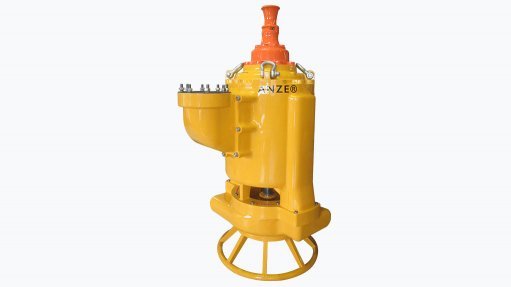
Goodwin Submersible Pumps Africa is sole distributors for Goodwin electrically driven, submersible, abrasion resistance slurry pumps.
VISIT SHOWROOM
SABAT Batteries is a renowned brand in the battery industry, manufacturing a wide range of batteries at its state-of-the-art production facility in...
VISIT SHOWROOM

Announcements
What's On
Subscribe to improve your user experience...
Option 1 (equivalent of R125 a month):
Receive a weekly copy of Creamer Media's Engineering News & Mining Weekly magazine
(print copy for those in South Africa and e-magazine for those outside of South Africa)
Receive daily email newsletters
Access to full search results
Access archive of magazine back copies
Access to Projects in Progress
Access to ONE Research Report of your choice in PDF format
Option 2 (equivalent of R375 a month):
All benefits from Option 1
PLUS
Access to Creamer Media's Research Channel Africa for ALL Research Reports, in PDF format, on various industrial and mining sectors
including Electricity; Water; Energy Transition; Hydrogen; Roads, Rail and Ports; Coal; Gold; Platinum; Battery Metals; etc.
Already a subscriber?
Forgotten your password?
Receive weekly copy of Creamer Media's Engineering News & Mining Weekly magazine (print copy for those in South Africa and e-magazine for those outside of South Africa)
➕
Recieve daily email newsletters
➕
Access to full search results
➕
Access archive of magazine back copies
➕
Access to Projects in Progress
➕
Access to ONE Research Report of your choice in PDF format
RESEARCH CHANNEL AFRICA
R4500 (equivalent of R375 a month)
SUBSCRIBEAll benefits from Option 1
➕
Access to Creamer Media's Research Channel Africa for ALL Research Reports on various industrial and mining sectors, in PDF format, including on:
Electricity
➕
Water
➕
Energy Transition
➕
Hydrogen
➕
Roads, Rail and Ports
➕
Coal
➕
Gold
➕
Platinum
➕
Battery Metals
➕
etc.
Receive all benefits from Option 1 or Option 2 delivered to numerous people at your company
➕
Multiple User names and Passwords for simultaneous log-ins
➕
Intranet integration access to all in your organisation